
Islamabad, November 15,2026: GAK HealthCare International has appointed nine eminent national and international experts as adjunct faculty at Islamabad Medical & Dental College (IMDC), bringing extensive expertise in public health, medical sciences, scientific research, healthcare entrepreneurship and emerging technologies into its academic environment.
The appointments were announced during IMDC’s 86th Academic Council Special Session and aim to enhance teaching and mentorship, advance curriculum development, strengthen research and create greater opportunities for academic and industry collaboration.
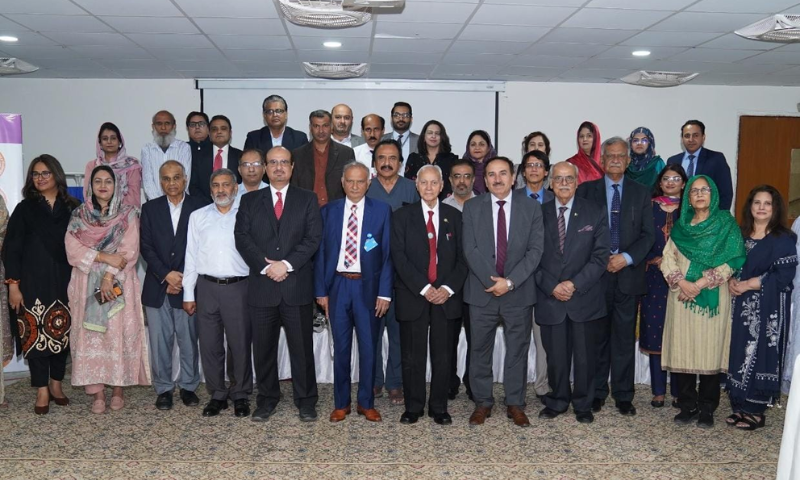
The session was attended by GAK HealthCare International Group CEO Yasir Khan Niazi, Vice Chancellor City University Islamabad (CUI) and IMDC Maj. Gen. (R) Prof. Muhammad Aslam, IMDC Principal Prof. Safia Shaukat, institutional principals and senior management.
Welcoming the experts, the vice chancellor expressed confidence that their association would enrich the institutions’ academic environment and contribute to student development.
The newly appointed adjunct faculty members include Prof. Zafar Mirza, global public health expert, former Special Assistant to the Prime Minister on Health and former senior World Health Organization (WHO) official; Prof. Muhammad Salman, CEO of the National Institute of Health (NIH), Pakistan; Prof. Zia Ullah Khan Dawar, Project Director of the Prime Minister’s National Programme for the Elimination of Hepatitis C; and Prof. Rizwan Uppal, healthcare entrepreneur and founder of Islamabad Diagnostic Centre.
The other appointees are Prof. N. M. Butt, internationally acclaimed nuclear physicist, pioneer of nanotechnology in Pakistan and former Director General and Chief Scientist of PINSTECH; Prof. Asjad Hameed, consultant endocrinologist and diabetologist and Founder and Chairman of The Diabetes Centre; Prof. Mumtaz Ali Khan, Chief of the Centre for Disease Control at NIH and Pakistan’s National Focal Person for Infection Prevention and Control; Prof. Javed I. Khan, forensic scientist, toxicologist and laboratory compliance expert with four decades of professional experience in the United States and Canada; and Prof. Muhammad Usman Hadi, Clinical AI expert from Ulster University, Belfast, United Kingdom.
Speaking on the occasion, Yasir Khan Niazi said GAK HealthCare was building on its established institutional foundations to strengthen its academic, research and technological capabilities in response to the changing needs of the healthcare sector.
“We are building for the healthcare landscape that lies ahead, not merely the one that exists today. Our responsibility is to prepare institutions and graduates for emerging challenges, new technologies and evolving healthcare needs; not simply to keep pace with change, but to help shape it,” he said.
He added that the strength of faculty and achievements of students were central to institutional success, saying the appointments would broaden students’ exposure, strengthen their capabilities and equip them to make meaningful contributions to healthcare.
Niazi also stressed the need to evolve medical education beyond a predominantly curative approach, with greater emphasis on preventive healthcare, public health, evidence-based practices and the responsible application of emerging technologies.
Highlighting GAK’s work in Clinical Artificial Intelligence, he referred to the Clinical AI in Healthcare Certificate Programme being offered in collaboration with Shaheed Zulfiqar Ali Bhutto Medical University, with the endorsement of the Pakistan Medical and Dental Council (PMDC).
He also highlighted efforts to integrate artificial intelligence into mainstream medical education, including the MBBS curriculum, and outlined the vision for a proposed Centre for AI in Healthcare at IMDC to advance AI applications in healthcare education, research and clinical practice.
Niazi invited industry and research organisations to collaborate with CUI and IMDC in applied research and innovation, bridging academic expertise with clinical realities and industry requirements.
” CUI and IMDC offer a strong platform for industry-academia collaboration, translating research and ideas into practical solutions that address healthcare challenges and deliver measurable value,” he said.
Prof. Zafar Mirza emphasized the need to place public health, disease prevention, health equity and evidence-based policymaking at the centre of healthcare education and practice.
He highlighted the importance of strengthening public health perspectives in medical curricula and expressed confidence that his experience in global health policy, health systems and international public health would help enrich the academic direction of CUI and IMDC, mentor future healthcare professionals and promote a more responsive, prevention-oriented healthcare approach.
Prof. Muhammad Salman highlighted the critical role of scientific research, strong laboratory systems, disease surveillance and health security in strengthening national healthcare capacity.
He underscored the potential for NIH to work closely with IMDC and CUI through joint research, scientific collaboration, professional training and knowledge exchange. Such engagement, he said, would help strengthen institutional research capabilities, advance laboratory sciences and biosafety, and equip students and faculty with practical expertise to address emerging public health challenges.
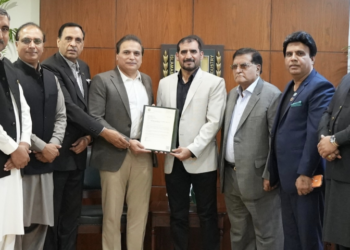
The experts received certificates of appointment and citations in recognition of their professional achievements and contributions.
Their association is expected to strengthen institutional capacity through expert mentorship, faculty development, academic engagement and collaborative research.
With an integrated network comprising CUI, IMDC, Dr Akbar Niazi Teaching Hospital, Islamabad Dental Hospital and its nursing, rehabilitation sciences and medical technology colleges, GAK HealthCare is advancing a connected model of higher education, clinical training, research and healthcare delivery.
The institutional integration is aimed at translating collective expertise and resources into stronger academic programmes, enhanced research capacity, innovation and industry linkages, while preparing a future-ready healthcare workforce to meet evolving national needs and contribute to global healthcare advancement.