
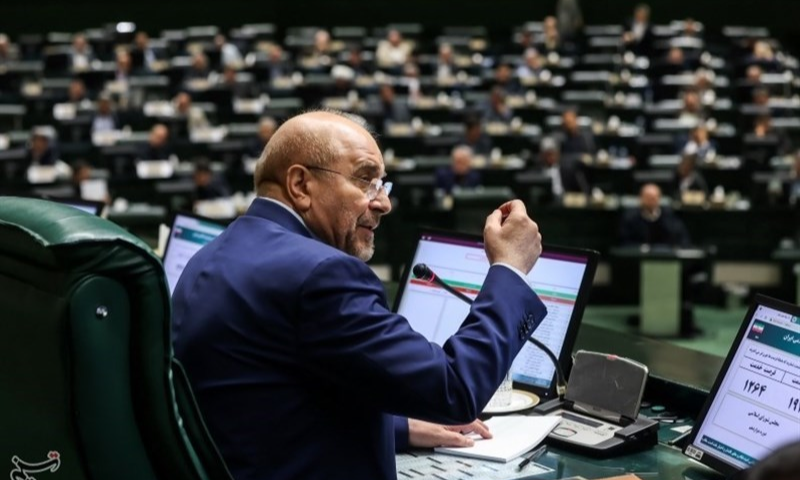
Tehran, November 15,2026: Iran will not allow the neither-war-nor-peace situation to continue, Parliament Speaker Mohammad Baqer Qalibaf said on Sunday, stressing that the path to an agreement with the United States remains open if Washington accepts Tehran’s seven conditions.
Addressing an open session of Parliament, Qalibaf said it made no difference to Iran whether the United States wanted negotiations or war, adding that acceptance of the seven conditions, which he described as the outcome of the Iranian nation’s sacrifices and perseverance, would pave the way for an agreement.
He warned that any further mistake by Washington would have serious consequences, saying the capabilities and determination of Iran’s Armed Forces, rather than US wishes, would determine the geography of the battlefield. He cautioned that another war would affect many parties.
Qalibaf also criticised US Treasury Secretary Scott Bessent’s remarks, describing them as vulgar and his language as unethical. He said the comments reflected Washington’s desperation in confronting the strength of the Islamic Republic.
He added that Bessent, who had reportedly taken shelter in military facilities over security threats, should reflect on what Qalibaf described as US strategic defeats in the Persian Gulf rather than insult other nations.
His remarks came as President Masoud Pezeshkian said Leader of the Islamic Revolution Ayatollah Seyed Mojtaba Hosseini Khamenei had instructed officials to bring the neither-war-nor-peace situation to an end.
Pezeshkian said Iran was ready for negotiations based on dignity, justice and equal conditions but would not submit to force or intimidation.
Secretary of Iran’s Supreme National Security Council Mohsen Rezaei has also urged Washington to abandon what he called fabricated reports about negotiations with Tehran and accept Iran’s seven conditions.
Foreign Minister Abbas Araqchi similarly stressed that Washington must choose between accepting Iran’s conditions and continuing the war, warning that the country’s Armed Forces were prepared for either eventuality.
Meanwhile, Iran has proposed a two-day plan to restore security in the Strait of Hormuz, calling for the strategic waterway to reopen to commercial shipping within 48 hours if the United States lifts its naval blockade of Iranian ports, ends the war on all fronts and unfreezes Iranian assets abroad.
Foreign Ministry spokesperson Esmaeil Baqaei described the proposal as a logical roadmap for restoring security in the strait.