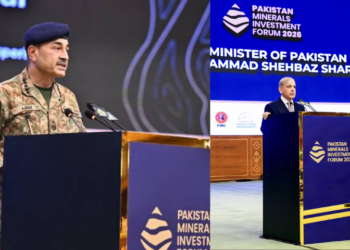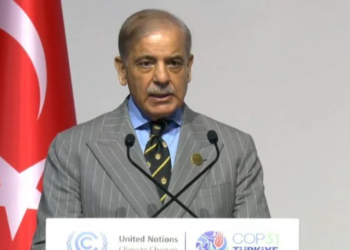

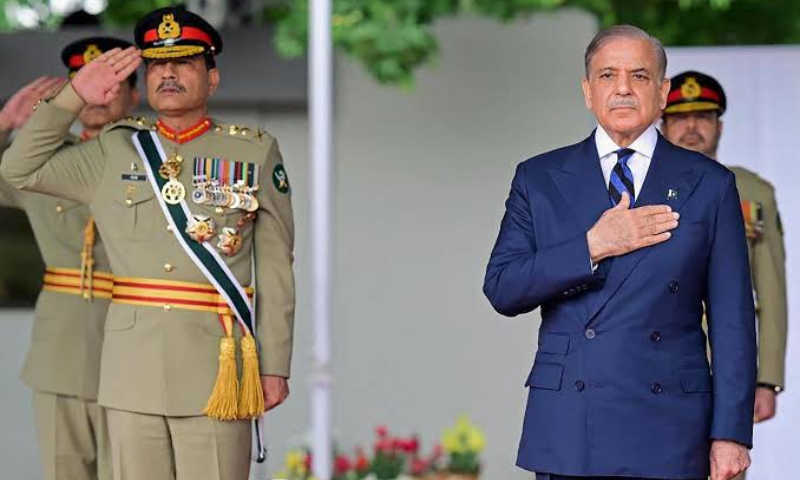
Islamabad, November 15,2026: Prime Minister Shehbaz Sharif and Chief of Defence Forces and Chief of the Army Staff Field Marshal Asim Munir have jointly secured the top position in the latest edition of the world’s 500 most influential Muslims, alongside the Saudi king and crown prince and the Turkish president.
The rankings have been compiled by the Royal Islamic Strategic Studies Centre (RISSC), a research institute based in Amman, Jordan, which has published its annual report, titled “The 500 Most Influential Muslims”, since 2009 to recognise individuals making significant contributions to Muslim communities worldwide.
According to the latest edition, this is the first time the list has featured multiple individuals at the top position, recognising the Makkah Joint Defence Agreement between Pakistan, Saudi Arabia and Turkiye.
“While this unified top spot features five individuals, it is actually divided into three shared entries that represent a massive shift in how Muslim nations are working together to protect one another. The main reason for this historic decision is the Makkah Joint Defence Agreement,” the report stated.
It said the mutual defence pact brought together Saudi Arabia’s economic strength, Turkiye’s advanced technology and manufacturing capabilities, and Pakistan’s military strength in a collective alliance.
Describing the agreement as based on a “one for all, all for one” approach to security, the report said it had significantly reshaped regional politics.
The publication also acknowledged Pakistan’s efforts over the past year to navigate economic stabilisation challenges, regional security pressures and diplomatic balancing between major powers.
It noted that Islamabad had engaged in regional shuttle diplomacy in the Middle East to promote de-escalation, even as domestic energy markets faced pressures from higher import costs and emergency fuel conservation measures.
Reacting to the development, Information Minister Attaullah Tarar posted on X: “A moment of gratitude for every Pakistani.”
“From Marka-i-Haq to global diplomacy, they walked this journey together. This honour is a tribute to the sacrifices of our martyrs and the unity of our nation,” he added.
Following the leaders of Pakistan, Saudi Arabia and Turkiye, Iranian Supreme Leader Ayatollah Mojtaba Khamenei secured fourth place, while Jordan’s King Abdullah II ranked fifth.
Qatar’s Emir Sheikh Tamim bin Hamad Al-Thani was placed sixth, while UAE President Sheikh Mohamed bin Zayed Al-Nahyan ranked 12th. Egyptian President Abdel Fattah Saeed El-Sisi secured the 22nd position.
Among Pakistani personalities, renowned Islamic scholar Sheikh Muhammad Taqi Usmani was ranked seventh, while Maulana Tariq Jamil secured 32nd place. Football star Mohamed Salah was placed 39th.
Palestinian President Mahmoud Abbas ranked 45th, followed by Syrian Interim President Ahmed Al-Sharaa at 46th place. New York City Mayor Zohran Mamdani was ranked 49th.
The list’s political honourable mentions included Hamas chief Khalil Al-Hayya, former prime minister Imran Khan, London Mayor Sadiq Khan and American Senator-elect Abdul El-Sayed.
In the categories of social issues, science, arts and culture, media and sports, honourable mentions included Jordan’s Queen Rania Al-Abdullah, British composer Sami Yusuf, Palestinian journalist Bisan Owda, British-American broadcaster Mehdi Hasan and Egyptian comedian Bassem Youssef.
The RISSC also names a Man of the Year and a Woman of the Year in its annual publication.
This year, Palestinian paediatrician Dr Hussam Abu Safiya was named Man of the Year in recognition of his commitment to treating patients in Gaza despite the devastating circumstances of the conflict.
The report described him as a doctor who refused to abandon his patients, returned to his hospital duties after burying his son and had spent more than 600 days in Israeli custody without charge or trial.
It said Abu Safiya had documented attacks on medical facilities during Israel’s invasion of Gaza and appealed to the international community to protect the territory’s healthcare infrastructure.
Minab school attack survivor Fatemeh Zahra Sheikhabadi was named Woman of the Year.
The report said she survived a US missile strike on an elementary girls’ school in Iran’s Minab on February 28, which killed more than 150 people, including over 100 children.
Following the attack, Sheikhabadi travelled to Geneva and addressed the UN Human Rights Council, urging world leaders to hear the voices of children affected by the incident.
The report honoured her for sharing the experiences of children who lost friends and teachers in the attack and ensuring their stories were not forgotten.