

By Muhammad Mohsin Iqbal
Some events pierce the heart so deeply that their echoes remain long after the floodwaters recede, the cries die down, and the dust settles. They do not merely pass; they imprint themselves upon our collective conscience—if, indeed, we still possess one. Among such tragedies was the recent incident in Swat, where joy turned into mourning in a matter of moments, and a dream of leisure ended in an irreversible nightmare.
On that Friday afternoon, the heavens bore witness to a calamity that no heart could endure. The blue skies of Swat, known for their serenity, suddenly watched helplessly as a savage torrent of water surged through the valley and snatched away human lives in the blink of an eye. The laughter of children turned into frantic screams, the chatter of friends into cries for help, and the calm of nature into a scene of utter devastation.
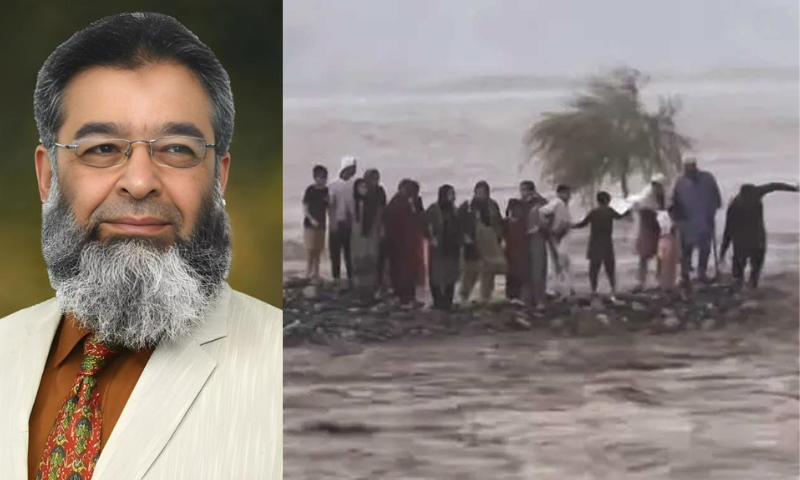
A group of 35 tourists from Daska had set out in the hope of finding solace in the lap of nature. They were families, friends, brothers and sisters—ordinary people seeking a brief escape from the burdens of life. But some 16 of them never returned. The Swat River, fed by the glacial veins of the north, became their unmarked grave. The final moments of these precious lives were captured by bystanders—cameras recorded the horror, and social media broadcasted the tragedy to the world. But for all the clarity of those visuals, what generally unseen were the figures who should have been there first—the rescuers, the officials, the system.
The affected families kept calling for help for hours. Voices cracked with desperation, phones trembled in wet hands, prayers were whispered with every breath—and yet, no one came. The delay was fatal. It was not just a failure of administration; it was a betrayal of responsibility, a brutal silence in the face of suffering. We often say that only Almighty Allah knows what lies in the hearts, but we must also say—only Allah knows what these people felt as they were swept away, glancing one last time at the shore, hoping someone, somewhere, would arrive.
This is not the first time that such helplessness has been documented. This is not the first time that our governance has failed to rise in time. Sympathy replaces swift action, condolence substitutes accountability, and compensation is offered like a balm to a bleeding wound that never heals. Will this be another one of those tragedies that fade into the archives of forgetfulness? A few officials may be suspended, financial aid may be announced, carefully worded statements will be issued—but will that bring back the lives lost to the river?
The real tragedy is not just the drowning—it is the apathy that follows. Didn’t such incidents happen before this? Have we not seen tourists lost to flash floods, families perishing in rivers, and roads washed away before? What did we learn then? What did we fix? Or did we just pass the blame to fate, shrugging our shoulders as if human life is so cheap that it can be written off by saying, this was destined?
There is a cruel repetition in our response. We will mourn, yes. We will share photos of the deceased with heartbroken captions. We will conduct meetings, prepare reports, and nod solemnly in conferences. But then we will move on. And the bereaved families? They will live with a hollow that no time can ever fill. They will bury not only their loved ones but also a piece of their own souls. There is no compensation for the pain of a mother who waited for her son to return with laughter and instead received his lifeless body; for a father who told his children to be careful, never knowing their smiles were their last. But unfortunately, this incident is completely different, in which all family members lost their lives.
In other nations, when a single child goes missing or an animal facing trouble, entire systems and machinery are activated. Roads are blocked, alerts are issued, and helicopters are dispatched. Here, dozens drown, and the machinery yawns awake only after it is too late. Social media becomes the first responder, and the administration lags behind, watching through the lens of detachment.
If we are to prevent such heartbreaks in the future, we must abandon the ritual of reactive mourning and adopt proactive planning. We need a comprehensive national strategy that includes real-time warning systems, riverbank surveillance, emergency drills, and public awareness campaigns tailored for tourists. It should not be difficult in an age of satellite data and instant communication to monitor water levels and forecast surges. But such tools are useless unless paired with the will to act.
The Swat River will continue to flow, indifferent to the tears it has caused. Tourists will return again, drawn by its beauty, unaware of the history that runs beneath its surface. If we do nothing now, another group of innocents will someday meet the same fate, and we will again be spectators—mute, late, and full of excuses.
Let us not deceive ourselves with poetic fatalism. Let us not cover up our failures with hollow prayers and staged sympathies. The people who died in Swat were not statistics. They were lives—full of love, stories, and dreams—snatched away not just by water, but by neglect.
And if we cannot change after this, then perhaps the real flood is not in our rivers—but in our hearts, drowning our sense of duty, compassion, and humanity.