Buner, August 21, 2025: Meteorologists have rejected claims circulating on social media that last week’s deadly floods in northern Khyber Pakhtunkhwa (KP) were triggered by a cloudburst, clarifying that the disaster was caused by the rare convergence of two powerful weather systems over the Malakand region.
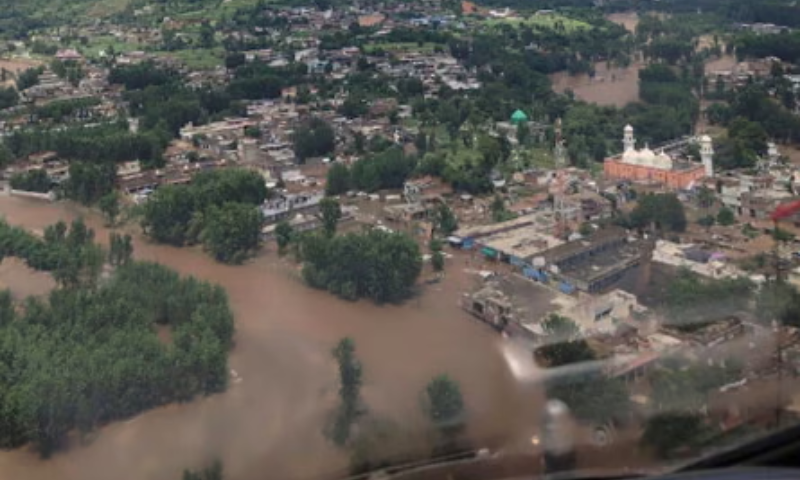
The floods, which struck Buner and Swat districts on August 15, have claimed at least 427 lives — including 291 in Buner alone — and left widespread destruction, with homes, hotels, and infrastructure swept away by flash floods and torrential rains.
In the aftermath, speculation on digital platforms blamed a “cloudburst” for the devastation. However, former Pakistan Meteorological Department (PMD) Chief Meteorologist Syed Mushtaq Ali Shah said meteorological data disproved that theory.
“These systems collided in Buner, causing unprecedented rainfall. But calling it a cloudburst is scientifically incorrect,” Shah told APP, noting that the rainfall was widespread and prolonged, unlike a cloudburst which is hyper-local and typically exceeds 100 mm in less than an hour. PMD equipment, he added, recorded no such spikes.
PMD official Irfan Virk confirmed the assessment, saying radars detected “prolonged heavy rainfall, not the sudden extreme precipitation associated with cloudbursts.” He warned against misusing terms that create unnecessary panic.
Both experts also pointed to environmental degradation as a critical factor behind the scale of destruction. Deforestation in KP, particularly in communal and private forests, has weakened natural water absorption, while unchecked construction in riverbeds has obstructed natural flood pathways.
“Cutting down forests has reduced the natural buffer zones, making flash floods more likely and more destructive,” Virk said. Former KP Forest Conservator Niaz Ali added that illegal logging and land degradation have amplified climate vulnerabilities in the province.
Pakistan’s national forest policy shows the country retains just 5% forest cover, losing about 27,000 hectares annually. Experts say this loss, coupled with climate change, is intensifying floods across KP, Sindh, and Balochistan.
Warning against inaccurate reporting, Shah said: “Mislabeling such events not only causes panic but can also lead to poor policy decisions.” Both meteorologists urged greater reliance on scientific data, improved climate modeling, and community education as Pakistan faces increasingly erratic weather patterns.
As communities in Buner and Swat begin rebuilding, experts stress that understanding the true causes of the floods is vital for disaster preparedness and long-term resilience.