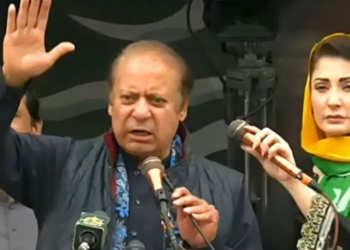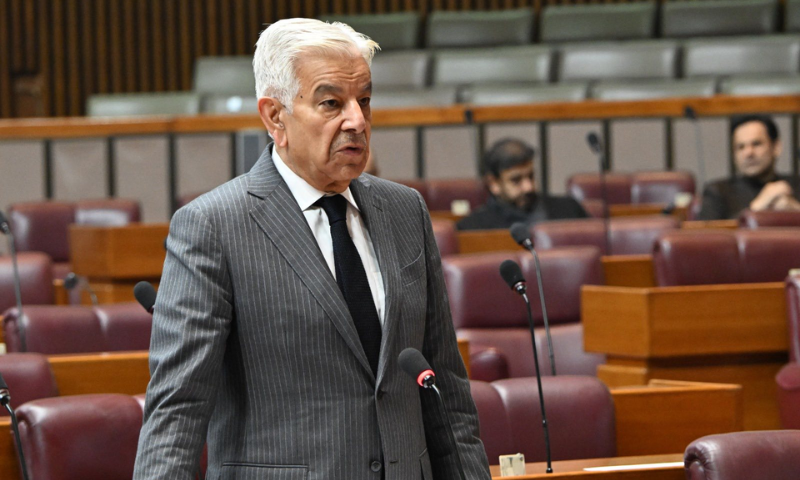
Islamabad, February 2, 2026: Pakistan’s Defence Minister Khawaja Asif on Monday strongly condemned the recent terrorist attacks in Balochistan, asserting that “nobody in Pakistan will be allowed to rationalise violence”. Addressing the National Assembly on the security situation in the province, Asif said attempts to dress criminal activity as a freedom movement are unacceptable and only serve as a cover for illicit operations.
The remarks came in the aftermath of a coordinated terrorist assault over the weekend, in which security forces reportedly killed over 150 terrorists in retaliatory operations, while 17 security personnel and 33 civilians lost their lives.
The Defence Minister traced the roots of the current violence to smuggling networks and criminal mafias exploiting nationalistic rhetoric. He alleged that billions were lost through oil smuggling, and these criminal elements have now become intertwined with terrorist activities.
“The terrorists’ leadership is based in Afghanistan and receives support from there. This movement has no political or nationalistic identity; it has become a movement of criminals,” he said, detailing how Iranian oil was being sold at inflated rates and profits were funding violence.
Asif emphasised that the Balochistan Liberation Army (BLA) and other militant groups are operating as protectors of these criminal networks and that negotiations with them are not an option.
Highlighting the geographical and logistical difficulties in securing Pakistan’s largest province, Asif said Balochistan spans vast areas with sparse population, making security deployments challenging. He also rejected narratives of deprivation and missing persons, arguing that development, federal allocations, and airports exist across the province, but progress has been hampered by corruption, feudalism, and patronage networks.
“The system of feudalism and fiefdom persists in Balochistan, resources have been looted, and the same nexus is now trying to hamper progress,” he stated.
The Defence Minister urged all political parties and citizens to unite against terrorism and criminal networks, stressing that resolutions and speeches alone are insufficient.
“It is the bottom line of the state of Pakistan that nobody will be able to rationalise violence… The response to them will be made with the full force of the state,” he warned.
He also called for solidarity with security forces and highlighted the broader threat posed to a generation of citizens being exposed to extremist narratives.
NA Opposition Leader Mahmood Khan Achakzai described Balochistan as a “blind spot” for Pakistan, underscoring the need for stronger parliamentary engagement to ensure national cohesion.
“The only way to bring Pakistan together is by strengthening the House,” Achakzai said, emphasizing awareness of the province’s unique challenges.
The session reflected a bipartisan acknowledgment of the security challenges in Balochistan and the government’s commitment to combat terrorism and criminal networks while fostering development and good governance in the province.