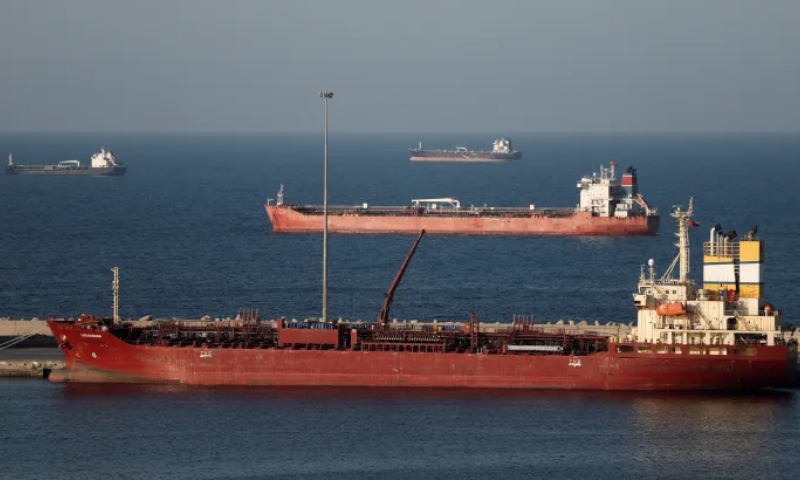
Karachi, March 17, 2026: A Pakistani-flagged tanker has become the latest vessel to navigate the Strait of Hormuz closely along the Iranian coastline, signaling that ships may now need Tehran’s approval for safe passage through the world’s most critical oil chokepoint, Bloomberg reported on Tuesday.
The transit comes as the US-Israeli conflict with Iran enters its third week, with at least 2,000 fatalities reported and no resolution in sight. The Strait of Hormuz, which handles roughly 20% of global oil and liquefied natural gas shipments, remains largely restricted. Attempts by US allies to reopen the waterway have so far been unsuccessful, contributing to rising energy prices and global inflation concerns.
According to vessel-tracking data, the Pakistani tanker Karachi sailed on Sunday through a narrow gap between the Iranian islands of Larak and Qeshm, maintaining open transponder signals, before proceeding along the coast into the Gulf of Oman. On Monday, two bulk carriers followed the same route, openly signaling their transit, while other vessels continue to switch off transponders for safety. Additional traffic included two India-flagged liquefied petroleum gas tankers on Saturday and a Gambia-flagged cargo ship exiting on Tuesday.
Analysts suggest this route may indicate an emerging traffic control system by Iran, allowing passage for approved vessels while potentially restricting or targeting others. Harrison Prétat, deputy director of the Asia Maritime Transparency Initiative at the Centre for Strategic and International Studies, noted that Iran’s apparent approval of specific ships suggests a verification process that could influence navigation patterns in the region.
Since the US and Israeli attacks began, Iran has targeted multiple vessels in and around the strait, leaving some ships stranded and others unable to enter, disrupting energy trade flows. JPMorgan Chase analysts warned that while the strait is not formally closed, transit increasingly depends on political understandings with Tehran.
Under normal conditions, vessels rarely sail so close to Iranian shores, and standard navigation routes typically direct ships away from the coast. Martin Kelly observed that the new pattern may represent the start of Iran’s verification process for transiting vessels between Larak and Qeshm.
While these transits provide some reassurance to oil traders, insurers and banks remain cautious, treating these waters as high-risk and issuing compliance alerts for vessels operating nearby. Despite this limited movement, the number of ships using the route remains a small fraction of usual traffic.
“These limited authorised passages fall far short of restoring typical shipping volumes or energy flows from the region,” Prétat added.