Islamabad, March 30,2026: Pakistan and Kuwait have reaffirmed their longstanding brotherly relations, with fresh assurances of enhanced cooperation in the energy sector, including facilitation for Pakistani vessels importing fuel.
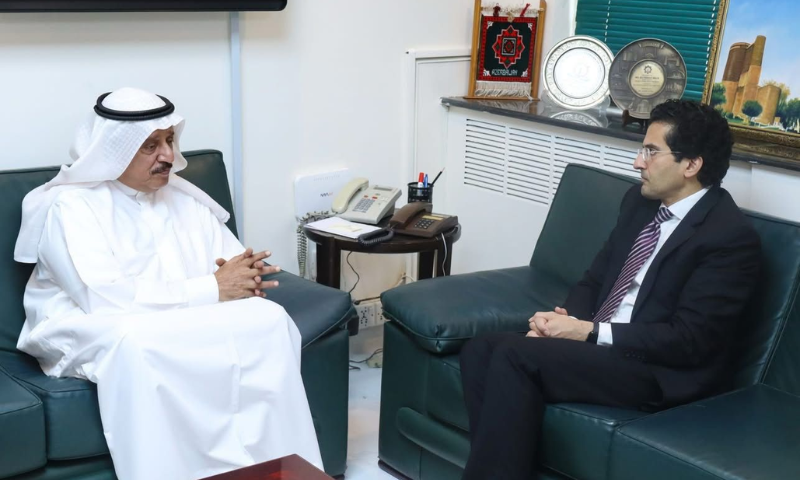
Federal Minister for Petroleum Ali Pervaiz Malik held a meeting with Kuwait’s Ambassador to Pakistan, Nassar Abdulrahman Jasser Almutairi, to discuss bilateral ties, energy collaboration, and regional developments.
During the meeting, the minister expressed gratitude to the Kuwait Petroleum Corporation (KPC) for assuring full facilitation to Pakistani-flagged vessels for the potential import of diesel and jet fuel from Kuwait. He termed the gesture a reflection of the strong and trusted partnership between the two countries.
Ali Pervaiz Malik also acknowledged Kuwait’s consistent support to Pakistan amid global and regional challenges, particularly its contributions toward strengthening Pakistan’s energy security. He requested the ambassador to convey his regards to Kuwait’s Minister of Oil Tariq Suleiman Ahmed Al-Roumi and KPC CEO Sheikh Nawaf Al Sabah.
Highlighting the depth of bilateral ties, the minister said Pakistan and Kuwait share a relationship that spans over five decades, with Pakistan regularly importing petroleum products—especially diesel—from Kuwait, underscoring enduring trust and cooperation.
On regional peace, he reiterated Pakistan’s desire for stability across the Gulf and the wider region, noting that Prime Minister Shehbaz Sharif is actively engaged in efforts to promote peaceful resolutions and facilitate the supply of essential commodities to Gulf Cooperation Council countries where needed.
The Kuwaiti envoy appreciated Pakistan’s constructive role in promoting peace and stability, commending the government, people, and armed forces for advocating dialogue and rejecting the use of force. He reaffirmed Kuwait’s support for Pakistan and expressed confidence in its continued positive role in the region.
Both sides agreed to further strengthen bilateral relations, particularly in the energy domain, and to acmaintain close coordination to expand cooperation in areas of mutual interest.