By Eldor Tulyakov, Executive Director, Development Strategy Centre
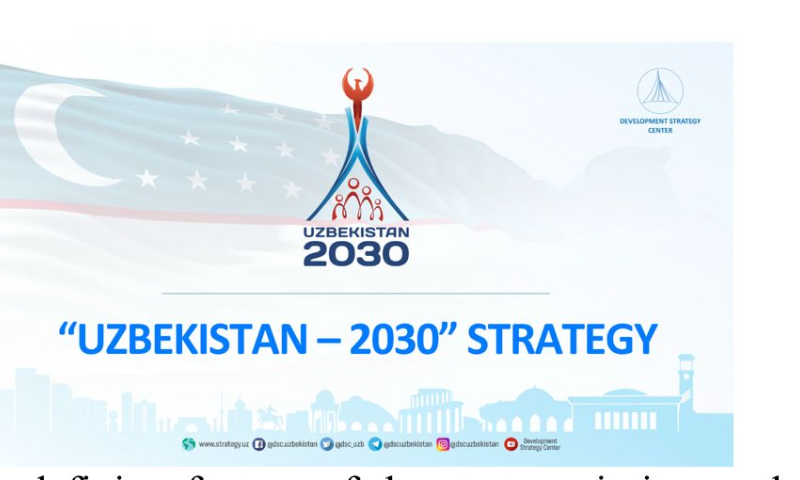
Tashkent, April 3,2026: Uzbekistan has unveiled its updated Uzbekistan–2030 Strategy, marking a major step in the country’s journey toward national reform and development. Officials emphasise that implementing reform requires responsibility, consistency, institutional discipline, and public legitimacy. The government has revised the strategy following extensive public consultations, ensuring that citizens’ voices are reflected in the results-based policy framework. Aligned with international standards and designed to advance the United Nations Sustainable Development Goals, the strategy positions Uzbekistan as an active participant in the global development agenda.
A defining feature of the strategy is its emphasis on measurable implementation. Authorities have established 100 goals to be assessed annually through 2030, each with designated institutions, mechanisms, and financing sources. This approach creates a governance model centred on accountability and transparency. International organisations and development partners will also be able to monitor progress, access reports, and contribute expertise — a move officials say will further enhance transparency and attract external support.
The first major priority of the strategy is to create opportunities for every person to realise their potential, with 44 goals linked to human development. These include targets for expanding access to education, healthcare, employment, and social protection. In education, the government aims to boost pre-school coverage to 80 per cent, achieve universal participation in school-preparation groups, and modernise schools with electronic boards and new-generation textbooks. Teachers’ salaries are set to double, and 500,000 education staff will receive ongoing professional development. Higher and vocational education goals include expanding access, improving graduate employability, and increasing the number of internationally accredited university programs to 200.
Officials have tied human capital development to advances in science and innovation. The strategy calls for raising spending on science to 1 per cent of GDP, increasing the number of research and innovation projects, and propelling Uzbekistan into the top 60 of the Global Innovation Index.
Healthcare reforms aim to increase average life expectancy to 78 years, with health expenditure projected to rise to 5 per cent of GDP. Priorities include reducing premature deaths from major diseases, improving maternal and child health, and expanding digital healthcare services. Broader social goals include increasing women’s representation in leadership and civil service, eliminating extreme poverty, reducing unemployment to 4 per cent, and training 2 million citizens in new skills and foreign languages.
Youth policy is another central pillar, with goals to offer free foreign language instruction to 7 million young people, train 3 million in modern professions using AI tools, and employ 300,000 in the IT sector. The strategy also seeks to boost participation in sports, culture, and the arts nationwide.
The second major priority is sustainable economic growth. The government has set targets to increase GDP from $145 billion to over $240 billion by 2030, and GDP per capita from $3,800 to $5,800. Other economic targets include keeping inflation at 5 per cent, public debt below 50 per cent of GDP, and the budget deficit under 3 per cent.
Plans for industry focus on diversification and value addition, with aims to boost high-tech output, raise car production to 1 million units (including 200,000 electric vehicles), create 1.8 million industrial jobs, and increase industrial value added to $60 billion. The government expects over 400 strategic projects worth $150 billion in foreign investment. Financial reforms will include bank privatisation, expanded credit, and the development of Islamic finance.
The strategy also emphasises the green economy. Officials want renewable energy to account for 54 per cent of total generation and to reduce greenhouse gas emissions by 35 per cent. Transport and logistics improvements will include expanding transit freight, repairing or building roads, and modernising airports. In agriculture, the focus is on boosting productivity and exports, with a target of $10 billion in agricultural exports.
Environmental protection and water saving are also key goals. Uzbekistan plans to improve water-use efficiency by 25 per cent, fully meter drinking water, and expand water-saving technology in agriculture. Other environmental targets include increasing urban greenery, expanding forested land, and creating new green spaces in the Aral Sea region and deserts. The government also aims to improve biodiversity, waste management, air quality, and climate resilience.
Strengthening the rule of law and public service is another core priority. The strategy aims to improve local governance, expand electronic public services, and reduce emergency response times. Legislative reforms will focus on increasing the number of directly applicable laws and reducing the regulatory burden. At the same time, additional measures will promote meritocracy, judicial reform, human rights, anti-corruption, and public oversight.
The strategy also calls for advancing a safe and peace-loving state by promoting an active foreign policy, regional cooperation, support for Uzbeks abroad, and better-managed labour migration. Targets include increasing the number of visa-free destinations for Uzbek citizens, boosting trade turnover with neighbours, expanding diplomatic representation abroad, and advancing WTO accession. Other goals include defence modernisation, disaster preparedness, and strengthening public trust and interethnic harmony.
A formal monitoring system will track implementation through a digital platform, using colour-coded performance categories to flag progress or delays. The Development Strategy Centre will play a key role in monitoring strategic indicators and recommending improvements.
The Uzbekistan–2030 Strategy stands out for combining ambition with a structured, results-oriented approach. Rather than isolated initiatives, the government is pursuing a coordinated, accountable, and long-term transformation agenda. The strategy is expected to guide Uzbekistan’s development and reform efforts well into the next decade.