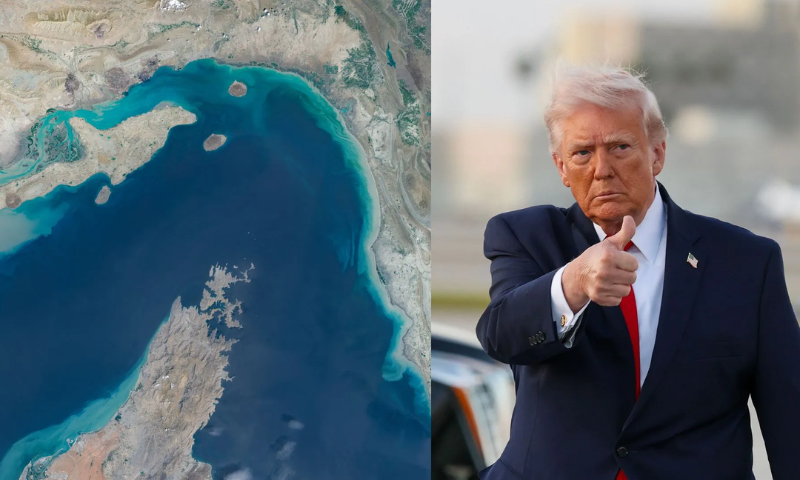
Washington/ Islamabad/ Tehran, April 22, 2026: US President Donald Trump has indefinitely extended the ceasefire with Iran, offering more time for diplomacy while maintaining a sweeping blockade on Iranian ports—underscoring a strategy that combines negotiation with sustained economic and military pressure.
The move came at the last moment as the original two-week truce approached its expiry, averting an immediate return to hostilities but leaving the future of peace talks uncertain. The ceasefire extension followed a request from mediator Pakistan, which has been facilitating dialogue between Washington and Tehran.
Blockade remains key pressure point
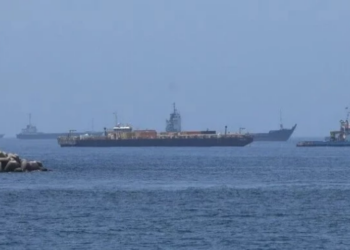
Despite prolonging the truce, Trump made clear that core pressure tactics would remain unchanged. In posts on Truth Social, he insisted that the US naval blockade—targeting Iran’s oil exports and maritime trade—would continue until Tehran submits a formal proposal.
At the centre of the dispute is the Strait of Hormuz, a vital global energy corridor through which nearly a fifth of the world’s oil and gas supplies pass. Trump argued that reopening the waterway prematurely would weaken US leverage, even as he accused Iran of seeking to restore access to protect its daily oil revenues.
US Treasury Secretary Scott Bessent reinforced the administration’s position, warning that tightening restrictions could soon overwhelm Iran’s storage capacity, forcing production shutdowns. He also cautioned that any vessels or entities involved in facilitating Iranian oil trade risk exposure to US sanctions.
Iran silent, tensions simmer
As of early Wednesday, Tehran had not formally responded to the ceasefire extension. Iranian officials had earlier indicated that the truce would expire at midnight, while also warning of potential retaliation against Gulf oil infrastructure if hostilities resumed.
The lack of immediate reaction reflects what analysts describe as a calculated approach by Iran—seeking to maintain strategic ambiguity while increasing bargaining leverage. Experts say the standoff has evolved into a contest of endurance rather than direct military confrontation.
On the ground, however, the impact of the crisis remains severe. Residents in Tehran reported worsening economic conditions despite the pause in fighting, highlighting the humanitarian toll of sanctions and instability.
Diplomatic efforts stall
The extension has also cast uncertainty over ongoing diplomatic efforts. A planned visit by US Vice President JD Vance to Islamabad for the next round of talks was postponed, with Washington indicating it will await Iran’s proposal before proceeding further.
Pakistan’s role as a mediator has drawn international attention. Prime Minister Shehbaz Sharif welcomed the ceasefire extension, reiterating Islamabad’s commitment to facilitating dialogue. Similarly, UN Secretary-General António Guterres expressed support for continued diplomatic engagement to avoid escalation.
However, the absence of a clear negotiating timeline has raised concerns that momentum toward a political settlement could stall.
Military posture unchanged
Even as the ceasefire holds, both sides appear to be maintaining readiness for a potential breakdown. The US Department of Defense confirmed that its forces recently intercepted and boarded a vessel suspected of violating sanctions, signalling continued enforcement of maritime restrictions.
Meanwhile, Iran’s Revolutionary Guards Navy detained two ships for alleged maritime violations, accusing them of operating without authorisation and manipulating navigation systems—moves that further heighten tensions in regional waters.
Both Washington and Tehran have traded accusations of ceasefire violations, reinforcing the fragility of the truce.
Regional spillover continues
The broader Middle East conflict linked to the US-Iran standoff remains active on multiple fronts. In a related development, Israel and Lebanon are set to hold fresh talks in Washington later this week, despite having no formal diplomatic relations.
A separate 10-day ceasefire involving Hezbollah has done little to halt sporadic violence. Israeli strikes in Lebanon have caused significant casualties, while Hezbollah has continued retaliatory actions, including recent rocket fire into northern Israel.
Markets react, outlook uncertain
Despite the uncertainty, global markets showed cautious optimism, with stocks rising amid hopes that the ceasefire extension could pave the way for a broader agreement. However, analysts warn that the situation remains highly volatile, with risks of escalation still significant.
The current impasse highlights a delicate balance: Washington is seeking to extract concessions through sustained pressure, while Tehran appears intent on negotiating from a position of resilience.
For now, the ceasefire offers a narrow window for diplomacy—but without concrete progress, that window could close as quickly as it opened.