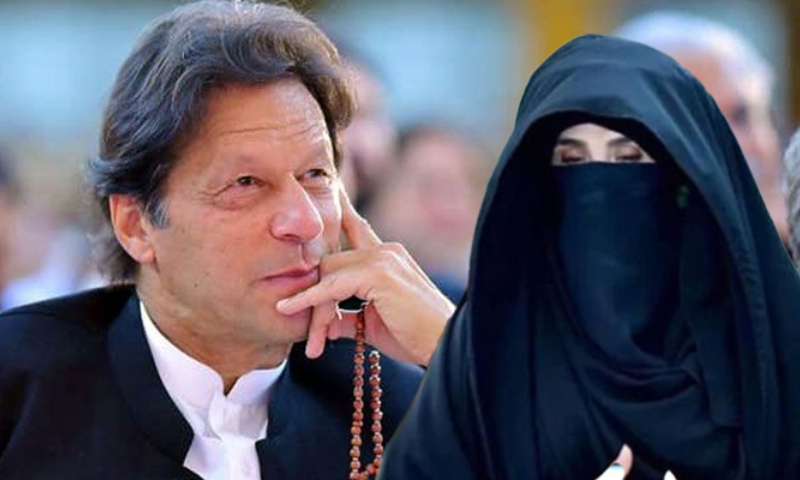
Islamabad, April 29, 2026: The Islamabad High Court (IHC) on Wednesday fixed for hearing the appeals filed by former prime minister Imran Khan and his spouse Bushra Bibi against their convictions in the £190 million corruption reference, with proceedings scheduled for April 30.
According to a supplementary cause list issued by the registrar’s office, a division bench comprising Chief Justice Sardar Muhammad Sarfraz Dogar and Justice Muhammad Asif will take up Criminal Appeal Nos. 63/2025 and 64/2025, filed by Imran Khan and Bushra Bibi, respectively.
Both appeals challenge their convictions under the Pakistan Penal Code, which carry sentences exceeding seven years. The cause list also noted that several miscellaneous applications, including those seeking suspension of sentence, remain pending before the court.
The development comes a day after the same bench, while hearing separate petitions for suspension of sentence in the case, indicated a structured timeline for concluding arguments in the main appeals.
Earlier this month, Chief Justice Dogar observed that if arguments begin promptly, the court could decide the matter within seven days. He also directed counsel Salman Safdar to coordinate closely and assist the court, noting that hearings could be scheduled twice a week.
Imran Khan, who has been incarcerated since August 5, 2023, is currently serving a 14-year sentence at Adiala Jail in Rawalpindi in connection with the £190 million case, also known as the Al-Qadir Trust case.
An accountability court in Islamabad had sentenced Imran Khan and Bushra Bibi to 14 and seven years in prison, respectively, on January 17, 2025. Both subsequently challenged their convictions before the IHC.
The case alleges that the couple received billions of rupees and land worth hundreds of kanals from Bahria Town Ltd in exchange for facilitating the legalisation of Rs50 billion returned to Pakistan by the United Kingdom during the Pakistan Tehreek-e-Insaf (PTI) government.
The court is now set to begin substantive proceedings in what remains one of the country’s most high-profile corruption cases.