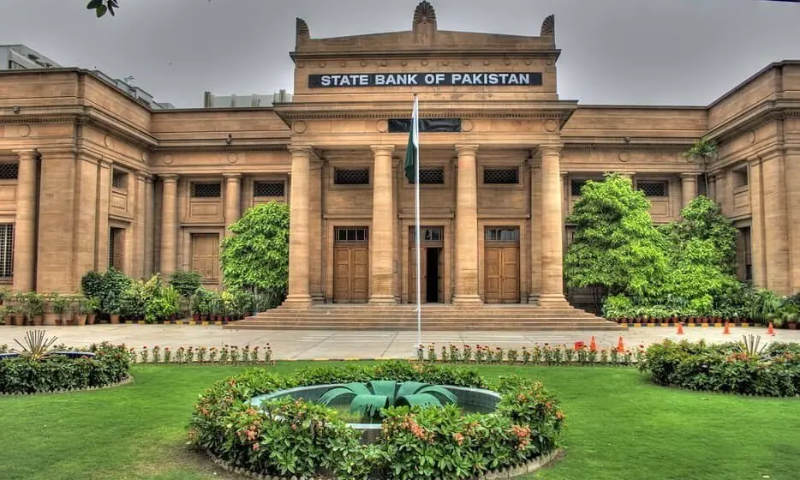
Karachi, May 12, 2026: The State Bank of Pakistan (SBP) on Tuesday warned that the ongoing war in the Middle East poses significant risks to Pakistan’s economic outlook despite notable improvements in macroeconomic stability during the first half of fiscal year 2025-26.
The central bank released its Half Year Report 2025-26: The State of Pakistan’s Economy, highlighting that economic conditions improved considerably during the first six months of the fiscal year amid prudent monetary and fiscal policies, structural reforms, favorable commodity prices, and support from the International Monetary Fund (IMF) programme.
However, the report cautioned that escalating regional tensions and disruptions linked to the Middle East conflict could adversely impact inflation, trade flows, remittances, and overall economic activity.
According to the SBP, economic activity maintained momentum through February 2026 before the regional conflict began affecting output and business sentiment.
The report stated that high-frequency indicators including the Purchasing Managers’ Index (PMI), large-scale manufacturing (LSM), and construction activity suggested a slowdown following the outbreak of the conflict.
As a result, the SBP now expects Pakistan’s real GDP growth to remain near the lower bound of its earlier forecast range of 3.75% to 4.75% for FY26.
Despite concerns over higher commodity prices and external uncertainty, the current account deficit is still projected to remain within the earlier estimated range of 0-1% of GDP.
The central bank warned that rising global oil prices and increases in commodity costs are likely to keep National Consumer Price Index (NCPI) inflation above the medium-term target range of 5-7% for most of FY27.
However, the report noted that average inflation eased significantly during H1-FY26, with NCPI inflation averaging 5.2%, nearly two percentage points lower than the same period last year.
SBP attributed this moderation to a prudent policy mix, stability in the exchange rate, lower international commodity prices, and reductions in electricity tariffs.
The report highlighted major improvements in Pakistan’s fiscal indicators, stating that the country recorded a fiscal surplus in the first half of FY26 for the first time since FY2002.
According to the SBP, lower interest payments and fiscal consolidation measures played a key role in improving the fiscal balance, while the primary surplus remained stable compared to last year.
The report stated that imports increased in H1-FY26 due to stronger domestic economic activity and higher demand volumes.
At the same time, export earnings declined mainly because of a significant drop in rice exports.
Nevertheless, rising workers’ remittances continued to support the external sector and financed much of the trade and services deficits, helping keep the current account gap manageable.
The SBP report also included a dedicated chapter on climate change and its impact on Pakistan’s economy.
It noted that although Pakistan contributes minimally to global greenhouse gas emissions, it remains among the countries most vulnerable to climate-related disasters and ranks as the 15th-most affected country by climate events.
The report warned that Pakistan faces low preparedness levels for dealing with climate risks, which could further threaten long-term economic stability.
The central bank also highlighted Pakistan’s relatively high emissions intensity of GDP, reflecting structural inefficiencies and dependence on carbon-intensive growth.
The SBP stressed that Pakistan’s transition toward sustainable long-term growth requires deep structural reforms aimed at addressing chronic issues such as low savings and investment rates, weak competitiveness, declining exports, subdued foreign direct investment, and a persistently low tax-to-GDP ratio.
The report further warned that an extended Middle East conflict could pose serious medium-term risks to Pakistan’s economy, particularly through disruptions in energy markets, trade routes, and regional financial flows.