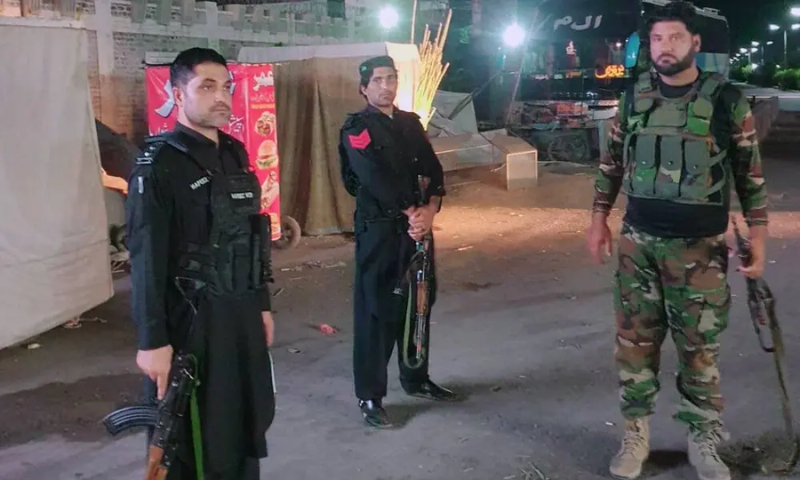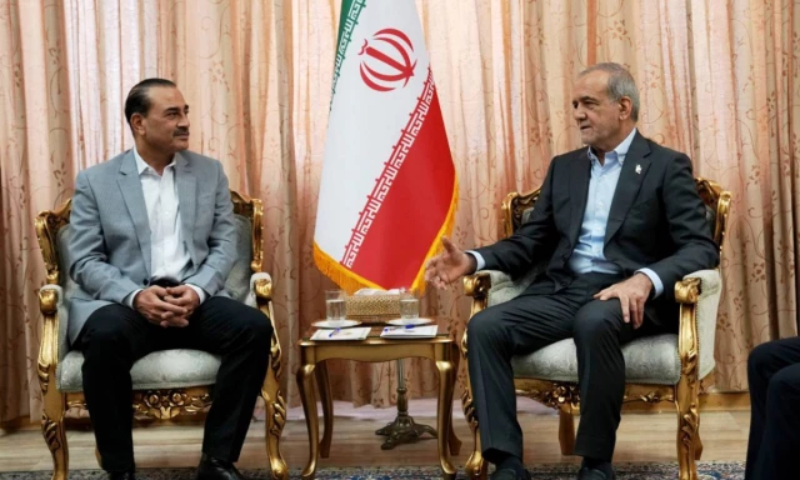
Tehran/Islamabad, May 23, 2026: Pakistan’s Chief of Army Staff and Chief of Defence Forces, Asim Munir, held a series of high-level meetings in Tehran as Pakistan intensified diplomatic efforts aimed at reducing tensions between Iran and the United States.
According to Iranian state media and Press TV, Field Marshal Asim Munir met Iranian President Masoud Pezeshkian in Tehran for talks focused on advancing diplomatic initiatives and regional stability.
Reuters also reported that Iran’s Parliament Speaker Mohammad Bagher Ghalibaf and senior Iranian officials met the Pakistani army chief as part of ongoing diplomatic engagement over escalating regional tensions.
Earlier, the Pakistani military chief held late-night talks with Iranian Foreign Minister Abbas Araghchi in Tehran. Discussions reportedly centered on diplomatic initiatives aimed at preventing further escalation and ending the ongoing conflict involving Iran.
The Inter-Services Public Relations (ISPR) had earlier confirmed that Field Marshal Asim Munir arrived in Tehran as part of Pakistan’s mediation efforts. He was received by Iranian Interior Minister Eskandar Momeni, while Pakistan’s Interior Minister Mohsin Naqvi was also present at the reception.
Iran blames US policies for diplomatic deadlock
Meanwhile, Iranian Foreign Minister Abbas Araghchi blamed repeated US policy reversals and military actions for difficulties in the Pakistan-mediated negotiations between Tehran and Washington.
During a telephone conversation with António Guterres, Araghchi said Washington’s alleged failure to uphold commitments, along with military actions against Iran and disagreements over Tehran’s nuclear and missile programmes, had complicated negotiations.
Despite what he described as “deep mistrust” toward the United States, Araghchi said Iran had re-entered diplomatic talks in a “serious and responsible” manner to pursue a fair outcome.
Guterres reiterated opposition to the use of force against the sovereignty and territorial integrity of states and stressed the importance of diplomacy and adherence to the UN Charter.
Separately, Iranian Foreign Ministry spokesman Esmaeil Baghaei said it was premature to conclude that a deal between Iran and the United States was imminent, although he acknowledged that recent visits by senior Pakistani officials suggested negotiations may have entered a decisive phase.
US considering military options as talks continue
Amid continuing negotiations, CBS News reported that the administration of US President Donald Trump was considering possible renewed military action against Iran, although no final decision had been taken.
According to the report, US military and intelligence personnel have altered schedules as contingency planning continues. Defence officials are also reviewing personnel recall lists at overseas bases amid concerns over potential escalation.
White House spokesperson Anna Kelly said Washington remained firm that Iran must not acquire nuclear weapons and warned that the US was prepared for “all possible scenarios” if diplomacy failed.
Iran’s Islamic Revolutionary Guard Corps (IRGC) earlier warned that any future attacks by the US or Israel could widen the conflict beyond the region.
Regional diplomacy intensifies
Regional diplomatic engagement also accelerated as Turkish Foreign Minister Hakan Fidan held separate telephone conversations with Iranian Foreign Minister Abbas Araghchi, Qatar’s Prime Minister and Foreign Minister Mohammed bin Abdulrahman Al Thani, and Pakistani mediators regarding the latest developments in Iran-US talks.
Diplomatic sources said discussions focused on the current state of negotiations and efforts to preserve the fragile ceasefire brokered earlier through Pakistani mediation.
The ceasefire, which took effect on April 8 after weeks of escalating conflict, has largely held despite continuing tensions over Iran’s enriched uranium stockpile and control of the Strait of Hormuz — a critical global energy shipping route.
US Secretary of State Marco Rubio acknowledged that “some progress” had been made in negotiations but cautioned that significant differences remained unresolved.
Iranian media also reported that Pakistani Interior Minister Mohsin Naqvi held another round of talks with Abbas Araghchi in Tehran following the delivery of the latest US proposal through Pakistan.
Despite intensified mediation efforts, Iranian officials maintained that diplomacy would require more time and warned that major disagreements still persisted between Tehran and Washington.