By Ma Ruiqian
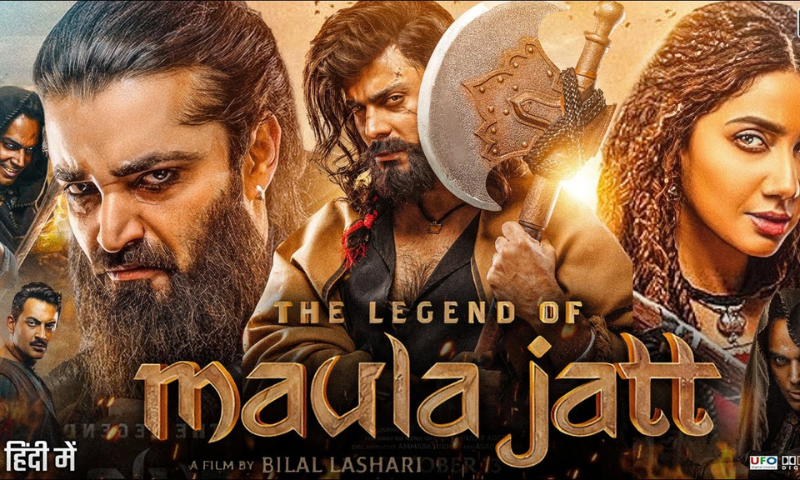
Beijing, June 26,2026: After hearing that The Legend of Maula Jatt, Pakistan’s highest-grossing film, had recently premiered in China, a Pakistani friend strongly recommended it to me. As I took my seat in a cinema in Beijing’s Xidan district, I did not expect this Pakistani box-office sensation to leave me with such a strong sense of both novelty and resonance.
The film revolves around a decades-long family feud in Punjab. The story follows Maula Jatt, a fierce prizefighter haunted by childhood trauma after a rival clan massacres his family.
When he uncovers the truth about his lineage and reclaims his ancestral weapon, he embarks on a quest for revenge against Noori Natt, the clan’s most feared warrior, ultimately leading to a deadly final confrontation.
On screen, a majestic yet haunting soundtrack accompanies a tale of vengeance and honor unfolding across the vast plains of Punjab.
The Punjabi-language dialogue, poetic recitations, traditional costumes and deeply rooted family culture immerse me in a world that feels at once unfamiliar and authentic.
As the story builds toward its climax, Maula confronts his nemesis wielding the Gandasa, the traditional axe once carried by his father.
The intense action sequences deliver a raw sense of power while evoking the spirit of Chinese martial arts films familiar to me.
Themes of family destiny, brotherhood and heroic growth inevitably bring to mind the chivalric values often found in Eastern storytelling.
Throughout the film’s more than two-hour runtime, I found myself on the edge of my seat, as both heroes and villains are rendered with remarkable depth and charisma.
As the end credits rolled and the lights slowly came up, I overheard two students seated nearby discussing the film. “The fight scenes were fantastic.
It felt a bit like watching a Chinese martial arts movie,” one said. “It was my first time seeing Pakistani culture presented like this. Now I want to learn more about its history and traditions,” the other said.
Their conversation made me realize that the significance of The Legend of Maula Jatt entering Chinese cinemas goes far beyond the film itself.
It is becoming a new window through which more Chinese audiences can discover Pakistan while also reflecting the growing depth of cultural exchanges between the two countries.
For many years, when Chinese people thought of Pakistan, what often came to mind first were the “iron-clad” friendship between the two countries and the China-Pakistan Economic Corridor. While these remain important dimensions of bilateral relations, cinema reveals another side of Pakistan — one that is more vivid, tangible and deeply human.
Through film, Chinese audiences gain a direct glimpse into Punjab’s distinctive language and culture, strong family traditions, traditional attire and folk customs, as well as ordinary people’s understanding of dignity, responsibility and honor.
In fact, the film’s record-breaking success in Pakistan cannot be attributed solely to its impressive production quality. Its emphasis on family honor, loyalty among brothers, resistance to oppression, and the protection of land and tradition is deeply rooted in Pakistani cultural values. At the same time, these themes resonate strongly with Chinese audiences, who are familiar with similar notions of loyalty, righteousness and devotion to family and country. One line from the film is particularly memorable: “Begging and cowardice cannot make a person stand tall. Only by proving one’s worth can one earn dignity.”
Interestingly, this shared resonance of values also brings to mind Ne Zha 2, the Chinese animated blockbuster that was released in Pakistan in late October last year. Although the two films emerge from vastly different cultural traditions and historical backgrounds, Ne Zha 2’s themes of defying fate, protecting loved ones and companions, and pursuing self-worth have likewise touched many Pakistani viewers. Together, the two films demonstrate a simple truth: What truly transcends national borders is people’s shared understanding of courage, responsibility, justice and dignity.
Film cooperation is gradually emerging as a new growth area in China-Pakistan cultural exchanges. In recent years, the two countries have expanded cooperation in the film sector, with several productions, including the Pakistani blockbuster Parwaaz Hai Junoon and Batie Girl, the first China-Pakistan co-production, being screened in Chinese theaters and receiving positive responses from audiences.
Looking ahead, Pakistan’s moviegoing market offers significant opportunities for Chinese films to reach new audiences and enrich local viewing choices. At the same time, introducing more Pakistani films into China aligns with the growing demand among Chinese audiences for diverse international content and a deeper understanding of different cultures.
As bilateral film cooperation mechanisms continue to evolve, the two countries are expected to expand collaboration not only in film distribution and exhibition, but also in co-productions, technological exchanges and talent development. Such cooperation can create new opportunities for the film industry and, more importantly, bring the peoples of the two countries closer together, adding richer cultural dimensions to the China-Pakistan all-weather strategic cooperative partnership.
From The Legend of Maula Jatt to Ne Zha 2, what crosses borders is not merely films or box-office figures, but also the growing mutual understanding and appreciation between the Chinese and Pakistani peoples. As more outstanding films make their way in both directions, a new chapter in China-Pakistan friendship is being written both on and beyond the silver screen.
The author is reporter of the opinion desk with the Global Times