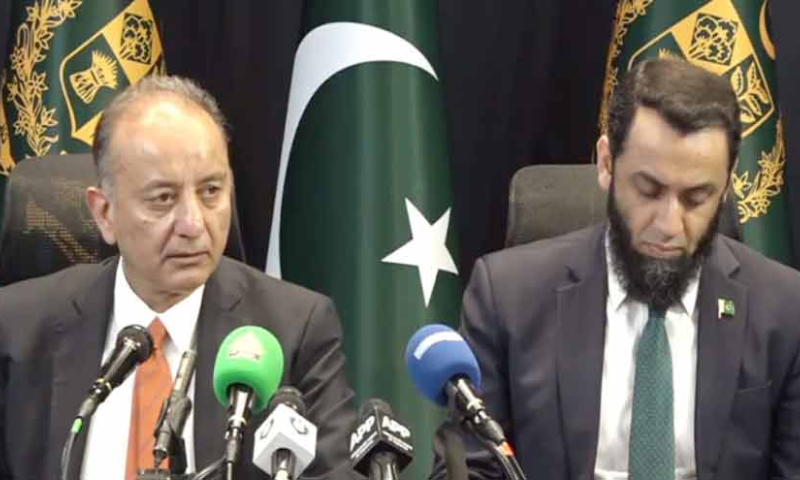
Islamabad, June 29, 2026: Federal Minister for Information and Broadcasting Attaullah Tarar on Monday asserted that the Indus Waters Treaty (IWT) between Pakistan and India remains legally binding and cannot be unilaterally revoked, suspended or amended, reaffirming that Pakistan’s rights to the waters of the Indus River system are protected under international law.
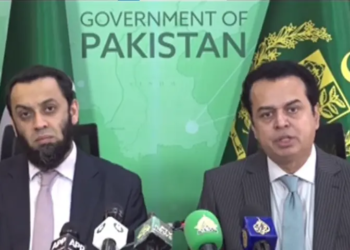
Addressing a joint press conference in Islamabad alongside Federal Minister for Climate Change and Environmental Coordination Musadik Malik, Tarar said Pakistan’s legal position on the treaty had received broad international support despite India’s attempt to place the agreement in abeyance.
“The Indus Waters Treaty cannot be unilaterally revoked, abolished or amended,” Tarar said, adding that the agreement continues to remain in force and provides Pakistan with legally enforceable rights over the allocated rivers.
He said the treaty contains a clear legal framework that continues to be implemented and noted that Prime Minister Shehbaz Sharif and Chief of Army Staff Field Marshal Syed Asim Munir have consistently described water as Pakistan’s “lifeline” and “red line.”
“Our people have a right to water through a legally enforceable treaty accepted by both countries,” he said, adding that India’s position had failed to gain international acceptance.
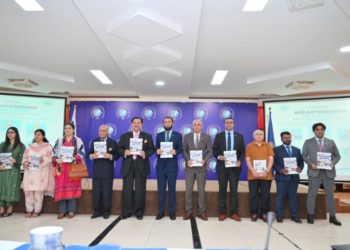
Tarar announced that an international seminar on the Indus Waters Treaty would be held in Islamabad on Tuesday, bringing together legal experts and water specialists from around the world to discuss Pakistan’s rights under the agreement and raise awareness of the legal and humanitarian dimensions of the issue.
He maintained that Pakistan had achieved an important success in the international narrative, saying legal experts and international forums had endorsed Islamabad’s interpretation of the treaty.
Speaking on the occasion, Climate Change Minister Musadik Malik said Pakistan had consistently raised the Indus Waters Treaty issue at various international forums over the past two months, adding that the country’s position had also been upheld by the Permanent Court of Arbitration.
Malik said irregular river flows were influenced not only by climate change but also by India’s stated intention to restrict water reaching Pakistan.
“There is a tap being controlled by the prime minister of a neighbouring country, who says he will not let even a drop of water flow into Pakistan,” he remarked.
He warned that any attempt to manipulate water flows threatened Pakistan’s food security, employment and economic stability, noting that 40 to 50 per cent of the country’s population depended on agriculture while the sector contributed around one-quarter of the national economy.
He said Pakistan had already made it clear that any attempt to deprive the country of its water would have serious consequences, while stressing that the issue also raised broader questions of international justice.
“Does every upper riparian now have the right to stop the flow of water to the lower riparian?” Malik asked, adding that even countries without formal treaties generally respected international water-sharing principles, whereas Pakistan and India were bound by a legally valid agreement.
The minister said Tuesday’s seminar would examine the legal, humanitarian and international implications of India’s actions and discuss whether downstream populations around the world have a fundamental right to access shared water resources.
Responding to a question on domestic water management, Malik said he expected political consensus on the construction of dams and other water storage infrastructure.
“We should at least agree that we need to regulate water flows and we need dams. God willing, there will be no dispute with any political party on this issue,” he said.
The Indus Waters Treaty, brokered by the World Bank in 1960, allocates the eastern rivers—Ravi, Beas and Sutlej—to India, while granting Pakistan primary rights over the western rivers—Indus, Jhelum and Chenab. Although India announced in 2025 that it was placing the treaty in abeyance following tensions between the two countries, Pakistan maintains that the agreement remains legally binding and that international legal decisions have reinforced its position.