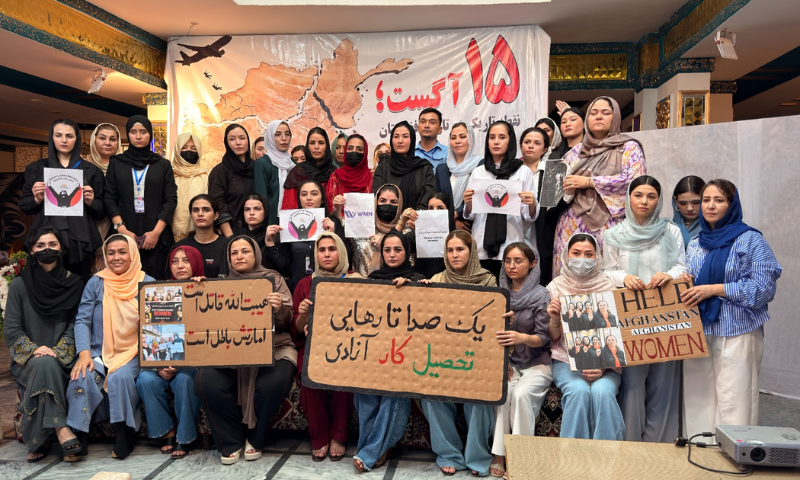
Kabul, August 15, 2026: A coalition of Afghan protest movements, civil society organisations, human rights defenders and freedom advocates has condemned five years of Taliban rule, describing August 15 as the “Black Day of Afghanistan” and calling for stronger international action to protect human rights and hold perpetrators accountable.
In a resolution issued to mark the fifth anniversary of the Taliban’s return to power, the groups accused the Taliban authorities of widespread repression, discrimination and human rights violations, with women and girls bearing the brunt of restrictions on their fundamental rights.
The signatories said August 15 marked the beginning of what they described as one of the darkest periods in Afghanistan’s contemporary history, alleging that the Taliban’s return was followed by targeted killings, arbitrary arrests, torture, enforced disappearances and unlawful detention.
They further alleged that millions of Afghan women and girls had been deprived of basic rights and extensively restricted from education, employment and participation in public life.
The resolution also condemned restrictions on freedom of expression and alleged that journalists had faced threats, arrest and torture, while civil society activists and protesters had been detained and intimidated.
Describing Afghanistan as a country where fear and repression had become instruments of governance, the groups called for an end to what they termed the international community’s policy of silence, appeasement and ineffective engagement with the Taliban.
The organisations urged the United Nations, governments and international institutions to stand with the Afghan people and called for the recognition of what they described as “gender apartheid” as a crime under international law.
They also called on governments to refrain from forcibly deporting Afghan asylum seekers to countries where they could face danger, while urging greater protection and practical support for human rights defenders, women protesters, journalists and activists at risk.
The groups appealed to international civil society organisations, media outlets, protest movements and freedom advocates to continue highlighting the situation in Afghanistan and ensure that alleged abuses are not forgotten.
The resolution also criticised what the organisers described as international double standards and inaction, arguing that the lack of effective measures had contributed to impunity and the continuation of human rights violations.
The signatories reaffirmed their commitment to what they described as a continuing struggle for freedom, justice and equality in Afghanistan.
“The women and people of Afghanistan will never surrender to tyranny, extremism and exclusion,” the resolution said, declaring that the “voice of freedom cannot be silenced” and expressing hope that Afghanistan would once again become a country based on justice, dignity and freedom.
The resolution was endorsed by the Women’s Movement Network, Afghan Women’s Justice Movement, Afghanistan Women’s Freedom Lantern Movement, Women’s Window of Hope Movement, Afghanistan Women’s Path to Freedom Movement, Rozna-ye Omid Social Organization and Afghanistan Freedom Forum.
The statement concluded with the slogans: “Long live freedom. Death to tyranny and extremism. A free Afghanistan is the right of the people of Afghanistan.”