Bishkek, September 1, 2026: Iran on Tuesday warned that it would respond to any further US attacks while signalling readiness to reciprocate if Washington honours its commitments under a June interim agreement aimed at ending the conflict, as tensions remained high following the first direct exchange of attacks between the two sides since late July.
The renewed confrontation has raised fresh concerns over global energy supplies, with oil prices climbing after reports that two tankers came under fire while leaving the Strait of Hormuz, a vital waterway through which a significant share of the world’s oil supplies normally passes.
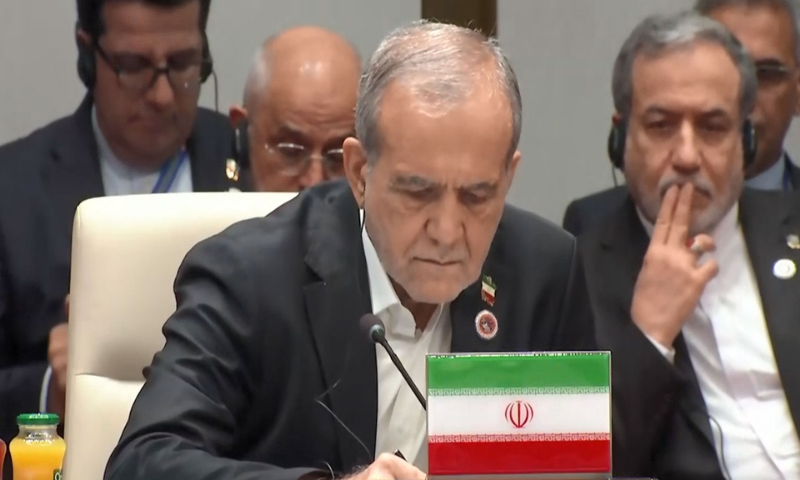
Iranian President Masoud Pezeshkian said Tehran was prepared to reciprocate immediately if the United States returned to its commitments under the June Memorandum of Understanding (MoU), which had declared an end to hostilities and provided a framework for broader negotiations.
“I am stating clearly that if the US returns to its commitments under the MoU, the Islamic Republic of Iran will immediately reciprocate,” Pezeshkian said while addressing the Shanghai Cooperation Organisation (SCO) summit in Bishkek.
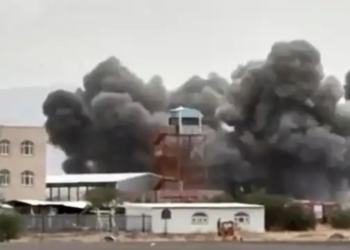
The statement came two days after the United States launched strikes on Iran’s Larak Island. Iran subsequently fired ballistic missiles at two US military bases in Jordan in what Tehran described as retaliation for the American attack.
Although both sides have indicated that they do not want a return to full-scale war, the latest exchange has highlighted the fragility of the truce and the risk that the conflict could once again escalate into sustained military confrontation.
A senior Iranian source described the latest exchange as a “limited and contained confrontation”, but warned that Tehran would respond harshly if attacked again.
US President Donald Trump, meanwhile, threatened further action against Iran. A Fox News reporter quoted Trump as saying the United States would “hit them hard” and that there would be a response, although Trump separately told reporters that the renewed strikes did not amount to a return to full-scale war.
The Strait of Hormuz has emerged as a major flashpoint in the conflict, with Tehran repeatedly linking the reopening of the strategic waterway to Washington’s implementation of the June MoU.
The agreement declared an end to the fighting but left several major disputes unresolved and provided for a 60-day period of negotiations. That period has now expired without a broader settlement.
Pezeshkian said on Monday that war was in nobody’s interest and that Tehran remained open to a negotiated solution.
However, there has been no indication of a breakthrough, while the latest military exchanges have revived fears of prolonged disruption to energy supplies from the Gulf.
Brent crude futures rose another 1.3% on Tuesday, adding to gains following the latest escalation.
“The tit-for-tat missile exchanges between the US and Iran bring validation to those who believe that even if not a ‘forever war’, this conflict will run and run,” said PVM analyst John Evans.
Concerns intensified after two supertankers carrying Saudi oil were reportedly struck by unidentified projectiles within minutes of each other while travelling out of the Strait of Hormuz on Monday night, according to shipping intelligence and vessel-tracking firms.
The incidents have added to concerns over the safety of commercial shipping through the waterway, which has already been severely disrupted by the conflict.
The latest military confrontation follows months in which Washington has increasingly relied on sanctions and other economic measures rather than direct military action to pressure Tehran.
The conflict began with US and Israeli strikes on Iran on February 28 and has since killed thousands of people, primarily in Iran and Lebanon.
US Treasury Secretary Scott Bessent has warned that countries continuing to conduct business with Iran could face American sanctions. He has also indicated that Washington could introduce secondary sanctions on a weekly basis, initially targeting financial institutions.
Iran’s government has meanwhile sought to reassure markets that it retains sufficient financial resources to withstand growing economic pressure.
Central Bank Governor Abdolnaser Hemmati said Tuesday that Iran had adequate foreign currency reserves and that the central bank was prepared to inject up to $2 billion into the foreign exchange market to stabilise the currency.
“I am telling the president of the United States: Iran has (foreign) currency and it has enough,” Hemmati said, according to Iran’s semi-official Tasnim news agency.
His remarks appeared aimed partly at calming concerns over Iran’s deteriorating economic conditions, after senior officials acknowledged growing pressure on the country’s economy.
The Iranian rial fell to a record low in August, crossing the psychological threshold of two million rials to the US dollar, while annual inflation reached 66% in July.
The latest escalation comes as diplomatic efforts to end the conflict remain stalled.
The June MoU was intended to establish a framework for ending hostilities and moving towards a comprehensive settlement, but the subsequent 60-day negotiation period failed to produce a final agreement.
Iran has maintained that it is willing to pursue diplomacy, while insisting that the United States must first honour its commitments.
With both sides now warning of retaliation and the Strait of Hormuz remaining effectively closed to normal commercial traffic, international concerns are growing that the conflict could once again shift from economic confrontation to direct military escalation.
For global markets, the greatest immediate concern remains the security of the Strait of Hormuz, as any prolonged disruption could further raise oil prices, increase shipping costs and intensify inflationary pressures worldwide.