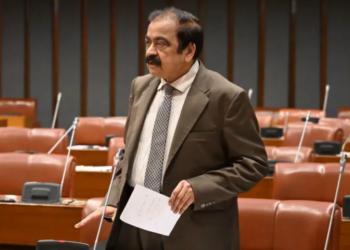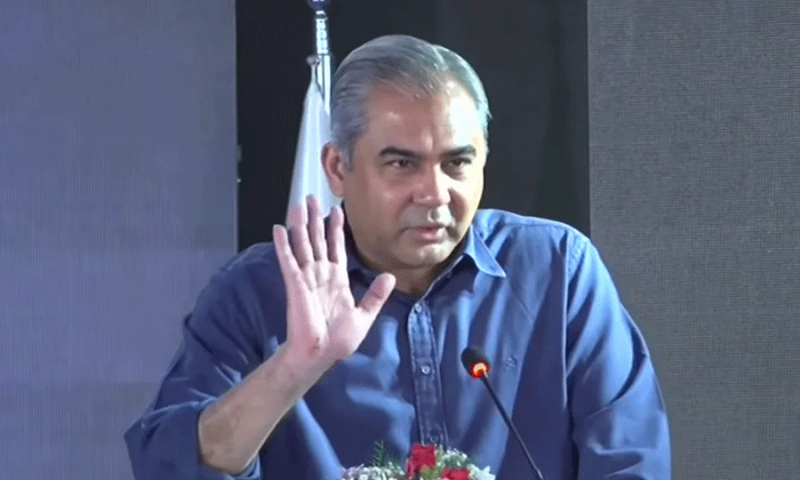
Lahore, September 5, 2026: Interior Minister Mohsin Naqvi on Saturday said any decision to create new administrative units in Pakistan should be based on the will of the people, calling a “system reset” necessary to address longstanding governance shortcomings.
“Reset does not mean breaking down the system. Reset means making wrongs right,” Naqvi said, clarifying that his earlier remarks about the collapse of the system were not directed at any particular political party.
“If a company does not work, deliberations are held on how to make it work,” he added.
Naqvi said work on creating new administrative units would only move forward if it had public support, stressing that any such reform would have to be undertaken within the Constitution and law and through political consensus.
“The decision on establishing new administrative units should be made according to the will of the people of Pakistan,” he said.
He said administrative units should be created where the public supported the move and the existing structure should remain unchanged where there was opposition.
The interior minister said Pakistan needed to review its governing system to address structural shortcomings and improve service delivery, noting that the administrative structure had lost efficiency.
He said Pakistan had produced numerous plans during its 79-year history but had yet to achieve the desired results for the public.
“The purpose of resetting is to make it better,” Naqvi said, adding that governments and policies continued to change but the key question was how much they delivered.
“We keep making plans, but the most important thing is how much we deliver,” he said.
Naqvi said the shortcomings could not be attributed to any single government, describing them as the outcome of 79 years of governance.
Islamabad as a province
The interior minister reiterated his support for making Islamabad a province, arguing that the federal capital needed a stronger fiscal position.
He claimed that Islamabad did not receive an allocation under the National Finance Commission (NFC) award and did not receive a share from the country’s overall budget in the manner provinces did.
“If a province is to be made, Islamabad is such a case that we should all say yes to it,” he said.
Naqvi maintained that his position on administrative restructuring would not change depending on whether he remained in office.
“Whether I remain in this job or not, I will not back down from this,” he said.
He argued that it was difficult for a single bureaucratic structure to effectively make decisions for populations running into tens or hundreds of millions and questioned whether such a large system could be managed efficiently from one city.
He also cautioned that a funding system in which larger population figures result in greater allocations could create incentives for inaccurate population counts.
No ethnicity-based provinces
Naqvi stressed that new administrative units should not be created on ethnic or communal grounds but should instead be aimed at improving governance and bringing administrative powers closer to the people.
He said the creation of southern or northern Punjab would not diminish Punjabi identity, just as administrative restructuring in Sindh would not take away Sindhi identity.
“Quaid-i-Azam had made it clear that we are all Pakistanis,” he said, adding that national identity should take precedence over ethnic identities.
Naqvi said administrative restructuring was not intended to increase the number of governments but to improve governance.
“The existing infrastructure will remain in place; only powers will be transferred to the lower level,” he said.
He called on parliament and the media to contribute to the debate, stressing that no map or plan for new administrative units should be finalised in advance.
He said no proposal should be predetermined and that any decision taken in the national interest should ultimately be accepted by all stakeholders.
PPP rejects proposals on Sindh
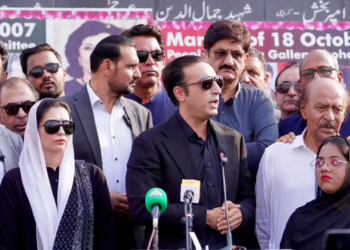
The Pakistan Peoples Party (PPP), however, strongly rejected Naqvi’s latest remarks concerning new administrative units, terming the federal minister’s statements “unconstitutional interference” in the constitutional status of Sindh.
The PPP expressed its position during a meeting chaired by Sindh chapter President Nisar Khuhro, according to a statement issued by the party.
The meeting condemned the remarks despite a resolution recently passed by the Sindh Assembly rejecting any proposal, plan or constitutional arrangement aimed at dividing the province, altering its territorial boundaries or creating new administrative units.
The PPP meeting urged Prime Minister Shehbaz Sharif to take notice of the statements and ensure that such remarks were stopped.
The Bilawal Bhutto Zardari-led PPP is a key coalition partner of the PML-N government at the Centre.
Sindh Local Government Minister Nasir Hussain Shah separately said administrative reforms and the reorganisation of provinces were two different matters.
“Provinces are not merely administrative units; they have their history, identity, culture and language,” Shah said.
He argued that if the objective was to bring administrative powers closer to the people, it could be achieved within the existing constitutional framework.
Districts, divisions and tehsils could be created and local government institutions empowered without altering provincial boundaries, he said.
Referring to the Sindh Assembly resolution, Shah said the people of Sindh had already expressed a clear position on their land, history and identity.
“The question of Sindh’s division is not merely an administrative proposal,” he said.
Shah said the provincial government was prepared to discuss positive proposals for administrative reforms but stressed that there would be “no compromise on the unity of Sindh”.
He urged Naqvi to understand the sensitivity and importance of the issue.