Karachi, October 18,2026: Pakistan Peoples Party (PPP) Chairman Bilawal Bhutto-Zardari said on Sunday that the emergency and governor’s rule imposed in Khyber Pakhtunkhwa could be withdrawn if the opposition agreed to a joint strategy to combat terrorism.
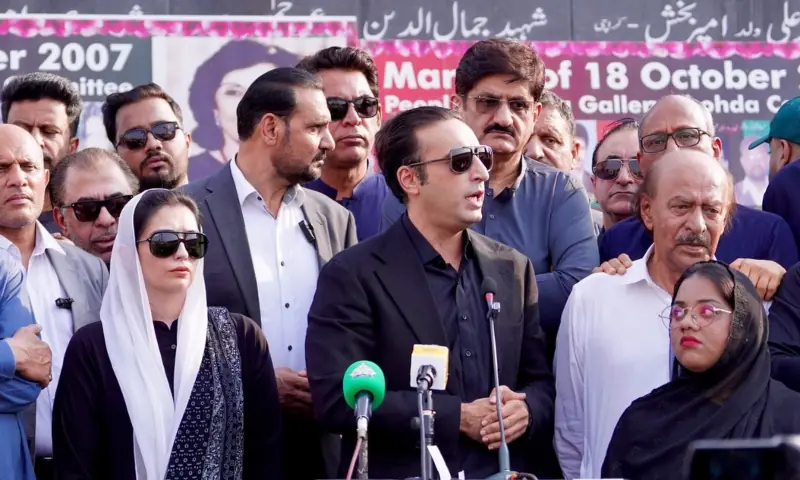
Speaking to the media during a visit to the Karsaz Monument on the 19th anniversary of the Karsaz bombing, Bilawal urged the Pakistan Tehreek-e-Insaf (PTI)-led opposition to engage with the federal government and other political parties to develop a unified counterterrorism policy.
“If they really want to fight terrorists, and if they want the emergency and governor’s rule in KP to end, then they should engage with the federal government and politicians and talk about a policy regarding a united fight against terrorism,” he said.
Bilawal added that if the opposition was willing to fight terrorism and agree on a joint plan, the emergency could also be brought to an end.
“If we can create such an environment, we will be in a better position to fight terrorists,” he said.
The PPP chairman’s remarks came a week after the federal government imposed emergency and governor’s rule in KP, citing the provincial government’s alleged “deliberate disengagement” from counterterrorism efforts. The move followed a PTI mobilisation campaign and protest march demanding the release of its jailed founder, Imran Khan.
Bilawal defended his party’s support for the decision, alleging that KP Chief Minister Sohail Afridi was unwilling to confront militants.
“If the Khyber Pakhtunkhwa chief minister was a coward, if he was not ready to defend his homeland, if he was not ready to fight those terrorists, then the PPP is ready to fight them,” he said.
He stressed that the PPP was prepared to join hands with all political forces to counter terrorism.
“We will join forces with everyone to fight these terrorists,” he added.
Bilawal calls for national unity against terrorism
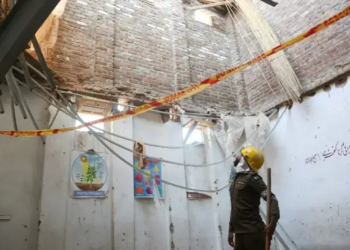
Highlighting the security situation, Bilawal said Pakistan was facing terrorist attacks across the country, from Khyber to Khuzdar.
He criticised the policy decisions taken after the change of government in Afghanistan in 2021, alleging that the then Pakistani government had allowed militants based in Afghanistan to return to the country and resettle in areas including Swat, Malakand and the former tribal districts.
He also alleged that militants imprisoned in Pakistan had been released, arguing that the country was now suffering the consequences of those decisions. His remarks referred to the policies pursued during Imran Khan’s tenure as prime minister.
Bilawal said the country was once again facing attempts by militants to challenge the state’s authority in Swat, while security personnel, law enforcement officials and civilians continued to be targeted.
He argued that the failure to take terrorist incidents seriously had caused immense suffering and called for a renewed national consensus to confront the threat.
Recalling the PPP’s tenure in government in 2008, Bilawal said his party had worked to build public support for counterterrorism operations and pursue institutional reforms to strengthen the fight against militancy.
He said success depended on the participation of the entire nation.
“Today as well, we will make efforts to create an environment where we are all united, and will fight the terrorists together,” he said, adding that Pakistan could not succeed without national unity.
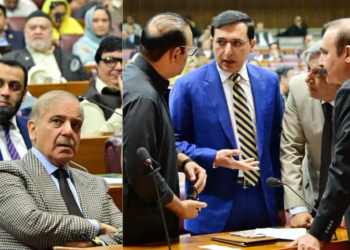
Bilawal said he had highlighted the need for a new National Action Plan and renewed political consensus during his recent address to the National Assembly. He also invited opposition parties to contribute to the proposed strategy.
Opposition invited to electoral reforms process
The PPP chairman also said his party wanted to strengthen democracy through electoral reforms.
He recalled that the federal government had decided to establish an electoral reforms committee and said the opposition had been invited to participate.
“If they say that democracy is weak in this country, then they should help us to strengthen it,” Bilawal said.
Reflecting on his mother, former prime minister Benazir Bhutto’s political struggle, he said Pakistan had yet to fully realise the vision for which she had fought, but efforts to achieve it were continuing.
PPP supports new provinces through constitutional process
Responding to a question about creating new provinces, Bilawal said the PPP’s position was clear: new provinces or administrative units could be established in accordance with the Constitution and law, provided the relevant provincial assembly supported the move.
He said Interior Minister Mohsin Naqvi was aware of the policy of the PPP and President Asif Ali Zardari on the matter, adding that the issue was not one to be decided solely by the president.
Bilawal argued that the creation of new provinces should be based on genuine consensus rather than political expediency.
“Where there is consensus and it is not a political stunt, if there is no other purpose behind it … why aren’t provinces being made there?” he said, citing Gilgit-Baltistan as an example of a region where there was broad agreement on constitutional rights.
He noted that the Gilgit-Baltistan Legislative Assembly had unanimously passed a resolution seeking constitutional rights and stressed that new provinces should be established only where there was a clear desire for them within the relevant province.
Bilawal urged politicians on both the government and opposition benches not to politicise terrorism or create controversy around counterterrorism measures, calling instead for a united national response.
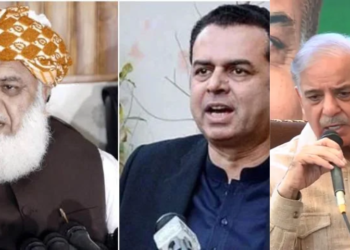
He also expressed confidence that Jamiat Ulema-e-Islam-Fazl chief Maulana Fazlur Rehman, whom he described as a respected figure across political divides, could help build the consensus needed to end the emergency and governor’s rule in Khyber Pakhtunkhwa.