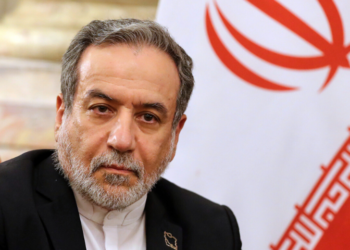

Baghdad, October 18,2026: Iranian Foreign Minister Abbas Araghchi has said Tehran remains open to dialogue with the United States but requires credible guarantees against further attacks, adding that Washington holds the key to reopening the strategically important Strait of Hormuz.
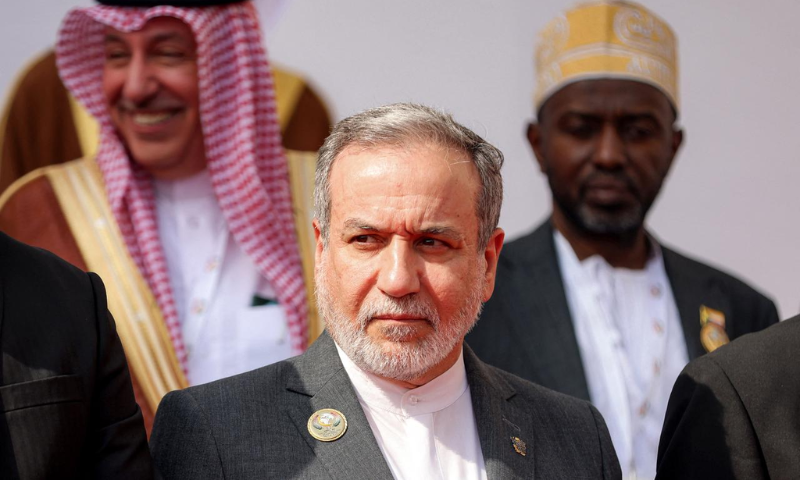
Addressing the 52nd session of the Organisation of Islamic Cooperation (OIC) Council of Foreign Ministers in Baghdad on Saturday, Araghchi said Iran would not accept coercion, threats or intimidation and would not surrender its sovereign rights under pressure.
He said Tehran remained prepared for negotiations based on mutual respect and credible assurances that military attacks would not be repeated.
Araghchi said Iran had conveyed a specific seven-day plan through Qatar, under which the Strait of Hormuz could be reopened and normal maritime traffic restored within a week if the necessary conditions were met.
“The choice is now with America,” he said.
The Iranian foreign minister maintained that Tehran had negotiated in good faith over the past two years but had faced military attacks rather than diplomacy, creating deep mistrust about resuming negotiations without guarantees against further aggression.
He said maritime traffic had recovered to around 60% of pre-war levels within two weeks of the June 17 Islamabad Memorandum of Understanding, mediated by Pakistan with Qatar’s support. However, he alleged that unilateral US actions and military aggression had prevented the memorandum’s implementation.
Araghchi said Iran had not attacked its neighbours but had targeted US bases and military facilities located in the region. He claimed that US and Israeli attacks had killed around 5,000 people, including hundreds of women and children.
He stressed that regional countries’ territory, airspace and infrastructure should be used to promote regional security rather than serve as launchpads for attacks against neighbouring states.
“The choice before us is simple: either we build security together, or we will endure insecurity together,” he said.
On Yemen, Araghchi said regional crises could not be resolved through military means. He expressed support for Yemen’s sovereignty, independence, unity and territorial integrity, as well as that of Saudi Arabia, and offered to help facilitate dialogue based on an existing peace roadmap.
He also endorsed a proposal by Turkish Foreign Minister Hakan Fidan to designate a day as “Gaza Genocide Remembrance Day”, thanking Türkiye for its chairmanship of the OIC. Iraq assumed the organisation’s rotating presidency at the meeting.
Meanwhile, Iranian lawmaker Yaqoub Rezazadeh said indirect talks with Washington were continuing through Qatar and Oman.
Speaking to the Iranian Labour News Agency (ILNA), Rezazadeh said both sides had presented conditions and Tehran was awaiting a response on whether the United States would accept its demands.
He said he did not expect another war before the US midterm elections and Israel’s elections, adding that Iran would not launch a pre-emptive attack but would respond if attacked.
Separately, Iran’s Foreign Ministry said Araghchi met his Turkish counterpart on the sidelines of the OIC meeting to discuss bilateral relations and regional developments, particularly Palestine. Their discussions also covered Islamophobia and the situation in the Gulf and the Strait of Hormuz.
Tensions surrounding the Strait of Hormuz have remained high amid the conflict between Iran and the United States and disagreements over navigation through the strategic waterway, a vital route for global energy supplies.
Tehran maintains that it has authority over passage through Iranian waters in the strait and has warned vessels against using routes it considers unauthorised. Washington, meanwhile, has insisted on freedom of navigation.
Recent attacks on commercial vessels in and around the waterway have further heightened maritime security concerns, while reduced shipping activity has added to uncertainty in global energy markets.
The conflict began with US and Israeli attacks on Iran on February 28, followed by a ceasefire in April. Clashes later resumed as negotiations stalled despite the June memorandum, according to the account provided.
Araghchi’s latest remarks indicate that Iran is linking any renewed negotiations and the reopening of the Strait of Hormuz to conditions it says are necessary to prevent further military escalation.