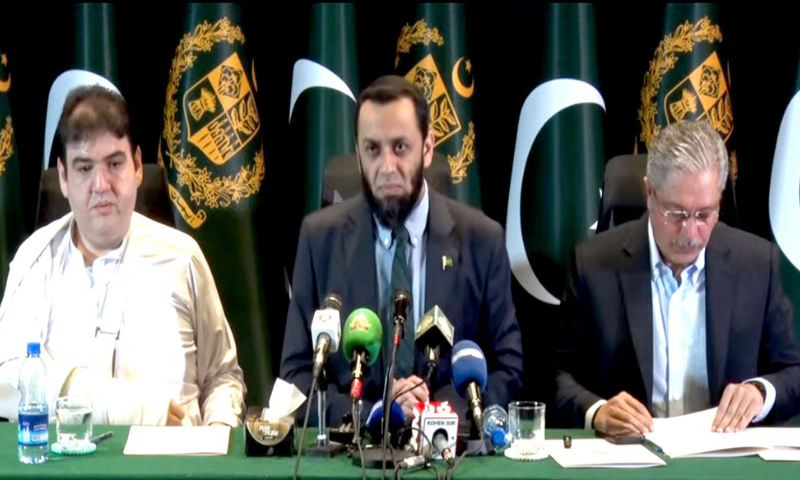
Islamabad/Peshawar, October 10,2026: Federal Information Minister Attaullah Tarar on Saturday accused the Pakistan Tehreek-e-Insaf (PTI)-led Khyber Pakhtunkhwa government of poor governance and failing to strengthen the province’s counterterrorism infrastructure, as tensions between the federal and provincial governments intensified over security policy and the possibility of emergency measures.
Addressing a press conference in Islamabad, Tarar alleged that the provincial government had received Rs700 billion under the National Finance Commission (NFC) arrangement for development but had failed to upgrade the Counter Terrorism Department (CTD), establish forensic laboratories and install Safe City surveillance cameras in merged districts and at entry and exit points across the province.
He claimed that the PTI was prioritising political protests over governance and security, criticising what he described as lengthy meetings for political mobilisation and insufficient attention to terrorism.
Tarar also accused the provincial government of failing to provide adequate health and educational facilities and improve infrastructure, alleging that its policies had deprived residents of development opportunities.
The minister further alleged that the PTI government had facilitated the return and settlement of terrorists in the country. He accused the party of maintaining links with the Tehreek-e-Taliban Pakistan (TTP), an allegation the PTI has rejected.
Tarar said the province needed peace and effective governance rather than political confrontation. He also questioned the performance of Chief Minister Sohail Afridi, comparing the provincial administration’s efforts with those of Prime Minister Shehbaz Sharif and other provincial governments.
Citing concerns about law and order, the information minister claimed that insecurity had affected several districts and that residents were travelling to other provinces for medical treatment. Asked about the possible imposition of an emergency or governor’s rule, he said it was premature to comment on the matter.
Coordinator to the Prime Minister on Information for KP Affairs Ikhtiar Wali Khan, who also addressed the press conference, alleged that 18 of the province’s 34 universities were facing the risk of bankruptcy and that some institutions were struggling because of vacant vice-chancellor positions.
Wali also criticised the provincial government’s handling of police and counterterrorism funding, alleging that resources allocated to the CTD had been withheld. He called for improved health facilities, security and a political culture based on tolerance and respect.
Federal leaders discuss security and political situation
Separately, Minister for Kashmir Affairs and Gilgit-Baltistan Amir Muqam met Khyber Pakhtunkhwa Governor Faisal Karim Kundi at the Governor House in Peshawar to discuss the province’s law and order situation, the PTI’s planned long march and other political matters.
According to a joint statement, both leaders said the federal government would continue efforts to restore lasting peace, strengthen security and accelerate public welfare and development in the province.
They also expressed concern over terrorism and what they described as political activities contributing to instability.
In a post on X, Kundi said the people of KP had paid a heavy price in the fight against terrorism and should not be subjected to further insecurity because of political confrontation. He reaffirmed the federal government’s commitment to protecting residents and supporting provincial development.
The meeting came amid growing speculation about emergency measures. On Friday, Parliamentary Affairs Minister Dr Tariq Fazal Chaudhry said the government had completed deliberations on the possibility of imposing an emergency and could exercise the option if the KP government failed to cooperate on counterterrorism.
PTI chairman opposes emergency measures
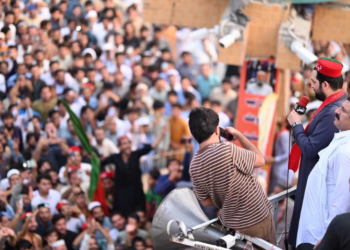
Meanwhile, PTI Chairman Barrister Gohar Ali Khan met Chief Minister Sohail Afridi in Peshawar to discuss the political situation, the party’s planned long march and other matters.
PTI Secretary General Salman Akram Raja, MNA Junaid Akbar, Parliamentary Leader Shahid Kattak and KP Information Minister Shafi Jani also attended the meeting.
Speaking to reporters afterwards, Gohar said imposing governor’s rule or an emergency would not resolve the province’s problems and could further worsen the situation.
He maintained that there was no disagreement over the need to eliminate terrorism, but differences remained over the strategy to achieve that objective.
Gohar called on the country’s political leadership to demonstrate political wisdom, suggesting that a meeting of the federal or provincial apex committee should be convened if the situation warranted consideration of extraordinary measures.
PTI rejects allegations, calls for comprehensive strategy
In a statement issued later, PTI Central Information Secretary Sheikh Waqas Akram rejected allegations linking the party to armed groups, saying the PTI neither supported armed struggle nor endorsed violence and sabotage.
Akram accused federal ministers of using press conferences to divert attention from the country’s economic, social and security challenges. He challenged the federal government to demonstrate the effectiveness of its security policies in Balochistan before applying similar approaches elsewhere.
He urged the Centre to consider the comprehensive peace plan approved by the KP Grand Jirga, calling for a counterterrorism strategy combining security operations, political engagement and respect for local communities’ rights.
The PTI leader also disputed claims that 11 districts of KP had become no-go areas, describing such assertions as exaggerated and potentially intended to justify emergency measures or undermine the elected provincial government.
Akram said terrorism had not initially been central to the October 3 talks between the government and the PTI but was subsequently introduced into the discussions, shifting attention from other political disputes.
He acknowledged the security challenges facing the province while questioning the effectiveness of a strategy that, in his view, relied heavily on force without adequately addressing local grievances.
The PTI information secretary urged the federal government to respect the constitutional mandate of the elected KP government and warned that the party would resist any measures it considered a violation of the rights of provincial residents and those in the merged districts.
The federal government and the PTI-led provincial administration have remained at odds over counterterrorism policy, the provincial government’s security performance and the PTI’s planned march towards Islamabad. The disagreement contributed to the breakdown of their October 3 talks, while efforts by political leaders to revive dialogue continue alongside discussions about possible emergency measures.