
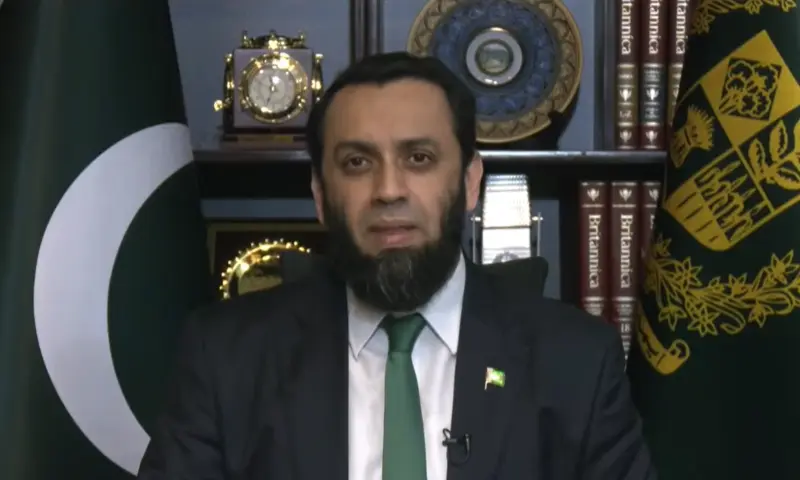
Islamabad, November 17,2026: Information Minister Attaullah Tarar has said that a referendum is a legal and constitutional mechanism for gauging public opinion on the creation of new provinces, arguing that no political party should have reservations about seeking the people’s mandate.
In televised remarks on Tuesday, following a strong speech by PPP Chairman Bilawal Bhutto-Zardari opposing the proposed referendum, Tarar said the ongoing debate over new provinces was part of a broader discussion on good governance and administrative reforms.
“The public wants a good government that is accountable,” he said, adding that political parties that had been part of the governing system for decades could not distance themselves from its shortcomings.
The minister said political parties could not enjoy the benefits of being in power while simultaneously acting as opposition, describing such an approach as a double standard.
Questioning opposition to public debate on administrative reforms, Tarar said people could not be stopped from discussing issues concerning their welfare and better governance.
“This debate will happen in Parliament and outside it,” he said, adding that democratic and political processes required the people to have a say in decisions affecting their future.
“What is the problem with going to the public? You and I are not going to decide what the people want. They are the ones who will decide,” he remarked.
Tarar maintained that a referendum was part of the Constitution and provided a legitimate means of determining public opinion. He said political parties should welcome the opportunity to seek the people’s mandate rather than oppose it.
“The people are the final decision-makers and good governance is the charter of every political party,” he said.
He further argued that if the people of Pakistan, including those in Sindh, wanted more provinces, their demand should be considered; otherwise, no such change should be imposed.
The minister urged political stakeholders to view the debate over smaller administrative units through the perspective of development and improved governance rather than treating it solely as a political controversy.
“Come and sit down with us so we can make decisions for the betterment of the people and the country. Let this decision be based on public opinion,” he said, describing a referendum as an effective way of gauging the people’s wishes.
The debate over new administrative units has intensified in recent months after Interior Minister Mohsin Naqvi called for the creation of new provinces, arguing that the existing governance system had collapsed and required a reset.
Last week, Naqvi also proposed holding a referendum to determine public opinion on the issue, saying it could help settle the contentious debate.
However, Bilawal Bhutto-Zardari, Sindh Chief Minister Murad Ali Shah and other senior PPP leaders have repeatedly rejected any move to divide Sindh, maintaining that the proposal is neither legally nor politically acceptable to their party.
In September, the Sindh Assembly adopted a resolution rejecting attempts to divide the province or establish new administrative units.
President Asif Ali Zardari also met Prime Minister Shehbaz Sharif over the weekend, with official sources saying both leaders agreed to strictly follow constitutional provisions governing the creation of new provinces or administrative units. Any proposed referendum on the issue would also require parliamentary approval, according to the sources.
Bilawal, however, on Tuesday described the proposed referendum as an unconstitutional move and vowed that the PPP would resist any such measure.