
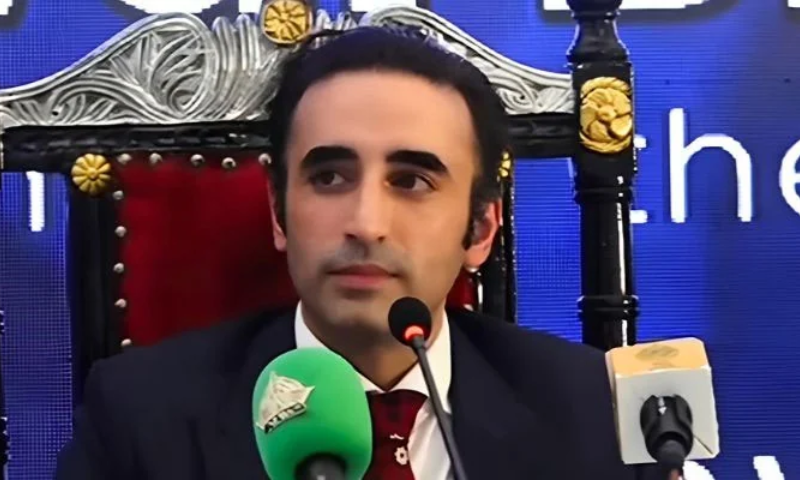
Karachi, November 17,2026: Pakistan Peoples Party (PPP) Chairman Bilawal Bhutto-Zardari on Tuesday called for a political reset of the country’s governance system, saying it had not collapsed on its own but had been deliberately weakened, and stressed that restoring public confidence in state institutions required political consensus, parliamentary engagement and an end to political victimisation.
Addressing Meet the Press at Karachi Press Club, Bilawal said that while there was widespread agreement that the existing governance system was not functioning effectively, little attention was being paid to the reasons behind its deterioration.
“I believe the system has not collapsed, but it has been made to collapse,” he said, acknowledging that he too had made mistakes and that all political stakeholders needed to take responsibility for correcting them.
Referring to recent calls by Interior Minister Mohsin Naqvi for the creation of new administrative units and a governance reset, the PPP chairman said the proposed measures did not address the underlying causes of the country’s problems.
He maintained that any meaningful reset must be political and should begin in Parliament, as elected representatives were responsible for addressing public concerns, including poverty, unemployment and inflation.
Bilawal said public confidence in state institutions, including Parliament, the judiciary and the media, needed to be restored, adding that the opposition had genuine reasons to lose confidence in the parliamentary system.
He argued that the government could not expect the opposition to endorse every decision while simultaneously resorting to political pressure, arrests and other punitive measures against its members.
Defending Jamiat Ulema-i-Islam (JUI-F) chief Maulana Fazlur Rehman, Bilawal said criticism of the government was a legitimate right of the opposition and should not be portrayed as an act against the state.
“It is the opposition’s right to criticise you, and however he does it, it is their right,” he said, adding that the opposition played one of the most patriotic roles in Parliament.
He termed differences of opinion the strength of democracy and said questioning the patriotism of opposition politicians was an injustice to Parliament, the political system and the country.
Bilawal also referred to the Capital Development Authority’s recent notice concerning alleged unauthorised construction at Fazl’s residence, questioning the timing of such actions and urging the government to engage with the JUI-F chief rather than penalise him for his criticism.
The PPP chairman said the tradition of political revenge needed to end permanently, calling for an environment in which no political prisoner remained behind bars.
Referring to the repeated imprisonment of former prime ministers, he questioned whether every individual who had held the country’s highest political office was a criminal or whether political victimisation was responsible.
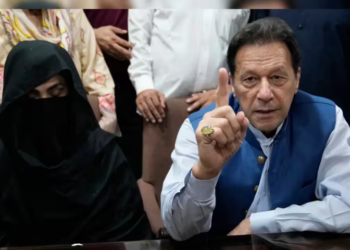
He specifically described incarcerated PTI founder Imran Khan as a political prisoner and said he wanted to see a Pakistan where no former prime minister had to face imprisonment after leaving office.
“Whoever becomes prime minister goes to jail, and whoever gets out of jail goes to sit in the Prime Minister House,” he remarked.
Bilawal also called for restoring the opposition’s confidence in Parliament through electoral and constitutional reforms, particularly addressing controversies surrounding the 2024 general elections, the allocation of reserved seats and the withdrawal of the PTI’s electoral symbol.
He recalled that the PPP’s electoral symbol had also been revoked in 1988, describing the withdrawal of a party symbol as an injustice to voters who deserved to exercise their democratic choice.
He termed the controversy over reserved seats another major injustice, arguing that the opposition had been deprived of its rightful representation and that the ruling parties had benefited from the disputed allocation.
He urged the government to return the reserved seats to the opposition without preconditions and resolve outstanding concerns over election rigging and the allocation of seats to rebuild political trust.
The PPP chairman also questioned whether constitutional and judicial reforms enjoyed sufficient political and public confidence. While defending the 26th Constitutional Amendment as having been passed through an agreement involving political stakeholders, he criticised the 27th Amendment for being adopted without political consensus or a bilateral agreement.
He said meaningful judicial reforms required engagement with the opposition and broader political consensus rather than reliance on numerical strength.
Bilawal said he would make efforts to build consensus among political parties on a political reset and proposed convening a round-table conference or an all-parties conference (APC), with the state of the governance system and institutional reforms as its central agenda.
Warns against forced division of Sindh
Responding to questions about proposals for creating new provinces, Bilawal strongly opposed any attempt to divide Sindh through coercion, warning that forced administrative or territorial changes could trigger serious unrest and bloodshed.
He clarified that the PPP was not opposed to the creation of new provinces in principle but maintained that any such move must reflect the wishes of the people and follow constitutional and democratic procedures.
“If Sindh is divided by force, society will be divided, it will lead to enmity, ordinary people will take up arms, and the bloodshed will not be limited to a single death,” he warned.
He said the PPP would firmly resist any unconstitutional attempt to create new provinces, arguing that the Constitution already provided a mechanism for such changes.
Questioning the proposal for a referendum, Bilawal said that in Pakistan’s history, referendums had generally been used to advance undemocratic objectives rather than democratic reforms.
“It is not about a referendum, it is about intent,” he said, adding that suggesting such a course raised questions about whether those proposing it were seeking to bypass constitutional procedures.
He also challenged supporters of the proposal to first hold a referendum within their own provincial assemblies, pointing out that the Sindh Assembly had passed resolutions opposing the division of the province on multiple occasions.
The PPP chairman said neither Prime Minister Shehbaz Sharif nor the federal cabinet had formally discussed the creation of new provinces with his party, while he himself had not been consulted on the matter.
He questioned why the issue was being debated through the media when it had not been brought before Parliament or discussed by the federal cabinet.
Bilawal said that suggestions being floated outside parliamentary forums indicated an attempt to pursue the matter through backdoor channels rather than democratic consultation.
He also recalled the imposition of One Unit and the historical struggle of the people of Sindh against it, saying that the 1973 Constitution had restored the provincial status of Sindh and Balochistan.
Reiterating his opposition to forced changes, he said political decisions affecting the provinces must be taken in accordance with public aspirations and constitutional safeguards.
Questions federal government’s financial claims
Bilawal also criticised the federal government’s approach towards provincial financial autonomy, particularly in the context of discussions about rolling back or revisiting the 18th Constitutional Amendment.
He said that despite the passage of 16 years since the amendment, provinces continued to face difficulties in receiving their due financial resources.
Referring to Sindh’s financial contributions, he said the province was providing Rs585 billion in surplus financial support to the Centre, while another Rs260 billion had been contributed in the interest of national security.
He further claimed that the province’s rightful share in the petroleum levy amounted to approximately Rs1.7 trillion.
Bilawal argued that the federal government should be held accountable for inadequate public spending rather than shifting responsibility to provincial administrations.
“If you will pickpocket the province, loot our resources and then ask why roads are broken and why schools and hospitals have not been built, how can that be justified?” he said.
He also highlighted the importance of provincial authority over natural resources, including rare minerals, and called for cooperation between the federal and provincial governments to attract international investment.
The PPP chairman invited Prime Minister Shehbaz Sharif to hold discussions with the Sindh government on public issues and suggested that the prime minister convene cabinet meetings in different provinces to better understand their challenges.
He said he wanted the prime minister to succeed, adding that the government must have sufficient authority to ensure coordination and discipline among its ministers.
Bilawal further observed that some proponents of new administrative units had never won an election and argued that decisions concerning the country’s political and administrative future should be taken by elected representatives accountable to the people.
“As a politician who has been in politics for generations, I will not take any step against the will of the people,” he said.
Tarar questions PPP’s position
Reacting to Bilawal’s remarks, Federal Information Minister Attaullah Tarar questioned the PPP’s position in the ruling coalition, asking whether enjoying government power while simultaneously adopting an opposition role amounted to a contradiction.
Tarar said no political or administrative agenda could be imposed against the wishes of the people and described a referendum as a constitutional mechanism for ascertaining public opinion.
He maintained that a referendum was provided for under the Constitution and said the public interest should remain central to any decision concerning the creation of new provinces.
The information minister also argued that all political parties had been part of the country’s governance system for decades and could not disassociate themselves from its shortcomings.
Questioning the PPP’s criticism of the National Accountability Bureau (NAB), Tarar said the same political stakeholders had previously introduced reforms concerning the accountability institution.
He further maintained that debate over the creation of new provinces was a democratic and legal requirement and should not be discouraged.
Tarar said good governance and institutional reforms remained the responsibility of all governments, adding that the discussion should continue with the interests and aspirations of the people in mind.