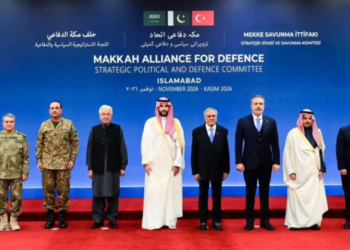

Islamabad, November 27,2026: The third meeting of the Strategic Political and Defence Committee (SPDC), the top decision-making body of the Makkah Joint Defence Alliance comprising Pakistan, Saudi Arabia and Turkiye, began in Islamabad on Friday, with the security situation in Yemen and wider regional tensions expected to feature prominently in discussions.
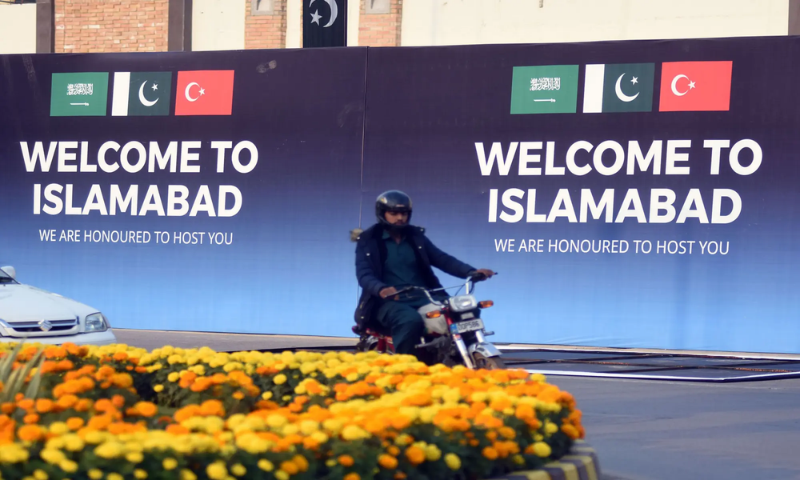
The high-level gathering is bringing together the foreign and defence ministers and senior military officials of the three countries. Special security and traffic arrangements have been put in place in the federal capital, where a public holiday has been announced for Friday. Rawalpindi has also declared a local holiday.
The meeting is expected to focus on finalising standard operating procedures (SOPs), establishing an implementation mechanism and defining coordination among the political, defence and military institutions of the three member states, a Pakistani official said.
Defence Minister Khawaja Asif said on Thursday that the foreign and defence ministers of Pakistan, Saudi Arabia and Turkiye would attend the meeting. He added that the “continuous turmoil south of Saudi Arabia” would be among the agenda items.
Saudi Arabia has faced repeated attacks by Yemen’s Ansar Allah movement, commonly known as the Houthis, targeting cities, oil facilities and shipping since fighting in the country’s civil war intensified in July.
“Any threat to Saudi Arabia is a threat to Pakistan and Turkiye according to the pact, which is absolutely clear,” Asif said.
Alliance moves towards operational framework
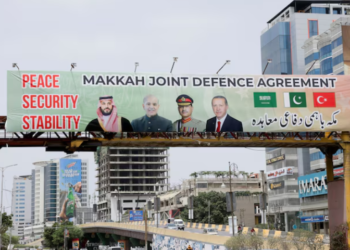
Pakistan, Saudi Arabia and Turkiye signed the Makkah Joint Defence Agreement on August 7. Under the pact, an armed attack against any one member is to be treated as an attack against all, requiring the other two countries to provide assistance through available means, including military support.
The SPDC, comprising the foreign and defence ministers and chiefs of defence staff of the three countries, serves as the alliance’s principal decision-making forum.
A permanent secretariat has been established in Riyadh to coordinate the alliance’s work, with Pakistan’s retired Lt Gen Nauman Mahmood appointed as its first secretary general for a three-year term. A working committee comprising officials from the member countries is also operational.
Turkiye’s ratification of the agreement completed the accession process for all three members. However, the alliance’s institutional and operational framework remains at an early stage.
Asif said frequent meetings would initially be required to develop the framework and put the necessary arrangements in place over the coming months.
The alliance has yet to publicly define its military doctrine, force composition, command arrangements or procedures for a collective military response.
An emergency SPDC meeting held in Riyadh on October 5 called for practical implementation of collective defence commitments, including arrangements for the rapid deployment of agreed forces and capabilities, subject to the national laws of member states.
Wider regional tensions on agenda
The alliance’s formation comes amid wider regional tensions involving Iran, the United States and Israel.
While the three countries share an interest in strengthening regional deterrence, their differing strategic priorities make it important to clarify the alliance’s scope and operational commitments.
Asif declined to comment on how the alliance would respond to a direct Iranian attack on Saudi Arabia but identified Israel as a potential source of aggression in the region.
“The possibility of some conflict, or aggression from the Israeli side exists, so we need to close our ranks, the countries of this region,” he said.
Managing relations with Iran remains particularly important for Pakistan, which has sought to maintain diplomatic engagement with Tehran while deepening defence cooperation with Saudi Arabia and Turkiye.
A meeting in Tehran involving representatives of the three countries and Iranian officials, held on Pakistan’s initiative, reflected efforts to maintain communication between the sides.
Pakistan also brokered a June accord aimed at halting fighting between the United States and Iran and providing a roadmap for reopening the Strait of Hormuz and negotiations on Tehran’s nuclear programme. However, the truce subsequently collapsed, with Washington and Tehran accusing each other of violating the agreement.
Qatar and Pakistan have since led diplomatic efforts to reduce tensions. Asif said Pakistan had played “a very, very constructive role” between Washington and Tehran, but acknowledged that the mediation process remained fragile and that lasting peace had yet to take hold.
A security source said recent Pakistani military deployments, including JF-17 aircraft, drones and HQ-9 air defence systems, had been made under bilateral cooperation arrangements predating the alliance. The source added that these existing arrangements would now become part of the trilateral framework.
Turkiye, meanwhile, has emphasised the defensive nature of the agreement and maintained a cautious position regarding possible involvement in combat operations in Yemen.