Islamabad, June 27, 2025: In a significant ruling, the Supreme Court of Pakistan on Friday declared that the Pakistan Tehreek-e-Insaf (PTI) is not entitled to reserved seats for women and minorities in the National and Provincial Assemblies.
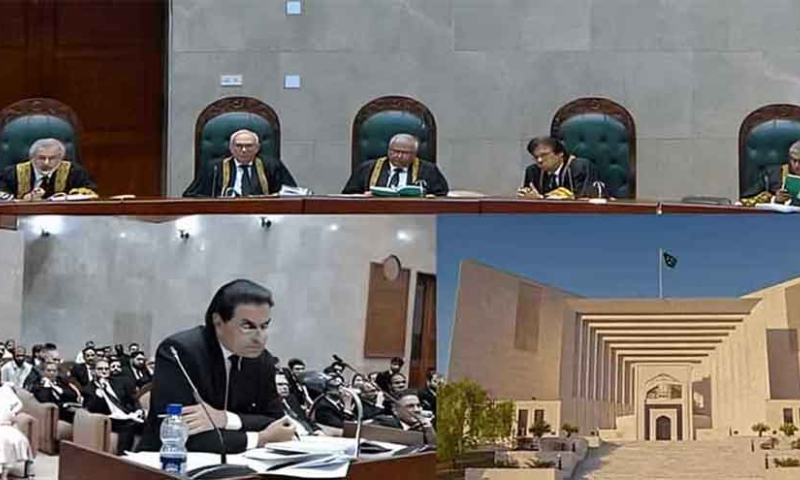
The verdict was announced by a 10-member constitutional bench headed by Justice Aminuddin Khan. The decision marks a pivotal moment in the ongoing legal battle over PTI’s parliamentary representation following the July 12, 2024, short order that had recognized 39 of 80 MNAs as valid PTI candidates, making the party the largest in the National Assembly. However, the verdict has not yet been implemented, as the Election Commission of Pakistan (ECP) raised objections, joined by the PML-N and PPP in submitting review petitions.
Earlier in the day, the court reserved its decision after a tense hearing, which featured a sharp exchange between Justice Jamal Khan Mandokhail and senior lawyer Hamid Khan. During the arguments, Hamid Khan claimed that the court lacked jurisdiction to hear the matter, citing precedents. Justice Mandokhail challenged this assertion, demanding specific references from the Supreme Court Rules:
“Where is it written that we cannot hear this case? Show us the rule.”
The day’s proceedings were also marked by the recusal of Justice Salahuddin Panhwar from the bench, following an objection raised by Hamid Khan, who questioned the judge’s presence due to his prior association with matters linked to the 26th Constitutional Amendment. Justice Panhwar, in a written note, acknowledged feeling personally hurt by the objection but stressed that his withdrawal was based on the principles of judicial impartiality and the need to maintain public trust in the judiciary.
“This decision is not based on personal sentiment but on judicial integrity,” Justice Panhwar stated.
Hamid Khan welcomed the recusal, prompting a pointed response from Justice Aminuddin, who reminded the court that arguments from another SIC lawyer were still in progress. Justice Mandokhail also criticized Hamid’s conduct, noting that he had been allowed to argue despite not being formally entitled to do so, and accused him of disrupting the proceedings.
The original 13-member full bench, constituted in May, began hearing the case but was gradually reduced due to multiple recusals. Justices Ayesha Malik and Shahid Waheed Abbasi earlier declared the review petitions inadmissible and stepped down. With Justice Panhwar’s exit, the final judgment was delivered by a 10-member bench.
Hamid Khan had also previously raised concerns about the composition of the enlarged bench, alleging “court packing” following the 26th Constitutional Amendment, which increased the number of Supreme Court judges to address pending caseloads. He argued that the expanded bench raised questions of procedural legitimacy.
Despite the controversies and judicial reshuffling, the Supreme Court ultimately upheld the review petitions and ruled against PTI’s claim to the reserved seats. The court’s decision sets the stage for further political and legal developments, especially as implementation of earlier rulings remains contested.
The case will continue to be closely watched as proceedings under the newly reconstituted bench resume in the coming days.