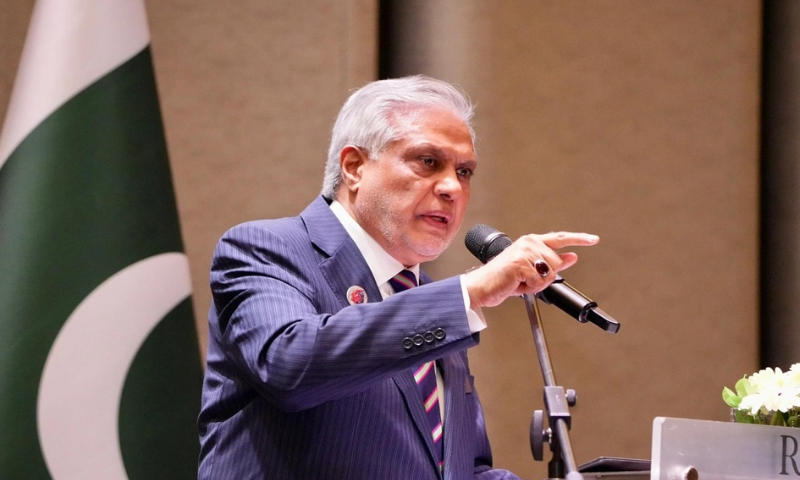
Kuala Lumpur, July 11, 2025: Deputy Prime Minister and Foreign Minister Ishaq Dar has said that while the military ceasefire between Pakistan and India remains intact, India’s political leadership appears unwilling to come to terms with its recent defeat during the brief but intense conflict earlier this year.
Speaking at an event hosted by the Pakistan High Commission in Kuala Lumpur on Friday, Dar stated, “The Pakistan-India military-to-military ceasefire is holding well, but India’s political leadership is struggling to digest it.”
The deputy prime minister is currently in Malaysia to attend the 32nd Ministerial Meeting of the ASEAN Regional Forum (ARF).
In May 2025, the two nuclear-armed neighbors engaged in a four-day military conflict — their most serious escalation in decades — involving the use of missiles, drones, and heavy artillery. The hostilities ended with a ceasefire reportedly brokered by U.S. diplomatic efforts.
Dar reiterated that Pakistan responded to Indian aggression with force under “Operation Bunyan-um-Marsoos,” targeting several Indian military installations across multiple regions. He further claimed that Pakistan Air Force shot down six Indian fighter jets, including four Rafale aircraft, during the conflict. He also accused India of deliberately targeting Sikh-populated areas during its missile strikes.
“India started the war but was the first to ask for a ceasefire,” Dar said, recalling that the U.S. Secretary of State called Pakistan at 8:15 a.m. on the final day of the conflict to convey India’s desire to halt hostilities.
The ceasefire was first publicly announced by U.S. President Donald Trump via social media, crediting Washington’s mediation. However, India has disputed Trump’s claims that the truce was the result of U.S. pressure or threats to suspend trade negotiations.
Dar strongly condemned India’s suspension of the Indus Waters Treaty (IWT), calling it an “unprecedented and bizarre” move that violates international norms. “India cannot stop or divert Pakistan’s water. New Delhi is increasingly isolated on the world stage because of its aggressive and unilateral policies,” he asserted.
Turning to Pakistan’s economic performance, the deputy prime minister expressed optimism, saying that despite challenging conditions, the country had made significant progress.
“Pakistan has achieved economic take-off, and our next goal is to gain membership in the G20 group of major economies,” he said.
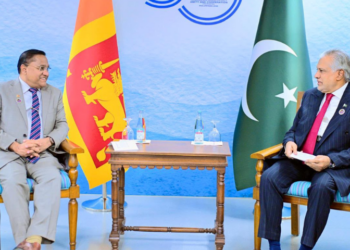
Earlier in the day, Dar held a bilateral meeting with Malaysian Prime Minister Anwar Ibrahim on the sidelines of the ASEAN Regional Forum. He conveyed warm greetings from Prime Minister Shehbaz Sharif and reaffirmed Pakistan’s commitment to deepening bilateral cooperation with Malaysia in trade, investment, and regional affairs.
He also lauded Malaysia’s leadership as Chair of ASEAN for 2025 and appreciated the country’s initiatives to strengthen economic ties following Prime Minister Ibrahim’s visit to Pakistan in October last year.
Prime Minister Ibrahim reciprocated the warm sentiments and expressed his anticipation for Prime Minister Shehbaz Sharif’s scheduled visit to Malaysia later this year in October.
Dar thanked the Malaysian leadership for their warm hospitality and the well-organized ASEAN forum, emphasizing Pakistan’s continued engagement with regional partners for peace and development.