Islamabad, July 14, 2025: Prime Minister Muhammad Shehbaz Sharif on Monday reaffirmed the government’s commitment to expanding the national tax base while reducing the burden on low-income segments of society. He emphasized that these objectives remain key priorities as the government pushes forward with a comprehensive reform agenda.
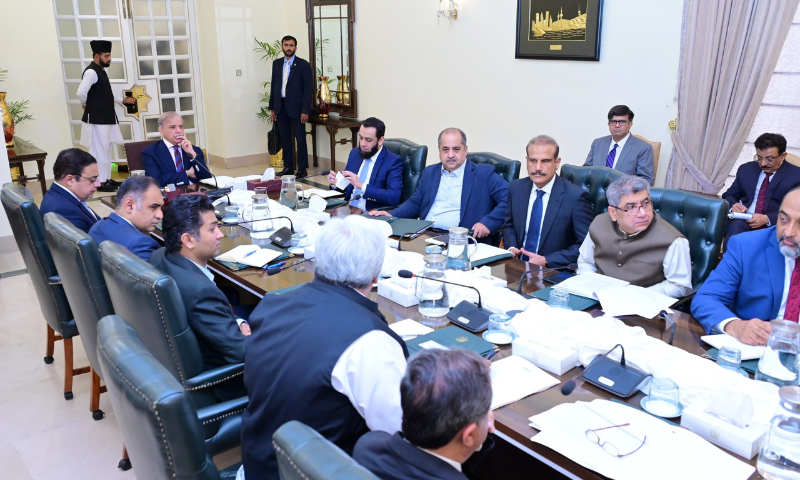
Chairing a high-level meeting to review the digitization of the Federal Board of Revenue (FBR), implementation of artificial intelligence (AI)-based tax systems, and other ongoing reforms, the Prime Minister lauded recent progress, particularly the introduction of simplified tax returns in Urdu. He directed the establishment of a dedicated helpline to assist taxpayers and called for digital invoicing to also be made available in Urdu to facilitate broader adoption.
“In all tax reforms, the convenience of the common citizen must remain the primary focus,” he said, highlighting that salaried individuals will be the principal beneficiaries of the newly simplified and digitized tax return system.
To ensure transparency, the Prime Minister directed that all FBR reforms undergo third-party validation. He noted that digitized tax returns—now simplified, concise, and linked to a centralized database—will make compliance easier and encourage broader participation.
He further instructed authorities to launch a nationwide public awareness campaign to promote the new user-friendly tax system and increase tax return submissions.
Commending the performance of the finance minister, the economic team, FBR Chairman, and their respective departments, PM Shehbaz said the visible outcomes of the tax reforms were the result of their “tireless efforts.” He also praised the implementation of an AI-based tax assessment system, calling it a “milestone achievement” in Pakistan’s history.
The Prime Minister emphasized the need to facilitate small and medium enterprises (SMEs) in transitioning to the digital invoicing system.
The meeting was attended by federal ministers Ahad Khan Cheema, Attaullah Tarar, Ali Pervaiz Malik, Minister of State for Finance Bilal Azhar Kayani, Chief Coordinator Mosharraf Zaidi, FBR Chairman, and other senior officials.
Officials briefed the meeting on several key initiatives, including:
- Digital Invoicing: All businesses, large and small, will be required to issue sales receipts via the FBR’s online system. So far, over 8,000 invoices worth Rs. 11.6 billion have been generated within a month. Approximately 20,000 more businesses are expected to join soon.
- Simplified Tax Returns: The new digital tax returns for salaried individuals will be launched on July 15, while returns for other taxpayers will follow on July 30. Urdu-language forms for salaried individuals will also be available by the end of the month.
- AI-Based Assessment System: Traders are now allowed to submit advance goods declarations before ships arrive, enabling upfront exemptions on duties and taxes. The rate of advance declarations is projected to rise from 3% to over 95%, allowing containers to be directly delivered from ports to factories.
- Taxpayer Support Tools: A new taxpayer portal and monitoring dashboard are being rolled out via PRAL (Pakistan Revenue Automation Ltd.), which businesses can access free of charge. Comprehensive training for traders is also underway.
- HS Code Standardization: Use of internationally recognized 8-digit HS Codes will help curb tax fraud by eliminating fake and flying invoices.
- Cargo Tracking and E-Bilty Systems: These systems will enable real-time tracking of goods and tax payments, supporting more efficient and effective enforcement through AI-driven oversight.
It was also revealed that bidding for the FBR’s central command and control center will be completed shortly, with the system expected to be fully operational by September. This platform will facilitate data centralization and enhance decision-making capabilities.
To support the cargo and invoicing reforms, the government is leveraging international best practices. Following PM Shehbaz Sharif’s recent meeting with the Turkish President in Azerbaijan, a Turkish technical team is now in Pakistan assisting local authorities with the implementation of these systems.