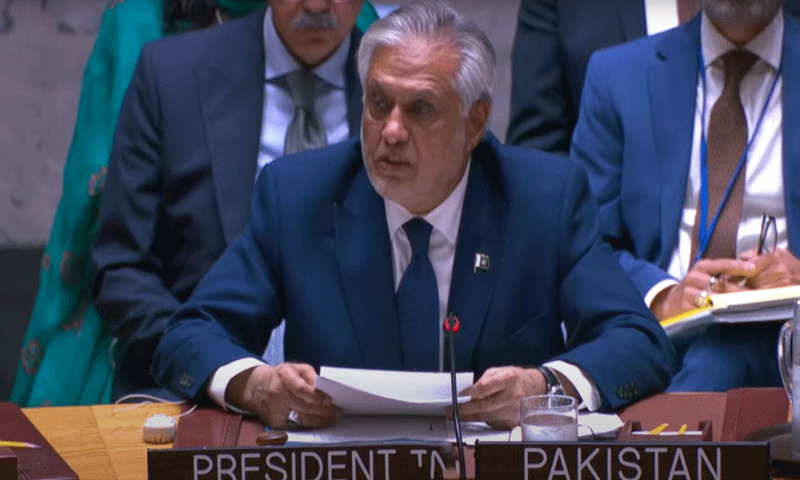
New York, July 22, 2025: In a significant diplomatic breakthrough, the United Nations Security Council (UNSC) on Tuesday adopted a resolution presented by Pakistan that urges member states to resolve international disputes through peaceful means. The resolution was passed during a high-level session chaired by Deputy Prime Minister and Foreign Minister Ishaq Dar, who represented Pakistan in New York.
In his address to the Council, Ishaq Dar reaffirmed Pakistan’s longstanding commitment to the principles enshrined in the UN Charter, including sovereignty, non-interference, and the peaceful resolution of conflicts. He stated that Pakistan has always preferred diplomacy over confrontation, and that the country’s foreign policy is rooted in mutual respect, dialogue, and multilateral cooperation.
Highlighting the global consequences of unresolved conflicts, Dar pointed to the continued crises in Kashmir and Palestine as examples of longstanding disputes that fuel regional instability. He warned that double standards in dealing with such issues undermine international norms and trust in the global system. He also raised serious concerns about the worsening humanitarian situation in Gaza, where more than 58,000 people have reportedly lost their lives amid an ongoing blockade and military operations. He called on the international community to act urgently to address the suffering of the Palestinian people.
The foreign minister also referred to the Kashmir dispute as a long-pending issue on the UNSC agenda. Accusing India of using water as a weapon against Pakistan, Dar described such actions as deeply irresponsible, stating that water is the lifeline of 240 million Pakistanis and must never be politicized.
The resolution introduced by Pakistan emphasizes the importance of dialogue, mediation, and diplomacy as the preferred tools for dispute resolution. It calls for effective implementation of existing UNSC resolutions and greater cooperation between regional organizations and the United Nations to prevent disputes from escalating into conflicts. The resolution further encourages collective international efforts to identify early warning signs of potential crises.
UN Secretary-General António Guterres welcomed the resolution, praising Pakistan’s initiative as both timely and necessary in an increasingly volatile global environment. He said that Pakistan’s leadership on this issue reinforces the international community’s commitment to diplomacy, adding that peace must always be pursued through negotiation rather than force. Guterres emphasized the need for the Security Council to remain vigilant in the face of growing geopolitical tensions, stressing that dialogue must never be abandoned.
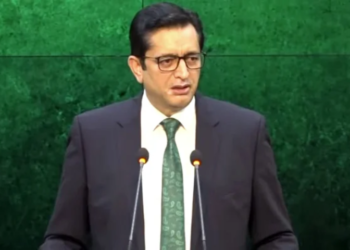
A spokesperson for Pakistan’s Foreign Office hailed the adoption of the resolution as a major diplomatic success and a reflection of Pakistan’s enduring commitment to global peace and stability. The spokesperson said the resolution strengthens the framework for peaceful conflict resolution and enhances the role of multilateral diplomacy in preventing future crises.
As wars rage in Gaza, Ukraine, Sudan, and other regions, the adoption of Pakistan’s resolution is being seen by analysts as a timely move that reinforces the primacy of dialogue and negotiation in global affairs.
In his concluding remarks, Ishaq Dar noted that peace cannot be imposed by force, but must be achieved through consistent dialogue, mutual respect, and shared global responsibility.