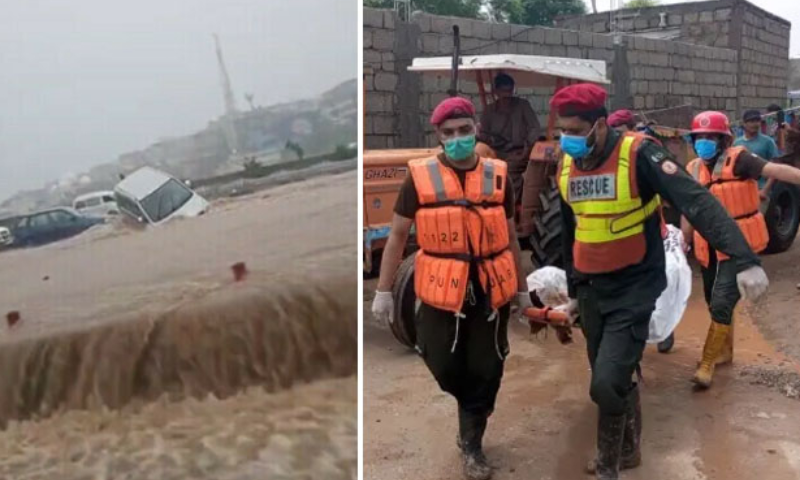
Islamabad, July 23, 2025: In a major breakthrough, authorities in Gilgit-Baltistan confirmed the successful rescue of all tourists and travelers stranded near Babusar Top following a devastating cloudburst earlier this week.
Gilgit-Baltistan government spokesperson Faizullah Faraq announced Wednesday that nearly 250 individuals had been evacuated to safety. He said that, although the majority were accounted for, search efforts are still underway for 10 to 15 people who remain missing, based on eyewitness reports.
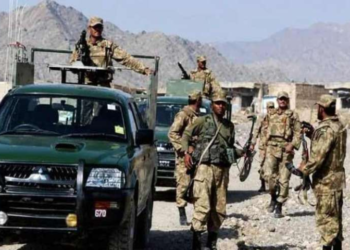
The large-scale rescue operation—spearheaded by local volunteers, police, the district administration, and the Pakistan Army—continues under the directives of Chief Minister Haji Gulbar Khan, who has ordered that no effort be spared in locating the remaining missing persons.
Temporary accommodations have been arranged for rescued tourists in Chilas, and all individuals seen in footage of vehicles being swept away by floodwaters have been found safe, according to Faraq. However, the situation remains dire in other areas of Gilgit-Baltistan. In Astore’s Boalan area, flash floods killed one woman, while relief operations continue in Thore, Diamer, and the Deosai region. Administrative teams are also assessing damage in Ghizer district.
The cloudburst at Babusar Top occurred amid nationwide monsoon devastation that has claimed 245 lives and injured over 600 people since June 26, according to a detailed report issued by the National Disaster Management Authority (NDMA).
In the past 24 hours alone, monsoon-related incidents killed three people and injured two in Khyber Pakhtunkhwa. Islamabad reported two injuries during the same period.
Punjab remains the hardest hit, with 135 deaths and 470 injuries, followed by Khyber Pakhtunkhwa (59 deaths), Sindh (24 deaths), Balochistan (16 deaths), Gilgit-Baltistan (3 deaths), Azad Jammu and Kashmir (2 deaths), and Islamabad (6 deaths). Victims include 83 men, 44 women, and 118 children, while over 600 others have been injured.
The monsoon rains have also caused widespread infrastructure damage, with 854 houses destroyed or damaged and 208 livestock lost. Most fatalities have resulted from collapsing homes, flash floods, landslides, and drowning.
In response to the crisis, the Senate Standing Committee on Climate Change, chaired by Senator Sherry Rehman, held a session to assess the ongoing emergency. Rehman attributed much of the devastation to unregulated construction in flood-prone areas and climate change, stating, “This is not just a natural disaster — this is climate change, and Pakistan remains one of the most vulnerable countries in the world.”
She highlighted a tragic incident in Rawalpindi where a father and daughter were swept away in a private housing society, criticizing poor infrastructure and lack of emergency planning. Rehman called for summoning housing society representatives in the next committee meeting and urged tourists to avoid travel to Gilgit-Baltistan, where heavy rains are forecast and 15 people are still missing near Babusar.
Senator Falak Naz Chitrali sharply criticized the NDMA for what she described as negligence in Chitral, demanding urgent attention to the region.
Meanwhile, officials from the Ministry of Climate Change acknowledged that while floods are a leading cause of casualties, poor urban planning and fragile infrastructure have significantly worsened the impact.
Relief and recovery operations are ongoing across the country as authorities brace for continued monsoon activity in the coming days.