Islamabad, July 24, 2025: Prime Minister Shehbaz Sharif on Thursday commended the World Bank for its principled support of Pakistan’s position on the Indus Waters Treaty, particularly in response to India’s recent unilateral actions that risk undermining international agreements.
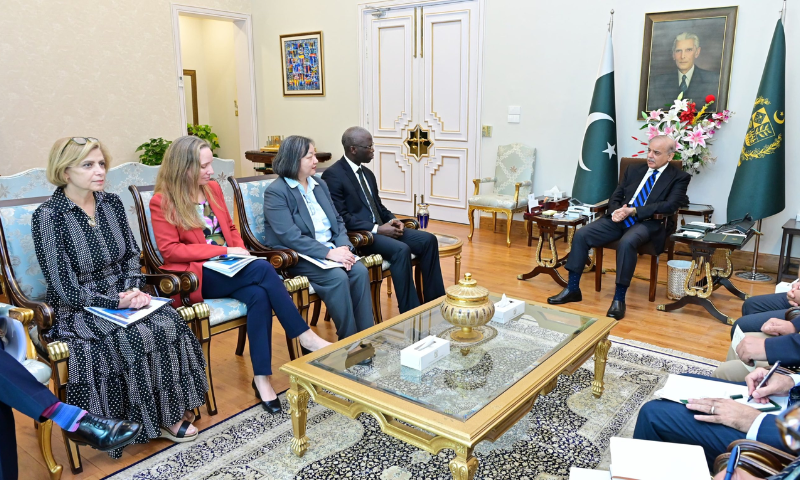
During a meeting in Islamabad with World Bank Regional Vice President for the Middle East, North Africa, Afghanistan, and Pakistan, Ousmane Dione, the Prime Minister thanked the Bank for backing Pakistan’s legitimate concerns under the 1960 treaty, a cornerstone agreement on transboundary water sharing between Pakistan and India.
India had earlier placed its participation in the treaty “in abeyance” following an April incident in Indian Illegally Occupied Jammu and Kashmir, where 26 people were killed. New Delhi blamed Pakistan for the attack — an allegation Islamabad strongly denies.
Reaffirming Pakistan’s commitment to international law and regional peace, the Prime Minister emphasized the need for dialogue-based dispute resolution and adherence to established agreements. “Pakistan remains dedicated to peaceful engagement and upholding global norms,” he said.
Highlighting Pakistan’s decades-long partnership with the World Bank, Shehbaz Sharif praised the strategic Country Partnership Framework that has supported national priorities across critical sectors including energy, education, climate resilience, and governance reforms.
He also expressed gratitude for the World Bank’s swift assistance in the aftermath of the 2022 floods, which played a vital role in relief, rehabilitation, and rebuilding efforts in devastated regions.
In response, Ousmane Dione reaffirmed the Bank’s strong commitment to furthering collaboration with Pakistan and supporting its economic development goals. He acknowledged Pakistan’s strides toward macroeconomic recovery and appreciated the government’s efforts to ensure fiscal discipline and sustainable growth.
The meeting concluded with a joint pledge to deepen cooperation across multiple sectors in pursuit of inclusive development and a more prosperous future for the people of Pakistan.