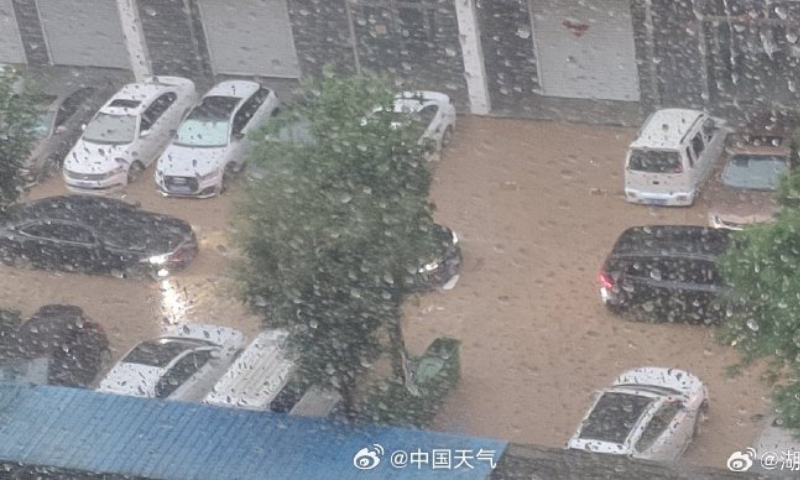
Beijing, July 26, 2025: Torrential storms have drenched northern China with nearly a year’s worth of rain in just 24 hours, submerging streets and cutting off roads in Baoding, an industrial city located roughly 160 kilometers southwest of Beijing, prompting mass evacuations and raising alarm over flood risks in the capital.
According to state broadcaster CCTV, the worst-hit area was Yi, in western Baoding, which received 448.7 mm (17.7 inches) of rainfall by early Friday — close to the city’s average annual precipitation of just over 500 mm. The deluge caused flash floods, power outages in some villages, and damage to infrastructure including bridges and roadways.
The China Meteorological Administration (CMA) reported that at least 19,453 residents from 6,171 households were evacuated as part of emergency measures. Videos shared online showed police wading through waterlogged streets amid ongoing downpours.
While no casualties or missing persons had been reported as of Friday afternoon, authorities remained on high alert. The rainfall in Baoding drew comparisons to the historic 2023 typhoon, which brought the heaviest rains to Beijing in over 140 years.
Though Beijing has yet to face the full brunt of the storm system, forecasts predict over 50 mm of rain in some districts over a six-hour period from Friday afternoon to Saturday morning. Flash flood alerts have been issued for four of the capital’s 16 districts, particularly in the mountainous northern and western regions, where the risk of landslides and debris flows is high.
Baoding’s Zhuozhou district, which suffered severe flooding during the 2023 typhoon, again saw roads and bridges cut off after receiving over 190 mm of rain by Friday morning. Hebei province, where Baoding is located, upgraded its emergency response to deal with the worsening situation.
Elsewhere, heavy rains disrupted railway services in Inner Mongolia, forcing the suspension of several passenger train routes through high-risk areas from Friday through Tuesday.
Hebei’s 2024 climate bulletin revealed the province recorded 640.3 mm of rainfall last year — 26.6% above its long-term average — and has experienced consecutive years of above-average rainfall since 2020. Last summer, Baoding and neighboring cities recorded 40% to 80% more rainfall than normal.
Experts have linked the intensifying precipitation in China’s traditionally arid north to global warming and the East Asian monsoon, part of a broader pattern of extreme weather that threatens to overwhelm China’s ageing flood defenses. The increasing frequency and severity of such events pose serious challenges to urban planning, disaster response systems, and China’s $2.8 trillion agricultural sector.
In response to ongoing flooding in Hebei and Shaanxi provinces, the Chinese central government has dispatched 23,000 relief items, including emergency kits and blankets, to support displaced populations.