Washington, July 30, 2025: In a move that could escalate trade tensions between Washington and New Delhi, US President Donald Trump announced on Wednesday that the United States will impose a 25% tariff on goods imported from India, effective August 1.
Speaking via a post on Truth Social, Trump said the decision was driven by India’s “extremely high tariffs and non-monetary trade barriers,” which he described as “strenuous and obnoxious.” He also stated that India would face an additional, unspecified penalty starting the same day, though he did not elaborate on its nature or amount.
“While India is our friend, we have, over the years, done relatively little business with them because their tariffs are far too high, among the highest in the world,” Trump wrote.
“They also maintain the most difficult non-monetary trade barriers of any country.”
He further criticized India’s defense and energy ties with Russia, noting that New Delhi continues to be Russia’s largest energy buyer, alongside China, even amid global calls to end the war in Ukraine.
The announcement effectively derails months of trade negotiations between the two nations, which had been working toward a limited trade agreement. The two sides had conducted several rounds of discussions, aiming to resolve key issues such as market access for US agricultural and dairy products.
Despite some progress, Indian negotiators resisted opening the domestic market to imports like wheat, corn, rice, and genetically modified soybeans, citing threats to millions of local farmers’ livelihoods.
The new tariffs are expected to affect India’s exports to the US, which totaled approximately $87 billion in 2024. Key sectors likely to be impacted include textiles, pharmaceuticals, gems and jewelry, and petrochemicals. The US currently has a $45.7 billion trade deficit with India.
India’s commerce ministry, which leads trade talks with the US, did not immediately respond to media inquiries regarding the announcement.
The move places India among several countries targeted under Trump’s “Liberation Day” trade policy, which seeks to overhaul US trade relationships by enforcing stricter reciprocity and reducing trade imbalances.
US trade officials have frequently flagged India’s high average applied tariffs, particularly in agriculture — averaging nearly 39%, with certain products like vegetable oils, apples, and corn attracting duties as high as 50%.
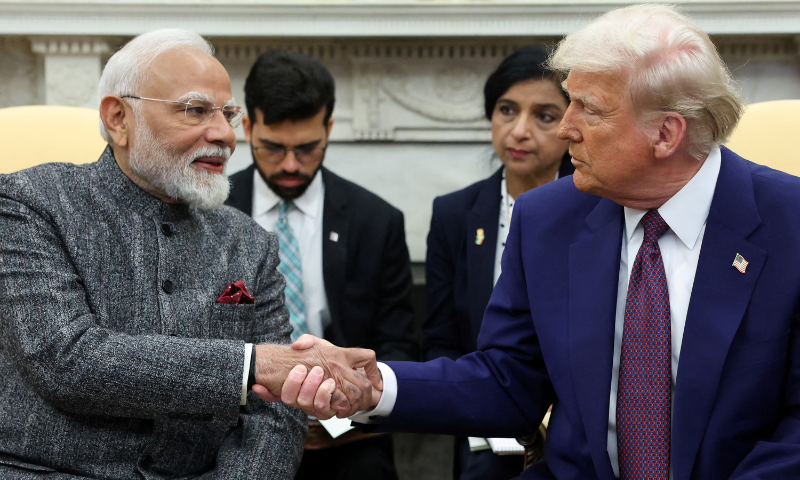
The development also marks a setback to previous commitments by Prime Minister Narendra Modi and Trump to conclude the first phase of a trade deal by autumn 2025 and scale up bilateral trade to $500 billion by 2030, from $191 billion in 2024.
The impact of the new US tariffs could prompt retaliatory measures from India, potentially targeting US manufacturing and energy exports, including liquefied natural gas, crude oil, and coal, which amounted to about $42 billion last year.
While Indian officials have continued to describe the US as a strategic partner, particularly in counterbalancing China, they have consistently emphasized the need to protect domestic interests in areas such as agriculture, digital governance, and subsidies.