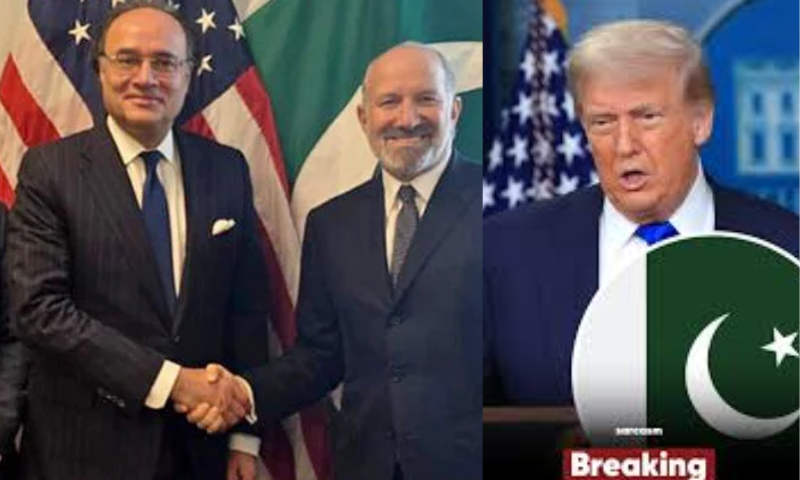
Islamabad/Washington, July 31, 2025: In a major diplomatic breakthrough, Pakistan and the United States have finalized a landmark trade and investment agreement, marking a significant step in strengthening bilateral ties and economic cooperation.
The deal was confirmed by former U.S. President Donald Trump, who took to social media to personally announce the development:
“We have just concluded a Deal with the Country of Pakistan, whereby Pakistan and the United States will work together on developing their massive Oil Reserves. We are in the process of choosing the Oil Company that will lead this Partnership.”
The agreement covers enhanced collaboration in energy, minerals, information technology, cryptocurrency, and trade facilitation. A major component includes reductions in tariffs, especially on Pakistani exports to the U.S., and a renewed focus on attracting American investment into Pakistan’s infrastructure and development sectors.
Pakistan’s Finance Minister Senator Muhammad Aurangzeb, who led the negotiations in Washington, described the agreement as a cornerstone of a broader economic and strategic partnership. He held key meetings with U.S. Commerce Secretary Howard Lutting and Trade Representative Jameson Greer, alongside Ambassador Rizwan Saeed Sheikh and Commerce Secretary Jawad Paul.
“This deal reflects a maturing relationship based on mutual economic interest and shared geopolitical concerns,” Aurangzeb told Geo News, adding that Pakistan was committed to reducing its trade imbalance with the U.S.
Deputy Prime Minister Ishaq Dar also celebrated the milestone, posting on X (formerly Twitter):
“Pakistan concludes deal with USA, AlhamdoLilah.”
The timing of the deal is significant as it comes amid rising U.S.-India trade tensions. Earlier the same day, Trump announced that a 25% tariff would be imposed on Indian imports starting Friday, citing India’s protectionist trade policies, continued energy dealings with Russia, and participation in the BRICS bloc.
“They [India] have one of the highest tariffs in the world… They’re willing to cut it very substantially. We’re talking to India now — we’ll see what happens.”
India’s exporters have expressed concern that the new tariffs could severely affect competitiveness in sectors like textiles, furniture, and footwear — especially against rivals such as Vietnam, China, and now, Pakistan.
The trade deal also underscores Washington’s recalibrated approach in South Asia, especially following the May 10 ceasefire between India and Pakistan. Trump had claimed credit for helping broker the de-escalation, which followed weeks of military tension after a deadly attack in Indian Illegally Occupied Jammu and Kashmir (IIOJK) on April 22.
While India rejected Trump’s claim of mediation, Pakistan welcomed U.S. diplomatic efforts, praising both Trump and Secretary of State Marco Rubio for their role in reducing hostilities.
According to the U.S. Trade Representative’s office, Pakistan-U.S. goods trade totaled $7.3 billion in 2024, with the U.S. running a $3 billion trade deficit — a gap that officials believe will narrow under the new agreement.
The Ministry of Commerce said a detailed MoU and supplementary agreements would be released in the coming days, focusing on energy cooperation, digital economy, and market access.
“This is a landmark shift in Pakistan’s economic diplomacy,” said a senior government official. “From being aid-dependent to building investment-driven partnerships — this is a new direction.”