Islamabad, August 1, 2025: In a sharp rebuke to the government, a multi-party opposition conference on Friday warned of a rapidly shrinking political space in Pakistan, accusing the ruling coalition of suppressing dissent, curbing constitutional freedoms, and engaging in political victimisation. The conference concluded with a call for a renewed Charter of Democracy to restore democratic norms, uphold the Constitution, and rebuild political consensus.
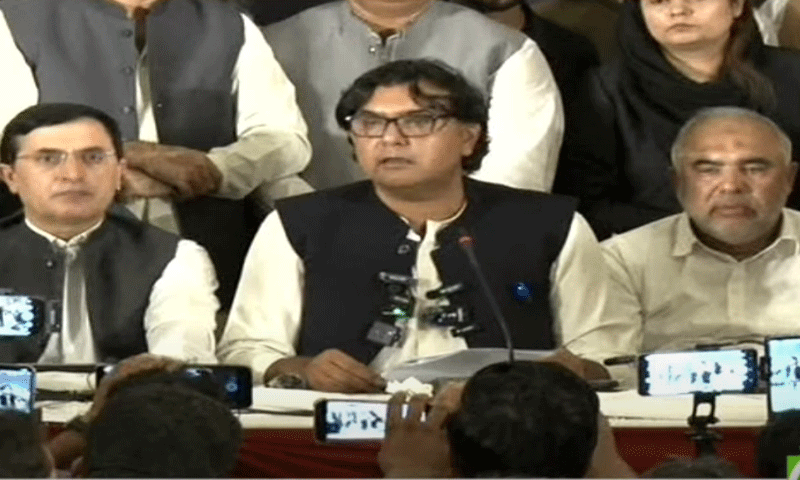
Addressing a press conference after the two-day Tehreek-e-Tahafuz-e-Ayeen-e-Pakistan (TTAP) multi-party conference, senior politician Mustafa Nawaz Khokhar said the opposition was being “deliberately cornered” and denied its constitutional right to assembly. He also lamented worsening economic conditions, citing that 45% of the population was now living below the poverty line, and unemployment had reached 20%, pushing the business community to seek opportunities abroad.
Reading out the joint declaration, Khokhar demanded the immediate release of PTI founder Imran Khan and his wife Bushra Bibi, and called for their cases to be fixed before the Islamabad High Court. He said their continued incarceration was emblematic of what the declaration described as “rising fascism and political revenge.”
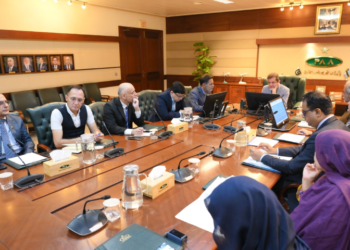
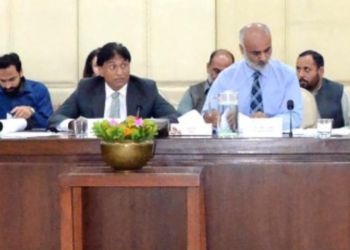
The gathering, attended by opposition leaders, lawyers, civil society members, and media representatives, denounced the government’s alleged manipulation of parliamentary proceedings, particularly targeting opposition leaders in the Senate and National Assembly, calling recent decisions against them “politically motivated.”
The joint statement emphasised the need for a new consensus-based Charter of Democracy, which would include:
- The establishment of a Truth and Reconciliation Commission
- Media freedom through enforceable legal protections
- Guarantees for women’s rights and education
- Restoration of usurped provincial rights
- Abolition of the 26th Constitutional Amendment
- A transparent and independent judicial appointments system
The conference praised the six judges who recently raised alarms over judicial interference, declaring them “national heroes.”
The participants rejected the results of the 2024 general elections, demanding the formation of an independent and empowered Election Commission to ensure free and fair future elections. They also proposed direct elections for Senate members and equal legislative powers for both parliamentary houses.
Focusing on regional grievances, the APC declared that:
- Balochistan’s natural resources belong to its people, and all missing persons must be presented in court.
- Civilian institutions should be tasked with maintaining law and order, and restrictions on religious pilgrims travelling overland for Arbaeen must be lifted.
- Cross-border trade routes should be reopened to support regional economies.
- The Khyber Pakhtunkhwa High Court ruling on Action in Aid of Civil Power Regulations should be restored, and the Supreme Court appeal by the PTI-led provincial government should be withdrawn.
The conference also called for water distribution in accordance with the 1993 accord and opposed canal projects threatening the Indus Delta ecosystem.
The joint declaration condemned media restrictions, censorship, and crackdowns on independent journalism. It demanded an immediate end to Jirga-imposed injustices against women, citing them as violations of fundamental rights.
In a rare foray into international affairs, the APC called for Israeli Prime Minister Benjamin Netanyahu to be declared an international war criminal and tried at the International Court of Justice for alleged war crimes in Gaza.
The conference concluded with a unified call to rebuild inter-party working relationships, warning that without institutional reforms and mutual respect for democratic principles, Pakistan’s political, economic, and social stability will remain under threat.