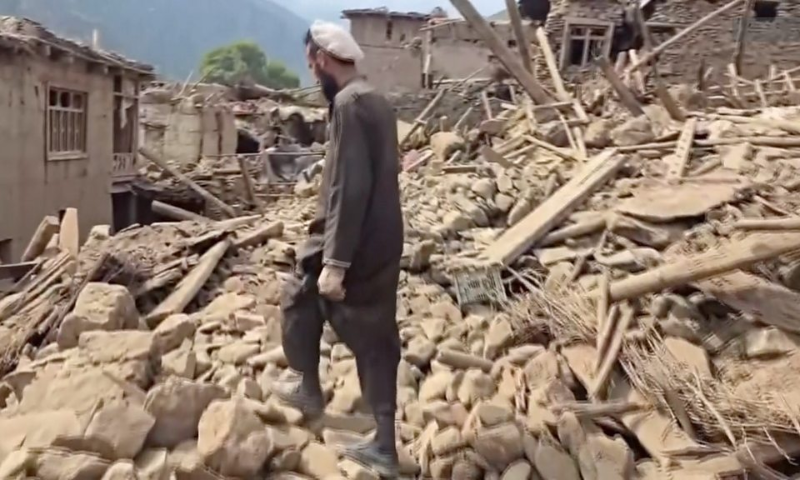
Kabul, September 3, 2025: Afghanistan on Wednesday airdropped commando units into quake-hit regions to rescue survivors trapped under rubble, as the death toll from two powerful earthquakes this week climbed to 1,457. Aid agencies warned that relief efforts are running out of time, with food stocks for victims set to be exhausted within weeks.
Dozens of commando forces were deployed to remote villages in Kunar and Nangarhar provinces, where helicopters could not land, to carry the injured to safety. Authorities said more than 3,394 people were injured and over 6,700 homes destroyed in the disaster.
The UN World Food Programme (WFP) cautioned that its funding for Afghanistan will only cover food needs for four weeks.
“Four weeks is just not enough even to meet the basic needs of the population struck by the earthquake, let alone help victims rebuild their lives,” said John Aylieff, WFP’s country director. He noted that the agency lost a helicopter critical for relief operations after funding cuts earlier this year.
The first magnitude-6 quake struck shortly after midnight on Sunday, followed by a magnitude-5.5 aftershock on Tuesday evening, triggering landslides and cutting off roads to already isolated areas. The Taliban administration has set up camps and two coordination centres for aid, but officials admitted air support is desperately needed.
Survivors in hard-hit villages described grim scenes. In Lulam village, 63-year-old Darbar said her family had waited three days without aid after their house collapsed.
“No one even hears our voices,” she said, nursing chest injuries. “We have no house, nothing to eat. We are just sitting with hope in God.”
Entire families have been wiped out, with locals digging graves using pickaxes and carrying bodies on makeshift stretchers.
The UN Office for the Coordination of Humanitarian Affairs (OCHA) warned of worsening conditions as flimsy stone and timber homes collapsed on unstable ground weakened by days of rain. The agency called for emergency shelter, food assistance, clean water, sanitation, and medical supplies.
Doctors Without Borders (MSF) said it had distributed trauma kits at hospitals in the region but stressed more international support was urgently needed.
Afghanistan, home to 42 million people, is among the world’s most disaster-prone countries due to its location along the collision zone of the Indian and Eurasian tectonic plates. Years of war, poverty, and donor fatigue — worsened by Taliban restrictions on women and aid workers — have left the country dangerously vulnerable to such calamities.