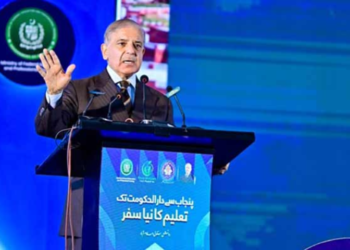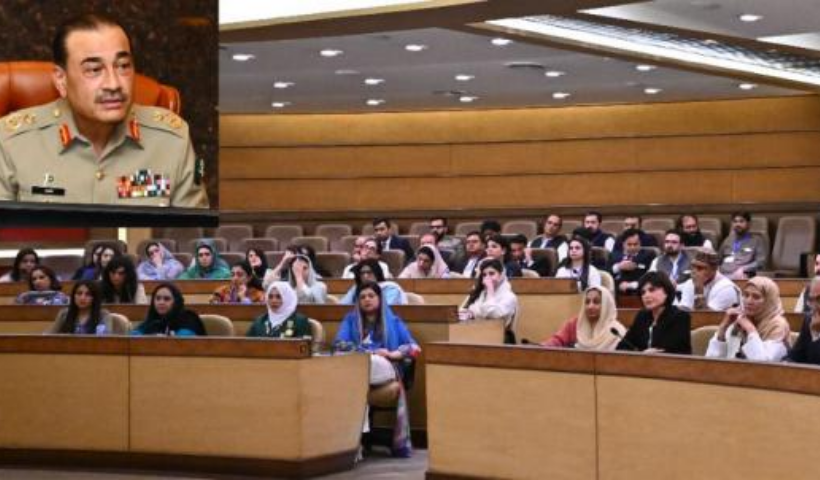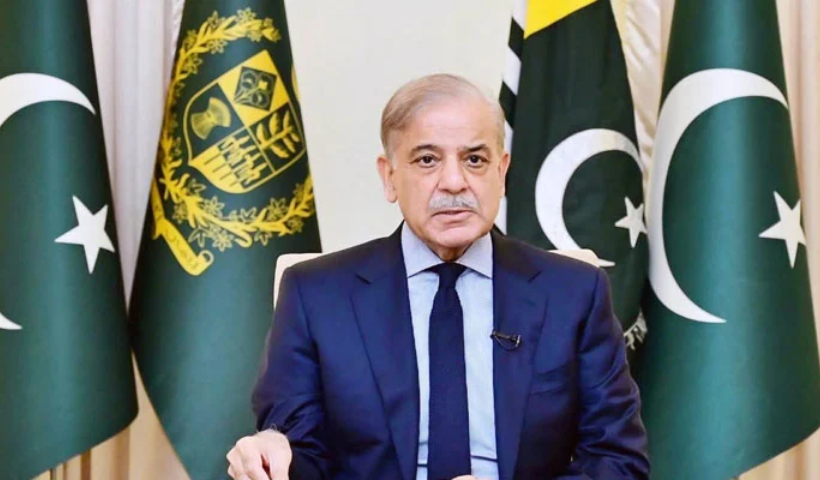
Islamabad, October 21, 2025: Prime Minister Shehbaz Sharif on Tuesday launched INSPIRE — the Initiative to Nurture Semiconductor Professionals for Industry, Research & Education — marking Pakistan’s formal entry into the global semiconductor ecosystem, valued at over $600 billion and projected to exceed $1 trillion by 2030.
The launch ceremony, held in Islamabad, marked what the prime minister described as a “milestone in Pakistan’s transition toward a knowledge-based digital economy”, emphasizing innovation, research, and human capital as the new engines of growth.
Spearheaded by the Ministry of Information Technology and Telecommunication (MoITT) and executed by the Pakistan Software Export Board (PSEB), INSPIRE is Pakistan’s National Semiconductor Initiative, aimed at developing a skilled workforce and establishing the foundations of a domestic semiconductor industry.
“Our vision is to prepare Pakistan’s youth for the industries of tomorrow,” the prime minister said. “Through this initiative, we are building the foundations of a new economic frontier — one where Pakistan contributes talent, technology, and innovation to the world.”
Shehbaz Sharif assured full government backing for the programme and directed the relevant ministries to accelerate implementation. He noted that while the Planning Ministry had allocated Rs 4.5 billion under the Public Sector Development Programme (PSDP), “funding is not an issue” and the initiative would receive all necessary resources.
The prime minister also highlighted ongoing government efforts toward digital governance, including the creation of the Pakistan Digital Authority, the digitisation of the Federal Board of Revenue (FBR), and the development of a cashless economy.
Commending the MoITT and PSEB, Shehbaz lauded the Special Investment Facilitation Council (SIFC) for fostering public–private partnerships and facilitating technology investments critical to initiatives like INSPIRE. He reaffirmed his government’s resolve to strengthen Pakistan’s digital and industrial capabilities through education, inclusion, and global collaboration.
‘Empowering youth for global innovation’
Federal Minister for IT and Telecommunication Shaza Fatima Khawaja described INSPIRE as a reflection of the prime minister’s vision for a technology-driven, inclusive economy, empowering youth and women to play leadership roles in global innovation.
“INSPIRE will enable our students, researchers, and professionals to transition from learning to leading roles in the global semiconductor industry,” she said, adding that the ministry was expanding international partnerships in semiconductor design, broadband infrastructure, and advanced manufacturing.
Chairman of the National Semiconductor Task Force, Dr. Naveed Sherwani, outlined the strategic roadmap for developing Pakistan’s semiconductor ecosystem.
“My vision for Pakistan’s semiconductor future has always been to move beyond training talent — it is to build an interconnected ecosystem that unites academia, research, and industry,” he said. “INSPIRE represents the first step toward that long-term national goal.”
PSEB CEO Abu Bakar described INSPIRE as a cornerstone project for building Pakistan’s indigenous technological capacity, noting that the programme would train 7,200 professionals over five years in semiconductor design, verification, and research.
Building foundations for chip design and manufacturing
The initiative will engage nine public-sector universities across Pakistan’s northern, central, and southern regions and establish six Integrated Circuit (IC) labs. As the first phase of Pakistan’s National Semiconductor Development Roadmap, INSPIRE aims to lay the groundwork for future Outsourced Assembly and Testing (OSAT) and fabrication capabilities, enabling Pakistan to integrate into the global semiconductor supply chain.
With the launch of INSPIRE, Pakistan has entered what the government calls a new chapter of digital transformation — one focused on innovation, opportunity, and resilience. The programme embodies a national vision to harness the potential of the country’s youth, strengthen international partnerships, and position Pakistan as a credible contributor to the trillion-dollar global semiconductor industry.