Islamabad, October 23, 2025: Pakistan and Poland on Thursday reaffirmed their commitment to expanding bilateral cooperation in diverse fields including trade, energy, defence, education, technology, and fintech.
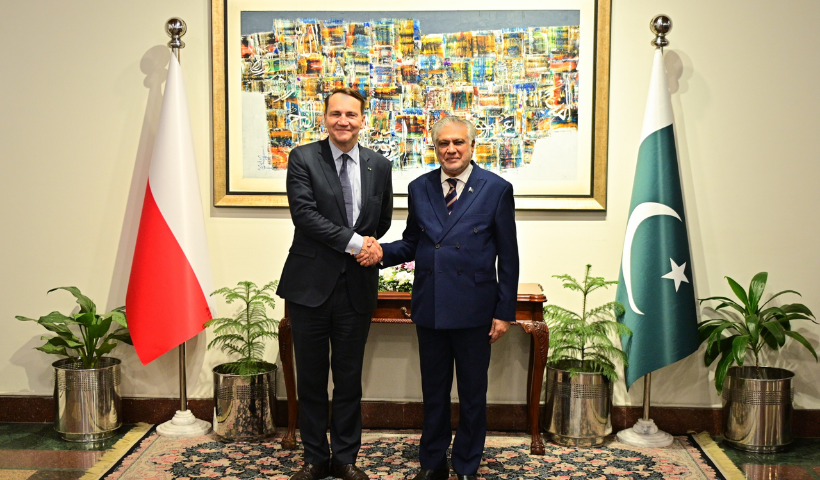
The understanding was reached during a meeting between Deputy Prime Minister and Foreign Minister Ishaq Dar and Polish Foreign Minister Radoslaw Sikorski, followed by a joint press stakeout in Islamabad.
Both leaders expressed satisfaction over the positive trajectory of Pakistan–Poland relations and stressed the need to tap the vast potential for economic and strategic collaboration.
“We have over a billion dollars in bilateral trade, and both sides agreed there remains immense untapped potential to expand trade and economic cooperation,” Dar said. “Today we have signed a memorandum of understanding that envisions regular bilateral consultations.”
He noted that Poland’s expertise in oil and gas could greatly assist Pakistan’s energy sector, pointing out that a leading Polish company had already invested nearly half a billion dollars in Pakistan.
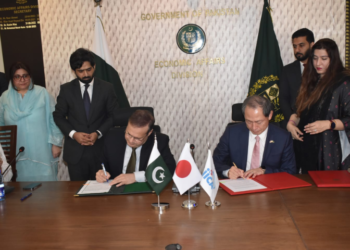
To institutionalize dialogue, two MoUs were signed — one between the foreign ministries of both countries to establish a mechanism for regular consultations, and another between the Institute of Strategic Studies Islamabad (ISSI) and the Polish Institute of International Affairs, promoting think-tank collaboration.
Dar recalled the historical ties between the two nations dating back to World War II, when thousands of Polish refugees found refuge in Karachi and Quetta. He paid special tribute to Air Commodore Władysław Turowicz, a Polish pilot and engineer who played a pivotal role in the early development of the Pakistan Air Force.
“His story is a monument to sacrifice, dignity, and honour,” Dar remarked, adding that Pakistan viewed Poland as a key partner both bilaterally and within the European Union.
He congratulated Poland on its economic rise as a trillion-dollar economy and appreciated its tenure as President of the Council of the European Union earlier this year.
Dar also thanked Poland for supporting Pakistan’s election to the UN Security Council and sought continued Polish backing for the renewal of Pakistan’s GSP Plus status with the European Union in 2027.
“GSP Plus is a win-win arrangement for both Pakistan and the EU as it promotes sustainable development, good governance, and poverty alleviation,” he said.
Reaffirming Pakistan’s principled stance on Jammu and Kashmir, Dar emphasized resolution of the dispute in line with UN Security Council resolutions and the aspirations of the Kashmiri people. He also expressed concern over militant elements in Afghanistan and underscored the importance of strengthening multilateralism under the UN Charter.
Polish Foreign Minister Radoslaw Sikorski, in his remarks, said Poland attached great importance to its relations with Pakistan and aimed to deepen cooperation in trade, public finance, fintech, mining, water management, and the energy sector.
“Polish companies have long been engaged in geological services in Pakistan and see great potential for future collaboration,” Sikorski said.
He praised the growing Pakistani community in Poland—around 2,000 people, including many students—describing them as an important bridge between the two nations. Sikorski reiterated Poland’s zero tolerance for illegal migration, while affirming openness toward legal migration and genuine students.
On global issues, the Polish minister reaffirmed Poland’s support for the sovereignty and territorial integrity of all states, particularly in the context of Russia’s invasion of Ukraine, and reiterated support for a two-state solution to the Palestine-Israel conflict.
“Poland has recognized Palestine for decades and believes both peoples deserve to live in dignity and peace,” he said.
Both leaders reaffirmed their determination to transform Pakistan–Poland relations into a comprehensive, long-term, and mutually beneficial partnership.
Dar noted that future cooperation could also extend to railways, agriculture, energy, and transport technology transfer, while both sides agreed on the need for effective multilateral reforms to address enduring global issues such as Kashmir and Gaza.