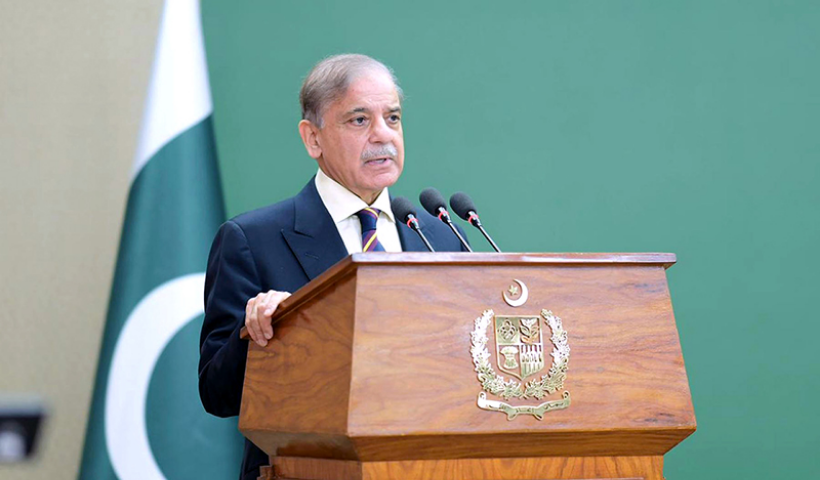
Islamabad, October 24, 2025: Prime Minister Shehbaz Sharif on Friday emphasized the importance of the China–Pakistan Economic Corridor (CPEC) and transnational transport initiatives, saying that enhanced connectivity would synergize the economic strengths of regional countries and usher in a new era of trade, economic, and energy cooperation across Asia and beyond.
Addressing the concluding session of the two-day Regional Transport Ministers Conference in Islamabad, the prime minister described regional cooperation as a “win-win proposition” that would strengthen collective peace and development efforts.
“Let us together sow the seeds of cooperation so that we may harvest the fruits of development and prosperity for our people, our region and beyond,” he said.
Hosted by the Ministry of Communications under the theme “Regional Connectivity: Opportunities for the Region,” the conference brought together transport ministers and delegates from 20 countries, as well as representatives of international organizations including the Asian Development Bank (ADB), Economic Cooperation Organization (ECO), International Road Transport Union (IRU), and the United Nations ESCAP.
The prime minister highlighted Pakistan’s historic role as a hub of connectivity—from the ancient Silk Road to the modern Belt and Road Initiative (BRI)—and said that shifting global dynamics had turned this ancient corridor into a “strategic necessity for the future.”
He underscored Pakistan’s geographic significance as a link between China, Central Asia, and the Middle East, calling the country’s location a “unique tri-junction of economic corridors.” He said Pakistan’s ports at Gwadar and Karachi serve as key transit points on the maritime Silk Road, offering immense potential for regional trade.
Shehbaz Sharif also praised the vision of former prime minister Nawaz Sharif, who signed the original CPEC framework, describing it as a “transformative experience” that connected markets and people across China, Central Asia, South Asia, and the Middle East.
Announcing that Pakistan had now entered an “exciting phase” of CPEC-2.0, the prime minister said the new phase would focus on business-to-business partnerships, investment opportunities for Chinese enterprises, and mutual prosperity.
He also highlighted ongoing rail connectivity projects including the Trans-Afghan Railway, the Islamabad–Tehran–Istanbul corridor, and plans to enhance air links with Central Asian Republics under frameworks like the TIR Convention.
Calling connectivity a multidimensional concept encompassing roads, railways, air routes, and digital infrastructure, Shehbaz said Pakistan was investing heavily in data and technology to integrate with the Fourth Industrial Revolution.
“We may not have black gold, but our youth are our greatest asset,” he said, noting that 60% of Pakistan’s population is between 15 and 30 years old. “They are poised to become the harbinger of Pakistan’s rapid progress and prosperity in the times to come.”
Earlier, in his concluding remarks, Minister for Communications Abdul Aleem Khan said participants reaffirmed their commitment to advancing connectivity as a pathway to shared opportunity and prosperity.
The conference also stressed the need for innovative financing mechanisms, liberal visa policies, and improved road safety measures, particularly for vulnerable users.
Abdul Aleem Khan expressed hope that the deliberations would pave the way for practical cooperation and joint ventures in the months ahead, reaffirming Pakistan’s readiness to facilitate regional dialogue and collaboration.