Islamabad, November 17, 2025: Federal Minister for Finance and Revenue Senator Muhammad Aurangzeb on Monday warned that Pakistan’s long-term economic outlook is deeply tied to how effectively the country confronts the twin national challenges of rapid population growth and rising climate vulnerability.
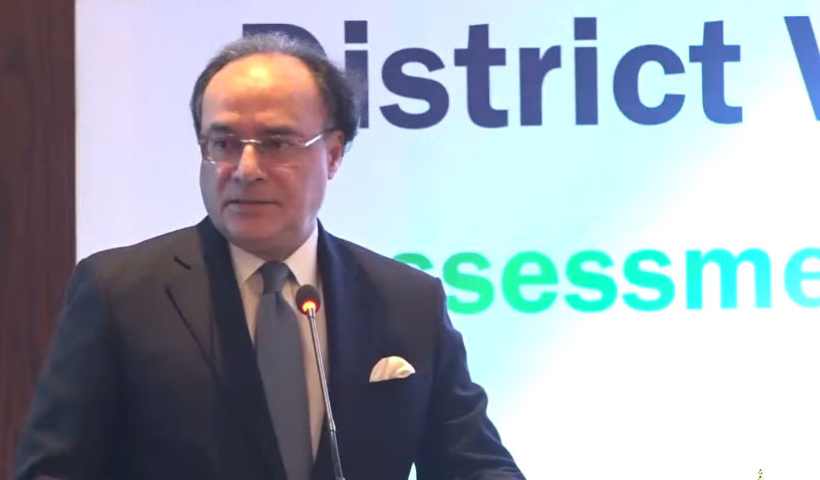
He made these remarks while speaking at the launch ceremony of the District Vulnerability Index for Pakistan (DVIP), organized by the Population Council in Islamabad.
Senator Aurangzeb said that although Pakistan was progressing toward macroeconomic stability and growth, the country’s full economic potential could not be achieved without acknowledging and addressing the pressures posed by an expanding population and escalating climate risks.
He pointed out that high population growth continued to fuel persistent human development challenges, such as widespread child stunting, learning poverty, and a workforce that remained inadequately prepared for the future.
Simultaneously, he noted, the accelerating impacts of climate change were exposing communities to extreme weather events, including heatwaves, flooding, droughts, and environmental degradation. These effects, he said, were particularly severe in districts already burdened by poverty, fragile infrastructure, and limited access to basic services.
The finance minister reaffirmed the ministry’s commitment to supporting national policymaking in both population and climate domains by incorporating these priorities into budgeting, planning, and resource allocation. He highlighted that finance ministries around the world were increasingly adopting similar approaches to mainstream climate and demographic considerations, adding that Pakistan “must move in the same direction to build resilience and ensure equitable development.”
Commending the Population Council for its three-year research effort, Senator Aurangzeb praised the DVIP as a comprehensive, data-driven tool that offers actionable insights across six critical domains. He said the index sheds light on geographic disparities and identifies high-risk districts—particularly in Balochistan and Sindh—where social vulnerabilities and climate exposure combine to create compounded risks.
He also underlined the growing challenge of rural-to-urban migration, noting that the expansion of informal settlements—marked by inadequate water, sanitation, and hygiene conditions—was worsening nutrition indicators and perpetuating child stunting. He emphasized the need for deeper research into urban vulnerabilities to enable better-informed national planning.
Calling for vulnerability metrics to be embedded into future development and resource allocation frameworks, the minister stressed that recognizing the interlinkages between population trends and climate impacts would be crucial for ensuring equity, strengthening resilience, and directing support to the districts most in need.
Senator Aurangzeb also appreciated the support of development partners, particularly the UK Government and the Foreign, Commonwealth & Development Office (FCDO), for their continued assistance in governance reforms, revenue mobilization, and evidence-based policymaking.
Expressing confidence in the DVIP’s contribution to shaping future strategies, he thanked the organizers and researchers for producing a tool that he said would significantly inform Pakistan’s national development agenda.