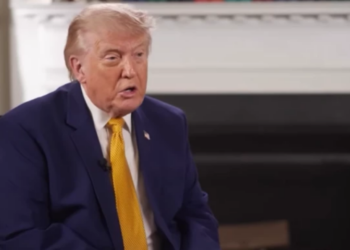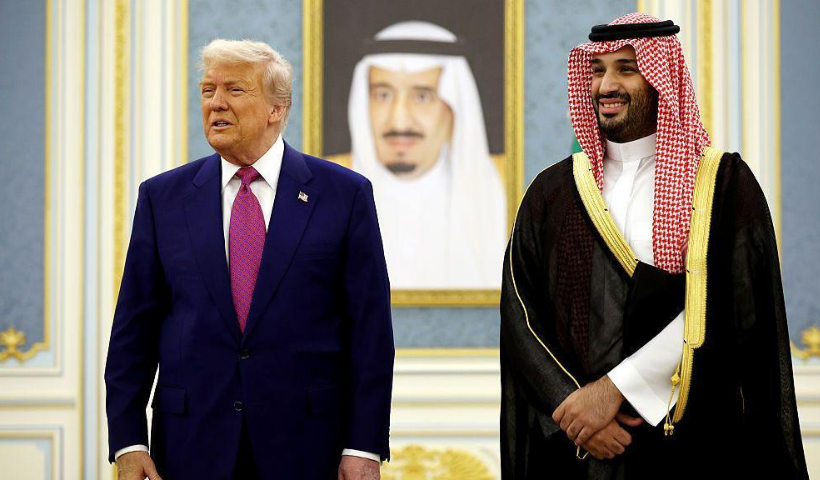
Washington, November 19, 2025: US President Donald Trump will welcome Saudi Arabia’s de facto ruler, Crown Prince Mohammed bin Salman (MBS), to the White House on Tuesday, in a high-stakes visit expected to advance a potential F-35 fighter jet sale and a series of major business agreements.
This marks MBS’s first visit to the United States since the 2018 killing of journalist Jamal Khashoggi inside the Saudi consulate in Istanbul — an incident that drew global condemnation and severely strained US-Saudi ties. While US intelligence agencies concluded that the crown prince approved the operation, MBS has denied ordering the killing, though he acknowledged overall responsibility as Saudi Arabia’s leader.
His red-carpet reception in Washington signals a full diplomatic reset between the two countries.
During the day-long engagement, MBS is scheduled to hold talks with Trump in the Oval Office, join him for lunch in the Cabinet Room, and attend a black-tie dinner later in the evening.
The White House is looking to tap into a $600 billion Saudi investment pledge announced during Trump’s 2017 visit to the kingdom. A senior US official told Reuters that deals spanning defence, technology, manufacturing and other sectors are expected to be announced following the meeting.
Trump told reporters on Monday that the United States “will be selling” F-35 fighter jets to Saudi Arabia. Riyadh has requested to purchase 48 F-35s — a move that would represent the first US sale of the advanced aircraft to the kingdom and a significant shift in longstanding American policy. Until now, Israel has been the only Middle Eastern country allowed to acquire the jets, under Washington’s commitment to maintain Israel’s “qualitative military edge.”
Beyond defence acquisitions, Riyadh is seeking security guarantees, access to artificial intelligence technologies, and progress on a civilian nuclear programme.
“The Saudis will be spending a lot of money tomorrow in the US,” a senior White House official said.
Analysts say Trump wants to deepen US-Saudi ties to prevent Riyadh from drifting toward China. Dennis Ross, a former US Middle East negotiator, said Trump aims to build “a multifaceted relationship” spanning security, finance, energy and AI. “He wants them bound to us on these issues and not China,” Ross noted.
Trump is also expected to push MBS to join the Abraham Accords and normalise diplomatic relations with Israel. Saudi Arabia has so far been reluctant to take the step without clearer prospects for Palestinian statehood, a demand overshadowed by ongoing turmoil in Gaza.
During Trump’s first term, the US brokered historic normalisation agreements between Israel and Bahrain, the UAE, Morocco and Sudan in 2020. More recently, Kazakhstan agreed to join the accords. But Washington has long viewed Saudi participation as the critical prize for broader Middle East peace.
“It’s very important to him that they join the Abraham Accords during his term, and so he has been hyping up the pressure on that,” a senior White House official said.
Jonathan Panikoff, a former US intelligence officer now at the Atlantic Council, said Trump’s push for Saudi-Israel normalisation is unlikely to hinder progress on a new US-Saudi security pact, especially given Riyadh’s promised investment flows.
“President Trump’s desire for investment into the US could help soften the ground for expanding defence ties even as he pushes for Israeli-Saudi normalisation,” Panikoff said.