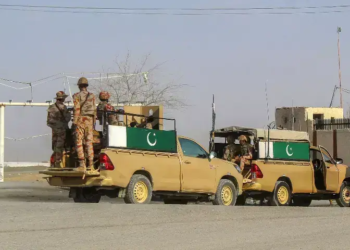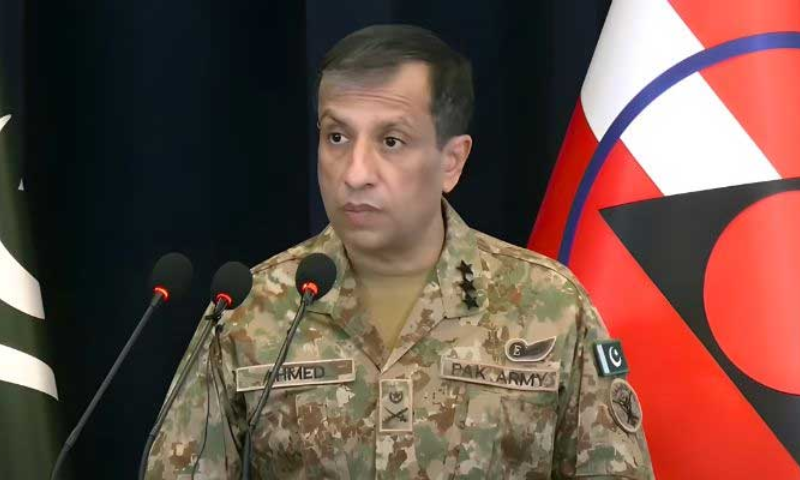
Islamabad, November 29,2025: Inter-Services Public Relations (ISPR) Director General Lieutenant General Ahmed Sharif Chaudhry on Friday accused Afghan Taliban forces of routinely engaging Pakistani border posts with unprovoked fire to facilitate the infiltration of terrorists into Pakistan.
Speaking to senior journalists in Islamabad, the military spokesperson said that coordinated firing from across the border creates openings for militants to slip through difficult terrain.
“Borders are always mutually guarded. On the other side, their posts first engage our posts through fire, and during this exchange, terrorists pass through the gaps,” he said.
Highlighting the complexity of the Pak-Afghan frontier, he noted that 29 tribes are divided across the border, creating a unique security challenge. “Unlike Punjab or Sindh, these are split populations. How do you fully control movement in such an environment?” he asked.
Lt Gen Chaudhry warned that physical barriers cannot guarantee security without robust surveillance and fire support. “The fence can be breached within minutes if not covered. Effective control demands continuous drone monitoring, fortified posts every few kilometres, and major investment in infrastructure,” he said.
He added that cutting obstacles or building makeshift bridges may take mere minutes, while counter-measures demand extensive resources. The ISPR DG also criticised what he termed “weak administration” in parts of the tribal districts.
“Go to Tirah in Khyber — you won’t find governance, courts or departments. Where is the administration?” he asked, linking governance gaps to terrorism, smuggling and illegal trade. Lt Gen Chaudhry said that border communities on both sides contribute to complex security dynamics, further aggravated by what he described as a “political-terror-crime nexus”. He said non-custom-paid vehicles were a major component of this network and were frequently used in terror attacks and cross-border movement.
Commenting on Pakistan-Afghanistan trade tensions, the ISPR spokesperson said that security concerns outweigh commercial interests. “Our problem is not with Afghans; it is with the Afghan Taliban regime. Blood and business cannot go together. Economic activity cannot continue if it threatens lives,” he stated.
Rejecting any distinction between “good” and “bad” militants, he added: “There is only one kind of terrorist — and that is sent to hell.”
The ISPR chief revealed that 67,023 intelligence-based operations (IBOs) were conducted nationwide this year — with 12,857 in KP and 53,309 in Balochistan.
He said 1,873 terrorists, including 136 Afghan nationals, were killed during these operations.
Since November 4 alone, security forces have carried out 4,910 IBOs — an average of 233 operations per day.
Under the government’s repatriation plan, he said Pakistan had returned 971,604 Afghans so far in 2025, including 239,574 in November. Another 366,007 Afghans were repatriated in 2024.
On Balochistan’s security and development landscape, the ISPR DG said Category B areas — covering nearly 86% of the population — were now under police control.
He said 949 development projects had been identified across 35 districts, including five major dams and 100 smaller ones. Of these, 52 projects have been completed.
Responding to recent statements by India’s army chief regarding a so-called “Operation Sindoor”, Lt Gen Chaudhry said the rhetoric was exaggerated and aimed at misleading the Indian public.
“He talks of seven planes falling, 26 targets destroyed and S-400 batteries wiped out — I think he is fond of horror films,” he remarked. “We can’t help a delusional mind. This narrative is meant to create an impression of victory for their population.”