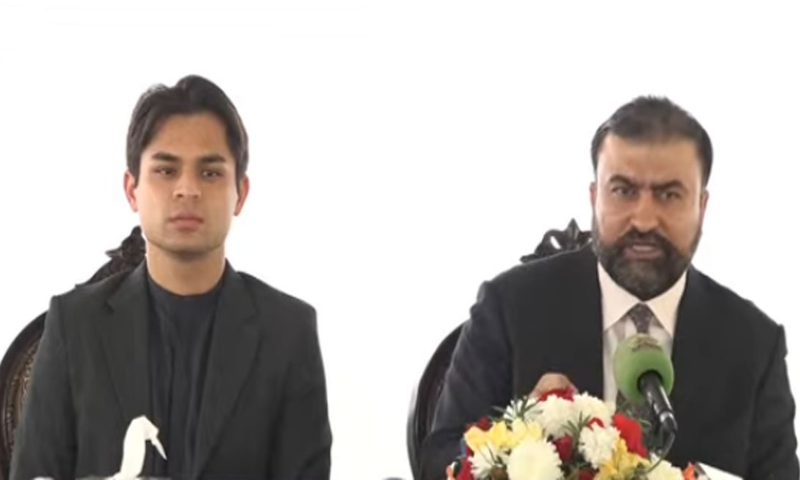
Islamabad, December 7,2025: Balochistan Chief Minister Sarfraz Bugti on Sunday criticised what he called “false, anti-state narratives” being promoted by certain political groups, declaring that Pakistan’s stability must take precedence over politics.
“Some political parties are spreading anti-state propaganda, while their own children study abroad. Our state is more important than politics,” Bugti said at a press conference in Islamabad.
He reiterated that terrorists would not be allowed to impose their agenda on the country and noted that the people of Balochistan had consistently supported the armed forces. “We must abandon narratives that seek to weaken the state,” he said.
Bugti revealed that around 100 militants in Dera Bugti had recently surrendered to the state.
“In 2018, these individuals retreated to the mountains, and today they have returned. We welcomed them. The surrender of militants is a welcome development,” he told reporters.
He recalled that the father of former chief minister Jamal Raisani was martyred in 2018 and stressed that the militants who laid down arms were previously affiliated with terrorist outfits.
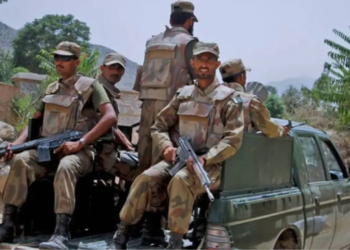
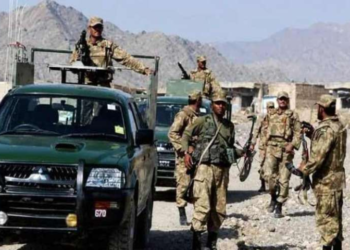
Sharing statistics, the chief minister said Balochistan witnessed 900 incidents of terrorism over the past year, which resulted in the deaths of 205 security personnel and 280 civilians. During this period, he added, security forces killed 760 militants.
Dismissing allegations of excessive force, Bugti said there were “no military operations” in Balochistan. “Only intelligence-based operations are being conducted,” he noted.
“Pakistan and its flag are more important than anything else. Our martyrs are our pride,” he said.
Bugti also criticised the Afghan Taliban, saying the regime had violated its commitments under the Doha Agreement by allowing Afghan territory to be used for terrorism. He said two Balochistan officers were martyred in recent attacks and recalled a previous attack on his own vehicle.
Bugti warned that militancy in Khyber Pakhtunkhwa and Balochistan remained a serious threat but asserted that Pakistan’s armed forces were “fully prepared and capable” of countering it.
“The dream of imposing an extremist system is impossible in the presence of the nation and the armed forces,” he said, adding that Baloch youth were being pushed into “futile conflicts.”
Calling for unity against extremism, Bugti said, “This is not just the military’s war; it is a shared struggle of the entire Pakistani nation. Discrediting the security forces strengthens the enemy’s narrative.”
He also referenced the May 9–10 unrest, claiming that the “nation thwarted Indian designs” and cautioning against defaming state institutions during periods of insurgency in two provinces.
Bugti also pointed to administrative and development initiatives undertaken by his government. He said Balochistan had shown the best performance in digital financial systems according to the Federal Board of Revenue (FBR).
The chief minister highlighted the recruitment of 17,000 teachers on merit, construction of 32 new schools, improved healthcare facilities in remote districts, and increasing public engagement as key achievements.
“Continuous political confrontation must be avoided to sustain development. The people of KP need governance, peace, and stability now,” he said, adding that he shared a good working relationship with KP Chief Minister Sohail Afridi.
Bugti concluded by urging political leaders to counter extremist propaganda, saying: “Today, the nation must stand with its forces to defeat the enemy’s narrative — just as the truth prevailed during the time of the Prophet despite popular opposition.”