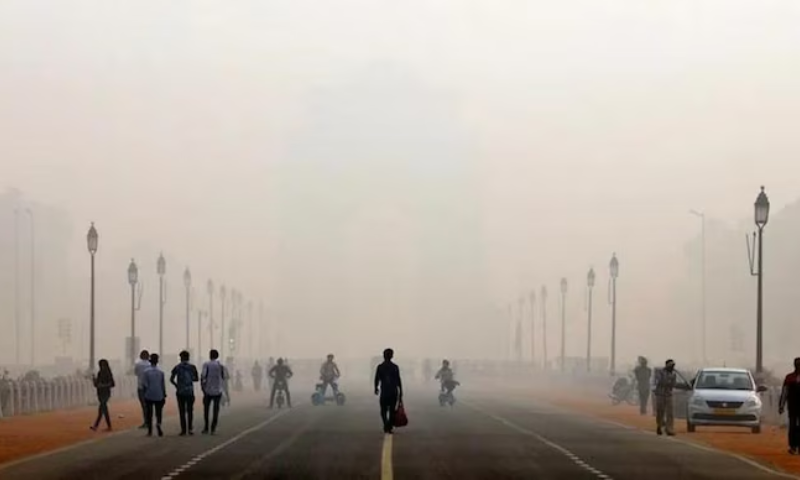
New Delhi, December 17, 2025: Authorities in Delhi on Wednesday announced a series of strict measures to tackle escalating air pollution, including a ban on vehicles not meeting the latest emission standards and reduced attendance at private and government offices.
The air quality index (AQI) in Delhi, home to around 30 million people, has remained in the “severe” category for several days, often exceeding 450. Shallow fog in parts of the city has further reduced visibility, disrupting flights and train services.
The Commission for Air Quality Management invoked stage four, the highest level of the graded response action plan for Delhi and nearby areas, on Saturday. Under this stage, older diesel trucks are banned from entering the city, construction — including public projects — is suspended, and hybrid schooling arrangements are introduced.
Kapil Mishra, a minister in Delhi’s local government, announced that all private and government offices would operate at 50% capacity, with the remainder working from home, subject to some exceptions. Construction workers affected by the shutdown will receive compensation of 10,000 rupees ($110) each, Mishra said.
India’s Environment Minister Bhupender Yadav instructed authorities to allow construction and demolition activities only if proper waste-handling infrastructure is in place. He also directed the removal of illegal encroachments and the creation of traffic corridors to ensure smooth movement during peak hours.
On Tuesday, Delhi enforced strict vehicle anti-pollution rules, banning non-compliant vehicles from operating within the city. “Our government is committed to providing clean air in Delhi. We will take strict steps to ensure this in the coming days,” said Delhi Environment Minister Manjinder Singh Sirsa.
Winter pollution is an annual problem in Delhi and its surrounding regions, as cold, dense air traps emissions from vehicles, construction, and crop burning in neighboring states. The resulting smog exposes residents to severe respiratory risks, with AQI levels frequently reaching the high 450s — far above the “good” threshold of 50.