Islamabad, December 18, 2025: Pakistan on Thursday welcomed a recent report by the United Nations Security Council (UNSC), saying it clearly validates Islamabad’s long-standing position that multiple terrorist organisations are operating from Afghan territory.
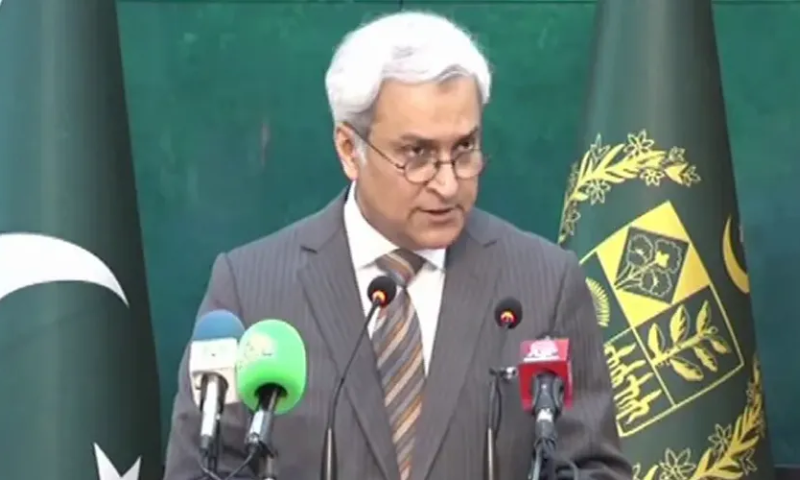
Addressing a weekly press briefing, Foreign Office Spokesperson Tahir Andrabi said the presence of terrorist elements in Afghanistan poses a serious threat to regional peace and security. “The continued existence of militant groups in Afghanistan is undermining efforts aimed at internal stability and development in the country,” he added.
Referring to the UNSC report, Andrabi said it specifically mentions the Tehreek-e-Taliban Pakistan (TTP) and other foreign terrorist elements. He stressed that militant groups remain the single biggest obstacle to stable relations between Pakistan and Afghanistan, reiterating that Islamabad would continue to support sustained diplomatic engagement to address shared regional security challenges.
The UNSC report, he noted, rejected the Afghan Taliban’s claim that Afghan territory is not being used by militant groups for cross-border attacks, describing the assertion as unsubstantiated. It warned that countries in the region increasingly view Afghanistan as a growing source of regional instability.
According to the report, several UN member states have confirmed the presence and activities of multiple terrorist organisations in Afghanistan, including the TTP, Daesh Khorasan, Al-Qaeda and other foreign militant groups, some of which are involved in planning external attacks. The TTP has been identified as the most significant regional threat, operating from safe havens inside Afghanistan.
The report also highlights internal divisions within the Taliban leadership regarding the TTP, noting that while some senior figures see the group as harmful to relations with Pakistan, others continue to support it. It further points to close links between Al-Qaeda and the Taliban, while describing Daesh-K as the Taliban’s principal rival.
Clarifying reports about a ceasefire between Pakistan and Afghanistan, Andrabi said it should not be seen as a conventional ceasefire. He explained that the arrangement was intended to prevent terrorist attacks inside Pakistan originating from Afghan soil.
He maintained that Pakistan has evidence of cross-border support for attackers and said Islamabad implemented the arrangement in good faith. “Unfortunately, it was not honoured from the other side, and cross-border attacks have continued. Effectively, the ceasefire has not held,” he added.
During the briefing, the FO spokesperson also strongly condemned the recent attack at Bondi Beach in Australia.
“We strongly condemn this horrific attack on a religious gathering and extend our deepest condolences to the families of the victims, while wishing a speedy recovery to the injured,” Andrabi said. He added that Pakistan stands in solidarity with the people and government of Australia and unequivocally condemns terrorism in all its forms and manifestations.
He termed attempts to link the attack to Pakistan as “regrettable and irresponsible,” saying that an unverified Pakistani name and photograph were circulated by sections of the media, exposing an innocent individual and their family to serious risk.
Andrabi alleged that Indian media outlets spread false information and propaganda regarding the incident, adding that subsequent investigations revealed the attacker was of Indian origin and held an Indian passport. He said the inaccurate reporting had seriously damaged the credibility of Indian media and urged them to adopt a responsible and professional approach.
Commenting on the recent mistreatment of a Muslim woman by the chief minister of the Indian state of Bihar, Andrabi said the forcible removal of a woman’s hijab by a senior political leader, followed by public ridicule, was deeply disturbing and deserved strong condemnation.
He also condemned the public mocking of the incident by a minister in Uttar Pradesh, saying such actions risk normalising the humiliation of Muslim women in India.
“The conduct demonstrates public disrespect for India’s religious minorities, particularly its Muslim citizens,” he said, adding that the incident reflects a broader and troubling pattern associated with Hindutva-inspired politics, marked by a rise in religious intolerance and Islamophobia.
He urged the Indian government and all relevant stakeholders to recognise the seriousness of the incident and reaffirm their commitment to minority rights, religious freedom and the preservation of human dignity.