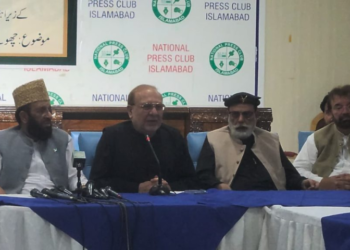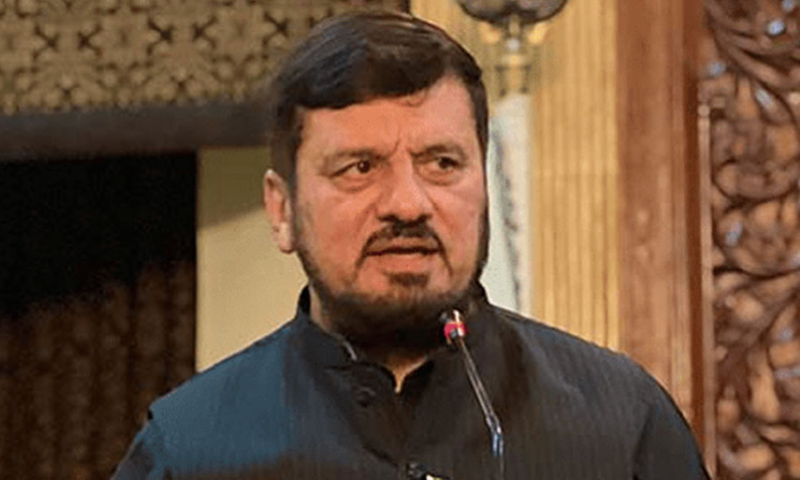
Islamabad, January 1, 2026: Former Governor of Khyber Pakhtunkhwa, Haji Ghulam Ali, on Thursday issued a stark warning that history would hold the government accountable if immediate and emergency measures were not taken to curb unemployment and address the growing sense of despair among the country’s youth.
In a press statement issued here, the former governor said Pakistan’s most pressing challenge was not the contest for political power, but the deepening hopelessness among educated young people caused by the lack of economic opportunities. He described the situation as a “ticking time bomb” and urged authorities to act before it was too late.
Haji Ghulam Ali questioned the silence of both federal and provincial governments, drawing a sharp contrast between their political conduct and the plight of the youth. He said political parties remained embroiled in mutual conflicts and accusations, yet displayed “unprecedented unity” when it came to raising their own salaries and privileges.
“On the other hand, educated youth, degrees in hand, are wandering the streets in search of a livelihood,” he said, citing the recent example of more than 100,000 applications being submitted for just 108 vacancies in the Federal Board of Revenue (FBR).
“This is not merely a statistic; it is a cry of helplessness from an entire generation and undeniable proof of the failure of federal and provincial governments to provide honourable employment,” he added.
The former governor also expressed concern over the accelerating exodus of skilled and educated Pakistanis, saying many were selling their homes and assets to seek opportunities abroad. He said this trend should not be dismissed as simple “brain drain” but viewed as a “declaration of complete state failure.”
“When a state fails to provide hope, its citizens are forced to look beyond its borders,” he warned.
Haji Ghulam Ali cautioned that if the government continued to prioritise political egos and hollow slogans over serious decision-making, public frustration could spiral into protests, chaos and, ultimately, national loss.
To avert the crisis, he proposed a four-point emergency plan: declaring a national emergency on unemployment; relaxing industrial policies to make them practical and investor-friendly; promoting industrialisation and investment to generate immediate job opportunities; and bridging the gap between the youth and the state so they contribute to national development instead of leaving the country.
Calling on the country’s “powerful circles” to compel the government into action, he said: “If we close our eyes today instead of supporting our youth, history will ask—where were the governments when an entire generation was losing hope?”