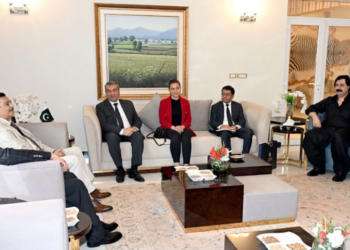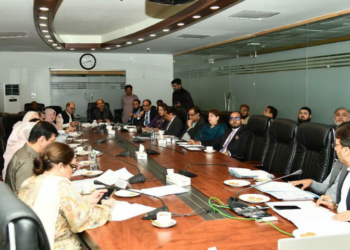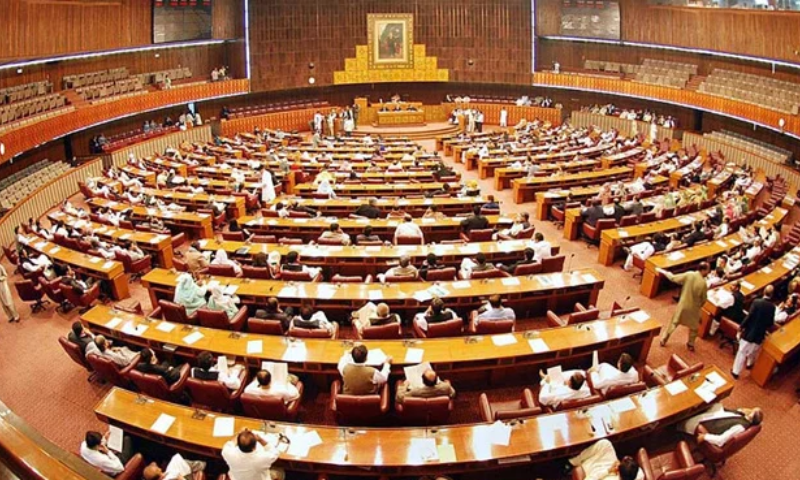
Karachi, January 9, 2026: The Senate Standing Committee on Cabinet Division held a meeting at the Sindh Assembly to review the performance of National Engineering Services Pakistan (NESPAK) and the Oil and Gas Regulatory Authority (OGRA).
The meeting was chaired by Senator Rana Mehmood-ul-Hassan and attended by Senators Farooq Hamid Naek, Amir Waliuddin Chishti, Abdul Qadir Khan, Shahadat Awan, Atta-ur-Rehman and Saleem Mandviwala, along with Members of the Sindh Assembly Saima Agha, Shariq Jamal and Rana Shoukat Ali. Senior officials from the Establishment Division, NESPAK and OGRA briefed the committee.
NESPAK informed the committee about its ongoing development portfolio in Sindh and Balochistan. Officials said the organization is currently executing 82 projects in Sindh with an estimated cost of Rs1,558 billion, while 17 projects are underway in Balochistan. The committee expressed serious reservations over delays and stagnation in several projects and directed NESPAK to improve monitoring mechanisms and ensure timely completion.
The committee was also briefed on Karachi’s acute water shortage and the alleged monopoly of the tanker mafia. Members expressed grave concern, stating that the tanker mafia has effectively hijacked the city’s water supply, forcing citizens to purchase water at high costs. The committee recommended that the Sindh government take immediate steps to curb the tanker mafia and upgrade Karachi’s water infrastructure in line with the K-IV water supply project.
It was further decided that the funding and progress of the K-IV project would be reviewed on a bi-annual basis. The committee also proposed a joint meeting of the Senate Standing Committees on Finance, Planning and Cabinet Division, along with other relevant committees, with the Chief Minister Sindh and provincial stakeholders on a single-point agenda focused on the K-IV project. The Mayor of Karachi, Chief Secretary Sindh and Managing Director of the Water Board will also be invited to attend.
In its briefing, OGRA apprised the committee of its plan to digitize 12,000 petrol pumps across the country. Under Phase-I, consumers will be provided with a mobile application and handheld devices through which all legal fuel stations will be visible, while illegal outlets can be reported. The committee was also informed that approximately 15,000 oil tank lorries will be monitored through a Track and Trace System developed by the Punjab Information Technology Board (PITB) to identify illegal fuel movement and report it to enforcement authorities. In the next phase, digital gauging of fuel pumps will be introduced to enhance transparency and curb pilferage.