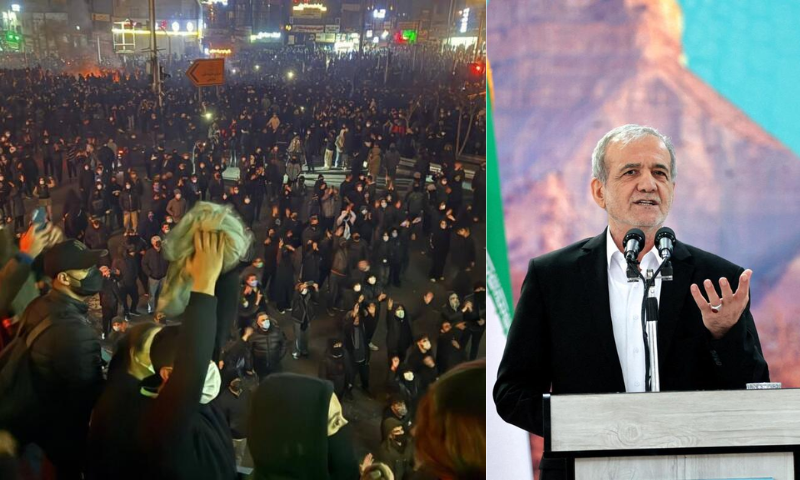
Tehran/Washington, January 11, 2026: Iran continues to face its most widespread anti-government protests since 2022, with a rights group reporting at least 192 people killed over the past two weeks amid demonstrations sparked by soaring inflation and economic hardship. The unrest, which began on December 28 near Tehran’s Grand Bazaar, has since spread to multiple cities, quickly taking on political overtones with calls for an end to clerical rule.
Iran’s President Masoud Pezeshkian is set to address economic reforms and “people’s demands” in a state TV interview on Sunday. According to IRIB, he will outline the status of the government’s major subsidy reform plan and discuss the administration’s response to the protests.
Rising death toll and information blackout
Norway-based NGO Iran Human Rights confirmed the deaths of at least 192 protesters, a sharp rise from an earlier figure of 51, while warning that the toll could be higher due to a government-imposed internet blackout since Thursday that has hampered verification. US-based HRANA reported 116 deaths earlier, including 37 members of the security forces. Iranian state TV has broadcast funeral processions in cities such as Gachsaran and Yasuj for security personnel killed during unrest.
Social media videos have shown large crowds in Tehran’s Punak neighbourhood drumming on bridges and metal objects in protest, as verified by Reuters. The Pakistan Embassy in Tehran has set up a crisis management unit to assist its citizens, providing 24-hour contact numbers for help.
Tensions with the US and Israel
Amid the protests, tensions between Iran, the US, and Israel remain high. Iranian Parliament Speaker Mohammad Baqer Qalibaf warned Washington against “miscalculations,” declaring that US bases and Israeli-occupied territories would be legitimate targets in the event of an attack. Israeli sources reported heightened alert levels in response to potential US intervention.
US President Donald Trump has repeatedly warned Iranian authorities against using force on protesters, asserting that Iran is “looking at FREEDOM, perhaps like never before,” and stating that the US stands ready to assist. Trump’s administration has reportedly considered potential strikes against Iran, though details remain unspecified.
US media reports indicate that discussions have included preliminary strikes on selected targets, while retired US Navy Vice Admiral Robert Harward urged expanded support for protesters through secure VPN access, enabling safe communication despite internet restrictions. He also called for a list of Iranian government entities involved in repressing free speech, including military, cyber police, and morality enforcement units.
International reactions and security alerts
Israeli Prime Minister Benjamin Netanyahu spoke with US Secretary of State Marco Rubio over the weekend, reportedly discussing potential intervention options. In 2025, Israel and Iran engaged in a 12-day conflict, during which the US joined Israeli airstrikes, and Iran retaliated by firing missiles at an American base in Qatar.
The Trump administration’s approach has been described by a senior intelligence official as an “endurance game,” balancing the opposition’s efforts to pressure the government against Tehran’s attempts to suppress demonstrations without provoking US military action.
Protests began over economic grievances, particularly the steep devaluation of the Iranian rial, and quickly turned political. Authorities blame foreign actors, including the US and Israel, for fomenting unrest. A social media post on Saturday showed a protester at the Iranian embassy in London replacing the current regime’s flag with a pre-revolutionary symbol.
Despite security measures and the internet blackout, demonstrators continue to mobilize across cities, while Iranian officials maintain that saboteurs and agitators will face strict action.