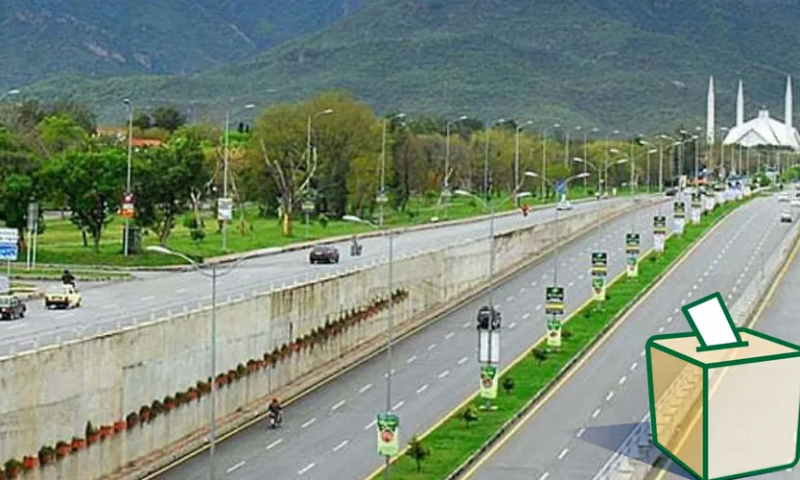
Islamabad, January 12, 2026: President Asif Ali Zardari has issued an ordinance amending the Islamabad Capital Territory Local Government Act, fundamentally reshaping the federal capital’s local government system and causing yet another delay in the city’s long-awaited municipal elections.
The Islamabad Capital Territory Local Government (Amendment) Ordinance, 2026, promulgated on January 9 and published the following day, replaces the previous Metropolitan Corporation model with Town Corporation structures. Under the new framework, Islamabad will be divided into three Town Corporations, each aligned as closely as possible with National Assembly constituency boundaries.
Each Town Corporation will include multiple union councils, delimited according to population equality and administrative convenience using the latest official census. The government retains the authority to adjust town or union council boundaries before the announcement of an election schedule, after inviting public objections. A transition clause allows the existing Metropolitan Corporation to continue functioning until the new Town Corporations are constituted and notified.
Key features of the amended law
- Local government composition: Each Town Corporation will have a mayor, two deputy mayors, and the chairmen of all union councils as general members, along with reserved seats: four women, one peasant/worker, one trader/businessman, one youth member, and one non-Muslim member.
- Union council elections: General members are elected by secret ballot, with each union council treated as a multi-member ward. Reserved seats and union council chairmanships are filled indirectly by a show of hands.
- Town corporation elections: Union council chairmen automatically become general members of the Town Corporation. Reserved seats are elected by a show of hands, and the mayor and deputy mayors are elected jointly from Town Corporation members.
- Administration and taxation: Where a local government is non-functional, the government may appoint an administrator to exercise powers. Local governments and administrators can levy taxes, fees, tolls, and rents, subject to vetting by the federal government and oversight by the National Assembly. Government-issued directions to local governments or administrators are binding.
The ordinance has effectively postponed Islamabad’s municipal elections, which had already seen 4,270 candidates submit nomination papers for 1,125 wards, each paying a Rs2,000 fee, totaling Rs8.54 million. Candidates have raised concerns that their submissions are now void under the new law, while the collected fees remain non-refundable.
By altering the legal framework for local governance, the ordinance marks a major reset for Islamabad’s municipal elections and introduces a completely new administrative and electoral structure for the federal capital.