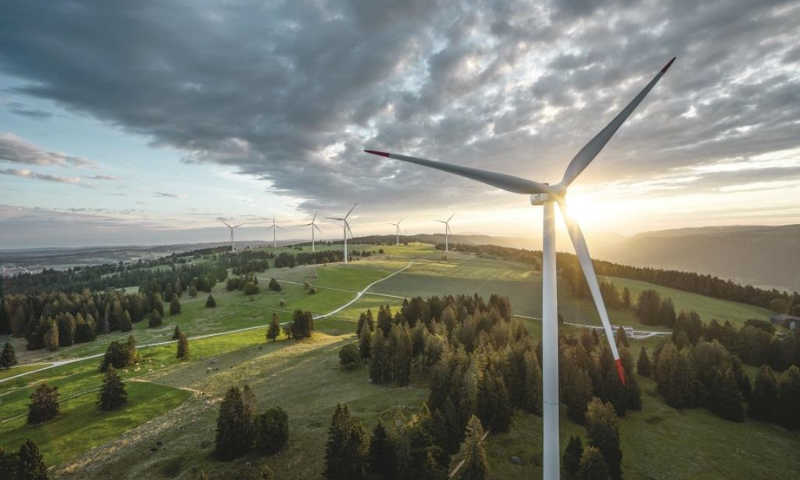
Bern, January 22, 2026: Wind energy is playing an increasingly important role in Switzerland’s electricity mix, helping power thousands of homes and complementing the country’s hydropower and solar generation, according to information shared by the Swiss Embassy on social media.
In northwestern Switzerland, Mont-Crosin is home to the country’s largest wind farm, featuring 16 wind turbines constructed between 2010 and 2016. Together, the turbines have a total installed capacity of 37.2 megawatts, making the site a key contributor to Switzerland’s renewable energy supply.
Electricity generation at Mont-Crosin varies depending on wind conditions. On December 29, 2025, for instance, the wind farm produced enough electricity to supply 7,582 households, highlighting its capacity to meet domestic energy needs during favorable weather conditions.
Switzerland’s journey into wind power began in 1986, when the country commissioned its first wind energy plant. By 2020, Switzerland had around 40 wind power installations, collectively generating approximately 140 gigawatt-hours (GWh) of electricity annually.
A notable advantage of wind energy in Switzerland is its seasonal alignment with demand. Nearly two-thirds of wind power is generated during winter, when electricity consumption is at its peak. This makes wind energy a strong complement to hydropower and solar energy, which typically produce more electricity during the summer months.
As Switzerland continues to diversify its renewable energy portfolio, wind power is emerging as a vital pillar in ensuring energy security and supporting the country’s transition toward a more sustainable and resilient power system.