By Shah Khalid Khan
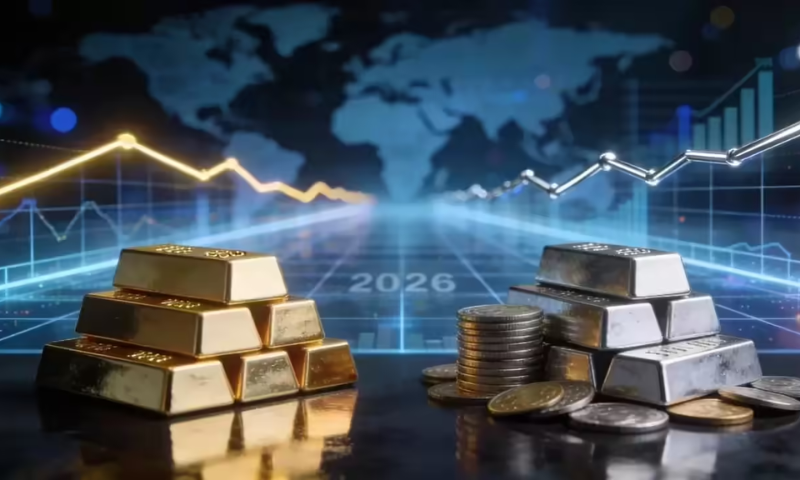
New York, January 31, 2026: Global precious metals markets suffered one of their sharpest one-day declines in decades after U.S. President Donald Trump announced the nomination of former Federal Reserve Governor Kevin Warsh as the next Chair of the Federal Reserve, triggering a dramatic reversal from record highs.
The announcement, confirmed on Friday, January 30, sparked widespread profit-taking across commodities markets, sending gold and silver sharply lower and erasing an estimated $7 trillion in combined market value from the precious metals sector, according to aggregate figures cited by multiple financial outlets.
Analysts attributed the sell-off to a strengthening U.S. dollar and rapidly shifting expectations around U.S. monetary policy. Warsh is widely viewed as an inflation hawk, with a long-standing record of advocating tighter monetary policy and balance sheet reduction. His nomination eased investor concerns over potential political pressure on the Federal Reserve, boosting confidence in the central bank’s independence and prompting markets to reassess expectations for aggressive interest rate cuts.
Gold prices plunged by approximately 9–12 percent, falling from intraday highs near $5,594–$5,608 per ounce earlier in the week to around $4,890–$4,902 per ounce in late trading. Spot gold settled near $4,887–$4,903 across various reports.
Silver experienced even more severe volatility, crashing 27–31 percent, with some intraday declines reported as high as 37–39 percent. Prices tumbled from record peaks above $120–$121 per ounce to trade in the $78–$85 range, marking silver’s worst single-day performance since 1980.
Market strategists described the move as a classic unwinding of overcrowded trades and leveraged positions that had driven prices sharply higher in recent weeks. Trading Group Research Director Kathleen Brooks said the rally had become unsustainable. “This unchecked surge had to cool off—the prices had risen too aggressively and too quickly,” she noted.
Experts said Warsh’s nomination undermined the so-called “debasement trade” that had fueled heavy safe-haven demand for precious metals, as markets began pricing in a Federal Reserve more focused on inflation control rather than rapid monetary easing.
In contrast, oil prices moved higher amid escalating geopolitical tensions involving Iran, providing a rare bright spot across commodities markets. Cryptocurrencies also came under pressure, with Bitcoin falling around 5–6 percent overnight and extending its recent decline.
President Trump formally nominated Kevin Warsh to succeed current Federal Reserve Chair Jerome Powell, whose term ends in May 2026. Warsh, who served as a Fed Governor from 2006 to 2011 and is currently affiliated with Stanford University and the Hoover Institution, will require Senate confirmation. His selection has been welcomed by some market participants as a move toward restoring policy credibility and rules-based decision-making at the central bank.
Despite the sharp sell-off, analysts largely characterized the plunge as a healthy correction following months of speculative excess and market euphoria. However, they cautioned that volatility is likely to remain elevated amid geopolitical risks, policy uncertainty, and further adjustments in expectations surrounding the Federal Reserve’s future direction.
Investors, analysts said, should remain cautious and focus on long-term fundamentals rather than short-term market swings in the current high-volatility environment.